Understanding IRS Form 8962: A Crucial Step for Premium Tax Credits
Navigating the complexities of the U.S. tax system can be overwhelming, especially when it comes to understanding forms that directly impact your financial wellbeing. Form 8962, also known as the Premium Tax Credit (PTC) form, is essential for taxpayers who have enrolled in a health insurance plan through the Health Insurance Marketplace and wish to claim the Premium Tax Credit. This tax credit can significantly reduce your monthly health insurance premiums, making healthcare more affordable for families and individuals alike.
The Regulatory Framework Behind Form 8962
Form 8962 is grounded in the Affordable Care Act (ACA), which was enacted in 2010. One of the ACA's primary goals is to make healthcare accessible and affordable. The Premium Tax Credit serves as a financial aid for individuals and families with low to moderate incomes, allowing them to purchase health insurance through the Marketplace. The Internal Revenue Service (IRS) oversees the administration of this form, ensuring compliance with federal regulations.
This form not only facilitates the claim of the Premium Tax Credit but also reconciles any advance payments made on your behalf during the year. Therefore, understanding how to effectively complete and file this form is crucial for any taxpayer eligible for premium assistance.
Who Needs to File Form 8962?
Generally, if you, your spouse, or a dependent received advance payments of the Premium Tax Credit to help pay for coverage through the Marketplace, you must file Form 8962 with your federal tax return. This requirement applies even if you received health coverage for only part of the year. The following categories of taxpayers specifically need to concern themselves with this form:
- Individuals and families enrolled in a health plan from the Marketplace.
- Taxpayers who have received advance premium tax credits (APTC) throughout the tax year.
- Married couples filing jointly, unless eligible for an exception that permits a different filing status.
Keep in mind that if you are filing as 'married filing separately,' you cannot take the PTC unless you qualify for a specific exception outlined in the IRS guidelines.
Steps to Complete Form 8962
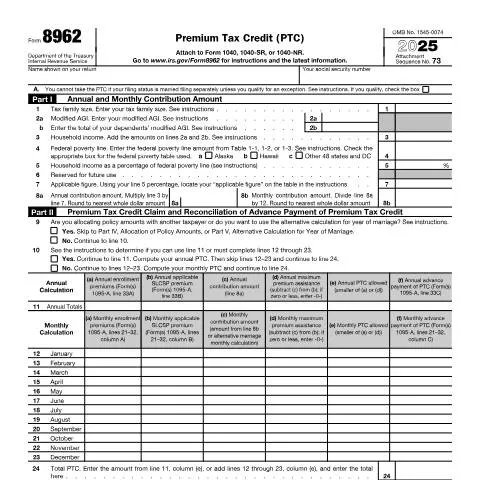
Filling out Form 8962 may seem daunting due to its detailed sections. However, breaking it down can make the process more manageable. Here’s a step-by-step guide on how to navigate this form effectively:
- Gather Necessary Documents: Before you start filling out Form 8962, ensure you have your Form 1095-A (Health Insurance Marketplace Statement) handy. This document contains important information regarding your health coverage and premium payments.
- Calculate Your Modified AGI: Your modified adjusted gross income (AGI) is crucial for determining your eligibility. You’ll need to input your AGI and that of any dependents on the form.
- Determine Your Household Size: Calculate your tax family size, which includes yourself, your spouse, and any dependents.
- Fill Out Parts I and II: In Part I, you will enter your annual and monthly contribution amounts. In Part II, you will claim the PTC and reconcile any advance payments.
- Repayment of Excess Payments (if applicable): If you received too much in advance payments, Part III of the form outlines how to handle these discrepancies.
- Review and Submit: Once completed, review your form for accuracy before attaching it to your Form 1040, 1040-SR, or 1040-NR when filing your tax return.
Filing Channels for Form 8962
When it comes to submitting Form 8962, taxpayers have different options, each with its characteristics:
| Filing Method | Pros | Cons |
|---|---|---|
| Online Filing |
|
|
| Paper Filing |
|
|
| In-person Submission |
|
|
Choosing the right method depends on your preferences and circumstances. For many, online filing is the most efficient option, allowing for faster processing times and the option to utilize tools that can help ensure the accuracy of the submitted information.
Addressing Common Issues with Form 8962
Despite careful preparation, problems can arise when submitting Form 8962. Here are some situations you may encounter along with guidance on how to address them:
- Incorrect Information: If you discover an error after submission, you will need to file an amended return using Form 1040-X. Make sure to correct the information on Form 8962 as well.
- Missing Documentation: If you fail to attach Form 8962 to your tax return, the IRS may deny your Premium Tax Credit. It's crucial to review all required documents before submitting your return.
- Advance Payment Discrepancies: If the amounts reported on your Form 1095-A do not match your calculations on Form 8962, the IRS may flag your return for further review. Address any discrepancies immediately by cross-referencing your documents.
Staying proactive and aware of potential issues will help ensure that your claims are processed smoothly and accurately.
The Importance of Timely Filing
Filing Form 8962 is not just a bureaucratic step; it's an essential part of ensuring that you receive the financial assistance you’re entitled to. Missing the deadline can result in losing out on the Premium Tax Credit for the tax year. The IRS sets a typical filing deadline of April 15 each year for individual tax returns. If you’re not able to meet this deadline, consider applying for an extension. However, keep in mind that an extension to file does not mean an extension to pay any taxes owed.
Moreover, if you fail to file Form 8962 when required, you risk having to pay back any advance payments of the Premium Tax Credit that were made to your health insurer during the year.
Eligibility Nuances: Special Cases
While the above guidelines cover the typical scenarios for filing Form 8962, there are nuances that may apply to specific cases:
- Married Filing Separately: Generally ineligible for the Premium Tax Credit unless you qualify for an exception, such as being a victim of domestic abuse. It’s essential to refer to IRS guidelines for these exceptional situations.
- Dependent Status: If you’re claimed as a dependent on someone else’s tax return, you cannot claim the Premium Tax Credit. Understanding your tax family structure is key to determining eligibility.
- Changes in Circumstances: If your financial situation changes significantly during the year (for example, a job loss), you may qualify for additional premium assistance. Assessing your eligibility throughout the year is important for maximizing your benefits.
Being informed about these specific circumstances can help you navigate the complexities of tax filing more effectively and ensure you're making the most of available credits.
Consolidating Your Understanding of Form 8962
IRS Form 8962 is a nuanced and essential form that serves as a bridge between the healthcare assistance offered by the ACA and the obligations you have as a taxpayer. Whether you are filing online, on paper, or in person, understanding the form's requirements and implications is crucial for maximizing your benefits and ensuring compliance with IRS regulations. As a taxpayer, arming yourself with the right knowledge will empower you to navigate these processes confidently, ensuring you don’t miss out on critical financial assistance.
By keeping current with IRS guidelines and preparing your documentation thoroughly, you can mitigate the risks associated with filing Form 8962 and pave the way for a smoother tax season.
Understanding the Premium Tax Credit and Form 8962
The Premium Tax Credit (PTC) is a significant program designed to help eligible individuals and families afford health insurance coverage purchased through the Health Insurance Marketplace. Understanding how Form 8962 interacts with the PTC is critical for taxpayers who have opted for such coverage. This tax credit is based on your estimated annual income and the size of your household, which can directly affect your tax liability.
When completing Form 8962, you need to report your annual household income alongside the number of individuals in your household. This information will determine your eligibility for the PTC and calculate the amount of credit you are entitled to. If you received advance payments of the premium tax credit (APTC) to lower your monthly premium costs, Form 8962 is essential for reconciling those payments with your actual annual income when you file your federal tax return.
Common pitfalls when filling out Form 8962 include incorrect income reporting, failing to include all household members, and misunderstanding the reconciliation process for APTC. It's crucial to use accurate data from your IRS Form 1040 and any relevant documentation received from the Marketplace, such as Form 1095-A, which provides details on your health coverage and any APTC received.
Failure to reconcile correctly can lead to a tax bill at the end of the tax year if your income was higher than estimated, or you could miss out on potential tax credits if you underreported your income. Make sure to review IRS guidelines and utilize relevant resources available on the IRS website to ensure you've completed Form 8962 accurately.
Common Mistakes When Filing Form 8962
Filing Form 8962 can be complex, especially for those unfamiliar with tax regulations surrounding health care credits. Below are some common mistakes that taxpayers may encounter when completing this form, which can lead to delays or complications with their tax filings.
- Incorrect Entry of Marketplace Coverage Information: The most common errors happen during the reporting of Marketplace coverage. Make sure that the information from Form 1095-A aligns perfectly with what you enter in Form 8962. Missing or incorrect policy numbers or amounts can lead to a mismatch that requires further clarification from the IRS.
- Failure to Include All Household Members: It's important to include everyone in your household, even if they did not receive coverage through the Marketplace. All individuals impacting your household income must be accounted for, as this influences your eligibility and amount for the PTC.
- Miscalculation of Income: Properly calculating your Modified Adjusted Gross Income (MAGI) is pivotal. Many taxpayers overlook deductions or other income sources that should be included in this calculation, potentially affecting the amount of tax credit available. Refer to IRS guidelines to clarify what constitutes MAGI.
- Neglecting to Complete All Required Portions of the Form: Each section of Form 8962 must be completed as specified. Omitting sections can result in the IRS flagging your return for further review. Make sure to review each part carefully before submission.
- Filing Late or Incorrectly: Ensure you're aware of the deadline for submitting your tax return, typically April 15, unless extended. Late submissions can incur penalties, and discrepancies in the form can lead to further IRS inquiries.
By being aware of these common pitfalls, you can take proactive measures to ensure your Form 8962 is filed correctly, thereby maximizing your potential tax credit and minimizing the risk of penalties.
Resources for Navigating Form 8962
Navigating the complexities of Form 8962 can be daunting, especially for first-time filers or those who have recently changed their health coverage due to life events such as marriage, divorce, or job loss. However, ample resources are available to assist taxpayers in understanding their obligations and completing the form accurately.
The IRS provides a wealth of information directly on their website, including guides, frequently asked questions, and access to fillable forms that can ease the filing process. The IRS Form 8962 page offers specific instructions and links to related forms that might be necessary for your tax situation.
Additionally, the Health Insurance Marketplace has resources that can help clarify how to report your health insurance information. Their customer service line can also provide personalized assistance in interpreting your Form 1095-A and reconciling any discrepancies with Form 8962.
If further help is needed, consider consulting a tax professional, especially if your tax situation is complex or if you wish to maximize your tax benefits. Tax preparers who are familiar with health care tax credits can provide tailored advice and ensure that your forms are filed correctly and on time. Many organizations also offer free tax assistance programs, particularly for low-income families, which can be found through community centers or local non-profits.
Ultimately, utilizing these resources not only simplifies the process but also ensures that you are in compliance with IRS requirements and fully benefiting from any available credits.