The Impact of IRS Publication P5649PRS on Puerto Rican Residents
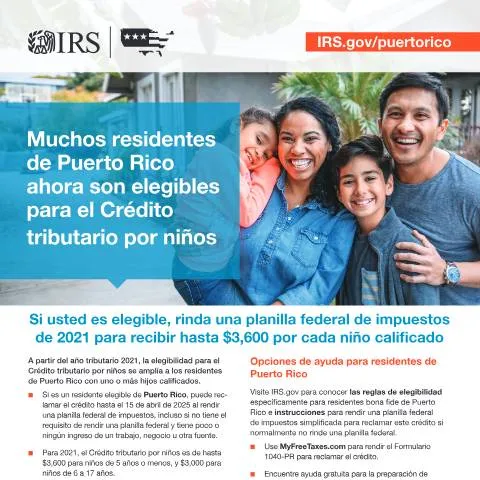
Understanding the nuances of IRS Publication P5649PRS is crucial for many individuals residing in Puerto Rico. This document plays a significant role in determining eligibility for various tax credits, particularly the Child Tax Credit, which has expanded its reach to embrace eligible residents of Puerto Rico. The implications of this publication not only influence fiscal responsibilities but also reflect changing policies that can significantly affect the financial well-being of families in Puerto Rico.
Navigating the Child Tax Credit: A Game Changer for Puerto Rican Families
With the recent updates in tax regulations, the Child Tax Credit now extends to residents of Puerto Rico who were previously excluded from federal tax benefits. Under Publication P5649PRS, eligible taxpayers can claim up to $3,600 for each qualifying child under the age of 5 and up to $3,000 for those aged 6 to 17. This represents a substantial financial boost for families, especially in a region facing economic challenges.
Who Can Claim the Child Tax Credit?
- Residents of Puerto Rico who have qualifying children.
- Grandparents or relatives who are the primary caregivers.
- Individuals with little or no income who usually do not file federal tax returns.
The inclusion of various categories of caregivers allows for a wider pool of individuals to benefit from the credits. This highlights the IRS's recognition of non-traditional family structures in Puerto Rico.
Filing Deadlines and What They Mean for You
For tax year 2021, the deadline for filing to claim the Child Tax Credit is typically April 15, 2025. This extended deadline is particularly beneficial for residents of Puerto Rico who may not usually file federal tax returns. However, understanding the timeline is essential not only for claiming credits but also for avoiding penalties associated with late filing.
How to File Your Tax Return
- Determine your eligibility based on the guidelines set forth in Publication P5649PRS.
- Gather necessary documentation, including proof of relationship to qualifying children.
- Complete Form 1040-PR to claim your credit.
- File your return through authorized channels outlined by the IRS.
- Consider utilizing local assistance resources if needed.
By following these steps, residents can ensure they are in compliance with federal tax requirements while maximizing their potential benefits.
Understanding Your Rights and Obligations
Filing your tax return is not just about fulfilling a duty; it’s also about understanding your rights as a taxpayer. Those eligible for the Child Tax Credit have the right to access available benefits, and it's essential to remain informed about the latest updates in IRS policies. Failure to file or incorrectly completing your tax forms can lead to unintended consequences, such as the forfeiture of potential credits or even legal repercussions.
Consequences of Non-Compliance
- Loss of the Child Tax Credit for which you may be eligible.
- Potential audits if discrepancies are found in your filings.
- Penalties for late filings or omissions.
Remaining proactive and informed can mitigate these risks and ensure taxpayers in Puerto Rico can fully capitalize on their eligible benefits.
How IRS Publication P5649PRS Fits into a Broader Tax Framework
Publication P5649PRS serves as a cornerstone document that illustrates the evolving relationship between federal tax policy and the unique circumstances of Puerto Rican residents. Taxpayers must understand not only this publication but also how it intersects with other IRS guidelines, such as those regarding self-employment income or other credits available to specific demographics, including military families or disabled taxpayers.
Related Publications and Resources
| Publication | Focus Area | Link |
|---|---|---|
| P2 | Investment Income and Expenses | IRS.gov/P2 |
| P151 | Understanding Your IRS Notice | IRS.gov/P151 |
| P501 | Dependents, Standard Deduction, and Filing Requirements | IRS.gov/P501 |
These publications complement the information provided in P5649PRS and help taxpayers navigate the broader tax landscape effectively.
Profile of Tax Filers: Unique Considerations for Puerto Rican Residents
The landscape of tax filers in Puerto Rico is multifaceted, incorporating various profiles, each with distinct tax obligations and benefits. Factors such as immigrant status, family structure, and income level can significantly influence how individuals engage with IRS regulations. Understanding this diversity is crucial for proper tax planning.
Case Studies
- Example 1: A single parent with two children under 5 years old may claim up to $7,200 in credits.
- Example 2: Grandparents raising a grandchild can also claim the Child Tax Credit, enhancing financial support.
- Example 3: Individuals earning less than $12,550 may qualify for additional credits despite their low income.
By examining different scenarios, Puerto Rican residents can better understand their eligibility for various tax credits and how to leverage these benefits effectively.
Leveraging Available Resources for Tax Filing
The IRS offers numerous resources to assist Puerto Rican residents in navigating tax filing, especially with the new eligibility for the Child Tax Credit. Understanding how to utilize these resources can significantly streamline the filing process.
Avenues for Assistance
- MyFreeTaxes.com: A resource for online filing of Form 1040-PR.
- VITA/TCE Locator: A tool to find free tax preparation services nearby.
- IRS.gov/PuertoRico: A comprehensive source for current tax guidelines and requirements.
Residents are encouraged to actively seek out these resources, which can provide valuable guidance and support, especially for those who are unfamiliar with the tax system.
The Importance of Staying Informed and Engaged
As tax regulations continue to evolve, particularly concerning the Child Tax Credit and its implications for Puerto Rican residents, it is essential to remain engaged and informed. Keeping abreast of updates from the IRS can empower individuals to take advantage of available tax benefits that directly affect their financial security.
By understanding the intricate details of IRS Publication P5649PRS, residents of Puerto Rico can better navigate their tax obligations and maximize their financial benefits, ensuring that they are not just compliant but also well-informed taxpayers.
Understanding IRS Publication 5649PRS: Overview and Key Points
IRS Publication 5649PRS serves as a crucial resource for individuals and businesses navigating the complexities of tax regulations related to public relations services. This publication outlines the tax implications of providing and receiving public relations services, detailing both the reporting requirements and applicable deductions. In addition, it clarifies the distinctions between different types of service providers, ensuring that taxpayers can accurately comply with federal tax law.
When dealing with public relations services, it is essential to understand whether the services fall under self-employment income or if they should be reported as wages. This distinction can significantly affect tax obligations, as self-employed individuals may have different deduction opportunities compared to traditional employees. The publication provides guidance on how to evaluate the nature of the work performed, relevant contracts, and billing practices that could influence tax treatment.
Furthermore, IRS Publication 5649PRS emphasizes the importance of proper record-keeping for both service providers and recipients. Keeping detailed documentation not only facilitates smoother interactions with the IRS but also provides a safety net in case of audits. Taxpayers are advised to maintain records of contracts, invoices, and expenditures related to public relations activities, as these can substantiate claims made on tax returns.
Deduction Opportunities and Limitations in IRS Publication 5649PRS
One of the central themes of IRS Publication 5649PRS is the exploration of deduction opportunities available to businesses utilizing public relations services. Understanding which expenses are deductible is imperative as it directly influences a company's taxable income. Notably, expenses incurred in promoting a business or improving its public image can often be deducted as ordinary and necessary business expenses under IRS guidelines.
Common deductible expenses outlined in the publication include costs associated with hiring public relations firms, expenses for promotional materials, and fees for attending industry conferences where public relations are a focal point. However, the IRS also sets certain limitations on these deductions - for instance, lavish or extravagant expenses may be scrutinized and disallowed. Therefore, businesses should exercise prudence in their spending and ensure that all incurred expenses align with the standard definitions of business necessity.
Additionally, the publication offers insights into the applicable tax implications if an individual or business receives public relations services without direct monetary compensation. In such cases, valuation of services can be complex, and IRS guidelines specify that fair market value should be applied when considering potential deductions or income reporting. Taxpayers should be aware of these intricacies to avoid pitfalls during tax season.
Navigating the Compliance Landscape: Future Changes and Considerations
As the landscape of public relations evolves, so too does the guidance provided by the IRS. IRS Publication 5649PRS not only addresses current regulations but also hints at potential future changes that could affect how public relations services are treated for tax purposes. For professionals in the field, staying attuned to updates from the IRS or changes in legislation is vital for ensuring compliance and optimizing financial outcomes.
For instance, the increasing use of digital platforms and social media may lead to new classifications of services or expense types, which could, in turn, impact deductibility. Taxpayers must be proactive in assessing how new technologies and methods influence their public relations activities and what that means for their tax reporting obligations.
Moreover, the IRS often revises its publications and guidelines to reflect evolving economic conditions and trends. Taxpayers are encouraged to review IRS Publication 5649PRS regularly for updates and consult with tax professionals when in doubt about compliance matters. Engaging with tax experts can provide tailored insights that align with a taxpayer’s specific situation, ensuring they are not only compliant but also positioned to maximize any available tax benefits.