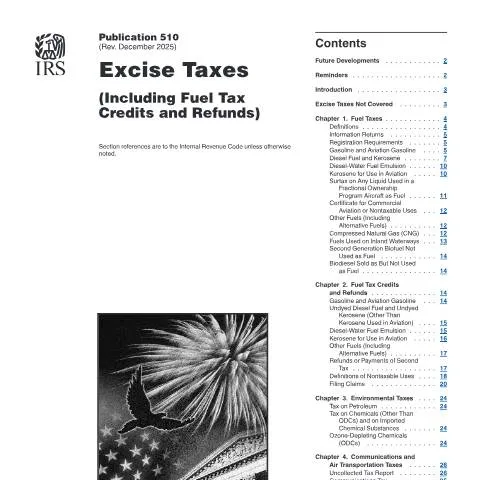
Navigating IRS Publication 510: Your Comprehensive Guide
IRS Publication 510 is not just any document; it’s a critical resource for anyone involved in the fuel industry or dealing with excise taxes in the United States. Understanding the nuances of this publication can significantly impact your tax obligations and entitlements. Whether you're a fuel retailer, importer, or consumer, knowing how to leverage this publication is essential for compliance and potential savings.
Understanding the Role of Publication 510 in Excise Tax Management
Publication 510, under the auspices of the Internal Revenue Service (IRS), serves to elucidate the various excise taxes associated with fuel sales and usage. This publication is particularly crucial for businesses and individuals engaged in fuel transactions, as it outlines the requirements for reporting and paying taxes accurately. Excise taxes covered in this document include those for gasoline, diesel fuel, kerosene, and certain alternative fuels, among others. It also details credits and refunds that are available under specific circumstances.
Excise Taxes and Their Implications
The publication categorizes various fuel types and their corresponding tax obligations. Each fuel type comes with specific definitions, where detailed distinctions are made to guide taxpayers effectively. This clarity helps avoid confusion that could lead to compliance issues or missed opportunities for credits and refunds.
- Gasoline and Aviation Gasoline: These are subjected to federal excise taxes aimed primarily at fueling transportation.
- Diesel Fuel: Different taxation rules apply for undyed diesel used for highway purposes versus that used for off-highway activities.
- Kerosene: The tax implications are distinct based on the intended use, such as aviation versus heating purposes.
Who Needs to Take Action?
Publication 510 is primarily directed towards taxpayers engaged in the distribution, sale, or consumption of fuels subject to excise taxes. This includes:
- Retailers and wholesalers of gasoline and diesel.
- Companies involved in aviation and transportation services.
- Taxpayers seeking to claim credits or refunds related to fuel usage or excise taxes paid.
Key players, such as fuel suppliers or manufacturers, must familiarize themselves with this publication to ensure they meet their tax responsibilities effectively. Understanding how excise taxes apply to their business operations is crucial for avoiding penalties and ensuring compliance.
Essential Documentation: Gathering Your Justifications
To navigate the complexities of excise tax filings, having the right documentation is vital. Publication 510 outlines various required documents and records that must be maintained. Here’s a breakdown:
- Invoices: Keep records of all purchase and sale invoices related to fuel transactions.
- Fuel Usage Reports: Maintain detailed records of how much fuel is used and for what purpose, especially in the case of refunds.
- Proof of Payment of Excise Taxes: Documentation that demonstrates all taxes paid on fuel is crucial for verifying compliance.
Maintaining these records not only assists in filing taxes but also provides necessary proof in the event of an audit by the IRS.
Completing Your Filing: A Step-by-Step Approach
Filing taxes related to excise tax can be daunting, but with the right approach, it can be manageable. Here’s a simplified pathway to ensure compliance:
Steps to File Excise Taxes using Form 720
- Determine Your Tax Obligations: Refer to the relevant sections of Publication 510 to identify applicable taxes for your fuel types.
- Compile Your Data: Gather all necessary documentation as previously outlined.
- Complete Form 720: This is the official form required to report and pay excise taxes. Ensure you include all relevant sections pertaining to your fuel types.
- Calculate Your Taxes: Carefully calculate the total amount of taxes owed based on the current rates specified in Publication 510.
- File Your Return: Submit your completed Form 720 to the IRS by the due date, which is typically quarterly.
It's vital to adhere to the April 15 deadline for those who are required to file annually. However, businesses may have different schedules depending on their fiscal calendars, so always check the specific deadlines outlined by the IRS.
What Happens After Filing: The Processing Journey
Once you’ve submitted your excise tax return, it’s essential to understand what happens next. The IRS processes your submission, which can take some time. Here's how you can monitor your submission:
- Confirmation: After submitting your form, you should receive an acknowledgment from the IRS confirming receipt. Keep this confirmation as part of your records.
- Processing Time: The IRS typically takes a few weeks to process returns. If there are discrepancies or errors, they may reach out for clarification.
If your claim qualifies for a refund, expect a separate communication regarding the refund process. Having accurate records and documentation readily available can expedite any follow-up inquiries.
Addressing Issues: What to Do If Your Claim is Denied
In some cases, claims for credits or refunds may be denied. It’s crucial to know how to handle such situations:
Steps to Take Upon Denial
- Review the Denial Notice: Carefully read the reasons provided by the IRS for the denial.
- Gather Supporting Documentation: Assemble any additional evidence or documentation that may help support your case.
- File an Appeal: If you believe the denial was in error, you can file an appeal with the IRS. This typically requires Form 843 (Claim for Refund and Request for Abatement).
- Engage Professional Help: In complex cases, consider engaging a tax professional or accountant who specializes in excise taxes.
Understanding your rights and the processes for appeals can help you navigate any challenges that arise post-filing.
Special Considerations: Unique Situations and Exemptions
While most taxpayers will follow the standard procedures outlined in Publication 510, certain unique situations require special attention. Here are some examples:
Unique Taxpayer Profiles
- Foreign Entities: Special rules may apply to foreign businesses operating in the U.S., particularly regarding taxation and credits.
- Minors: If a minor engages in a business that involves fuel sales, there may be additional legal considerations to address.
- Urgent Situations: In emergencies, such as natural disasters, specific provisions may allow for expedited processing or additional credits.
Each unique profile may require tailored approaches to comply with IRS regulations while maximizing benefits. Consulting with legal or tax professionals can provide clarity and direction.
Continuous Updates and Future Developments: Staying Informed
The realm of excise taxes and fuel regulations is continually evolving. Changes in legislation or IRS rulings can have direct implications on how Publication 510 is interpreted and applied. To remain compliant:
- Monitor Updates: Regularly check IRS.gov for the latest revisions and updates to Publication 510.
- Join Industry Associations: Engaging with industry groups can provide insights and updates regarding regulatory changes.
- Subscribe to IRS Newsletters: This is a practical way to receive timely information on tax developments relevant to excise taxes.
Keeping abreast of changes ensures that you are complying with the latest regulations and can take full advantage of credits and deductions available to you.
Your Next Steps: Empowering Yourself in the Tax Process
Ultimately, IRS Publication 510 is a powerful tool in the landscape of fuel excise taxes, offering guidance on obligations, rights, and benefits. By thoroughly understanding its contents, preparing your documentation, and staying informed on changes, you can navigate the complexities of excise taxes with confidence.
For tailored assistance and further inquiries, consider reaching out directly to the IRS or consulting a tax professional. Empowering yourself with knowledge and resources is the key to effectively managing your tax responsibilities and maximizing your entitlements under the law.
Understanding IRS Publication 510: Who Needs It?
IRS Publication 510, titled "Excise Taxes for 2021," is an essential document for taxpayers who are involved in specific industries or activities that incur excise taxes. This publication outlines the types of excise taxes that might apply to your business or personal activities, such as fuels, air transportation, or communication services. Understanding who needs this publication is crucial for compliance and planning.
Generally, the following individuals and entities may need to refer to IRS Publication 510:
- Businesses in the Fuel Industry: If your business produces, imports, or sells taxable fuel, this publication is vital. It provides details on how to report and pay excise taxes related to various fuel types, including gasoline, diesel, and kerosene.
- Airline Operations: Airlines and other air transport service providers must understand the aviation excise taxes detailed in this publication. This includes taxes on passenger tickets and cargo services, which heavily influence pricing and compliance.
- Communication Providers: Entities that offer services such as telecommunication services may also be liable for specific federal excise taxes. Understanding how these are calculated and reported is essential for avoiding penalties.
- Individuals Claiming Refunds or Credits: Those who have overpaid excise taxes or are entitled to certain refunds or credits need to refer to Publication 510 to understand their rights and the processes involved in reclaiming those amounts.
In addition, if you are planning to start a new business in any of these sectors, reviewing Publication 510 early on can provide insights into potential tax liabilities you may face. Always keep in mind that staying informed about your specific tax obligations can prevent costly errors down the line.
Key Updates in IRS Publication 510 for 2023
Each year, IRS publications are updated to reflect changes in tax law, rates, and administrative procedures. For those relying on IRS Publication 510, it’s essential to be aware of the significant changes made for the 2023 tax year. These updates can have direct implications on how businesses calculate their tax liabilities and file their returns.
Some of the key updates in the 2023 version of IRS Publication 510 include:
- Revised Tax Rates: The IRS frequently adjusts excise tax rates based on legislative changes or inflation. Check the latest figures in the publication for the accurate calculations of any taxes owed.
- New Reporting Requirements: Any updates regarding forms or schedules that must be attached when filing taxes related to excise duties are crucial, especially if you operate a business that frequently interacts with these taxes.
- Changes in Eligibility for Refunds: The eligibility criteria for obtaining refunds related to excise taxes may shift. Understanding these changes can help taxpayers avoid misfiling and potential penalties.
It’s advisable to consult the most recent version of IRS Publication 510 before submitting your excise tax return. You can find the updated publication on the official IRS website, which provides access to the most current regulatory information.
Navigating the Filing Process with IRS Publication 510
Filing excise taxes can be a daunting process, especially for those unfamiliar with the specific requirements laid out in IRS Publication 510. Here are some practical steps to help you navigate through the filing process effectively:
1. Determine Your Tax Obligations: Before filing, identify which excise taxes apply to you or your business. This can include fuel taxes, airline taxes, and communication taxes. The publication provides detailed sections outlining the thresholds and conditions that trigger these taxes.
2. Gather Necessary Documentation: Compile all relevant records, such as fuel purchase receipts, sales records, or passenger ticket data, which may be necessary to substantiate your tax filings. Proper documentation can help ensure accuracy and minimize the risk of audits.
3. Complete the Appropriate Forms: Depending on the type of excise tax, you will need to fill out specific IRS forms. For instance, Form 720 is commonly used to report excise taxes related to various sectors. Ensure that you are using the correct version of the form and that it aligns with the guidelines detailed in Publication 510.
4. Pay Your Taxes on Time: It’s crucial to meet all deadlines to avoid penalties and interest charges. Most excise taxes are reported quarterly, but certain types may have different timelines. Be sure to check these dates in the publication and set reminders for yourself or your business.
5. Seek Professional Assistance if Needed: If you find the excise tax filing process overwhelming, consider consulting a tax professional who specializes in excise taxes. They can provide tailored advice and ensure compliance with all regulations.
By following these steps and utilizing IRS Publication 510 as a guide, you can navigate the excise tax filing process with confidence and clarity.