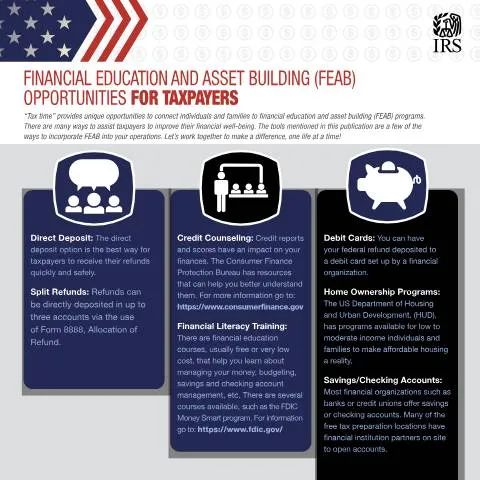
Navigating the Financial Education and Asset Building Landscape with IRS Publication 4870
Imagine you're at tax season, pondering not just how to file your taxes, but also how to enhance your financial literacy and asset-building strategies. This is where IRS Publication 4870 comes into play, a resource aimed at equipping taxpayers with essential tools for financial education and asset building (FEAB). This publication serves as a guide to help individuals and families maximize their financial potential while navigating the often-complex landscape of tax obligations.
The Crucial Timing: Understanding the IRS Calendar
Tax season is not just about meeting a deadline; it’s an opportunity to assess one’s financial health. Typically, tax returns are due by April 15 each year, but this timeline can vary slightly based on weekends and holidays. Publication 4870 emphasizes the importance of understanding this calendar, as it connects with various financial education opportunities.
- January to March: This is the preparatory phase where you gather documentation and possibly attend financial literacy workshops.
- April 15: Deadline for filing your federal tax return. Missing this deadline can lead to penalties.
- April to December: Review your financial standing and consider programs that can aid in asset building and financial education.
During this period, numerous organizations partner with the IRS to facilitate workshops and training sessions aimed at enhancing financial literacy. This is the perfect time to get involved and improve your financial skills.
The Framework of Publication 4870: More than Just a Form
Publication 4870 is not merely a document to glance over during tax season; it is a comprehensive guide that outlines financial education resources available to taxpayers. It highlights the collaboration between the IRS and various organizations to foster a financially literate community.
The publication categorizes resources into several key areas:
- Credit Counseling: Understanding credit reports and scores can empower you to make informed financial decisions. Various resources, such as those from the Consumer Finance Protection Bureau, provide insights into managing credit effectively.
- Financial Literacy Training: Free or low-cost courses are available, teaching crucial skills like budgeting and savings. Programs like the FDIC Money Smart initiative are highlighted for their accessibility.
- Home Ownership Programs: The Department of Housing and Urban Development (HUD) offers initiatives aimed at making home ownership a feasible goal for low to moderate-income families.
This publication emphasizes the idea that financial education is not a one-time event but an ongoing journey. Each section encourages taxpayers to explore the available options that can lead to better financial management.
Completing the Loop: The Process from Education to Application
Engagement with the resources mentioned in Publication 4870 can lead to meaningful changes in your financial situation. However, the journey from understanding to application is vital.
- Research: Use the resources provided to understand your financial landscape better.
- Engage: Attend workshops and participate in courses that resonate with your financial needs.
- Apply: Implement the strategies learned in real-life scenarios, such as planning for tax refunds or managing debts.
- Reflect: Continuously assess your financial standing and adapt your strategies as needed.
This cycle not only helps in managing finances but also fosters a mindset geared towards continuous improvement and adaptation, which is crucial in today’s ever-changing economic environment.
Managing Challenges: What If Things Go Wrong?
Despite the best efforts, obstacles may arise when dealing with taxes and finances. IRS Publication 4870 encourages taxpayers to be proactive in dealing with these challenges.
In Case of Errors or Missing Information
Sometimes, tax forms may be improperly filled out, or crucial documents may go missing. Here’s how to address these issues:
- Double-check your information: Before submission, ensure all details are accurate to avoid delays.
- Contact the IRS: If you discover an error post-submission, contact the IRS as soon as possible to rectify the situation.
- Follow up: Keep track of any amendments or communications made with the IRS to ensure everything is resolved.
Addressing Denials or Rejections
In the unfortunate event that an application for a credit or assistance program is denied, it’s crucial to know the next steps:
- Review the denial: Understand the reason behind the rejection to avoid similar mistakes in the future.
- Consider your options: Research alternative programs or avenues that may be available to you.
- Seek help: Engaging with financial counselors can provide additional insights into overcoming barriers.
The Impact of Financial Literacy: Real-Life Applications
Engaging with the resources listed in Publication 4870 is not just a theoretical exercise. The knowledge gained can have profound implications for your everyday life.
- Budgeting: By utilizing financial education programs, individuals can create realistic budgets that align with their income and expenses.
- Saving for the Future: Understanding different savings tools helps in building a safety net for emergencies.
- Investing Wisely: Knowledge of financial principles aids in making informed investment choices that can lead to wealth accumulation.
In essence, the practical application of these teachings can lead to a more secure financial future, reducing anxiety and improving overall well-being.
Categories of Individuals Who Benefit from Publication 4870
Not all taxpayers are the same, and IRS Publication 4870 recognizes the diversity of individual needs. Here are a few specific groups that may find particular value in the publication:
- Low-Income Families: They may benefit significantly from programs aimed at financial education and asset building.
- First-Time Homebuyers: Resources regarding home ownership can provide invaluable assistance.
- Students: Young adults entering the workforce can gain critical financial management skills that will serve them throughout life.
Each segment of the population can leverage the information in Publication 4870 to create tailored strategies that align with their unique circumstances, thereby maximizing the benefits they receive from available programs.
Final Thoughts on Utilizing IRS Publication 4870
As tax season approaches, IRS Publication 4870 stands as a beacon for those looking to enhance their financial literacy and build assets. Engaging with the resources and information it contains can lead to practical benefits in managing one’s financial health.
From understanding the tax timeline to navigating potential setbacks, this publication offers a roadmap that extends beyond mere tax compliance. It encourages ongoing engagement with financial educational resources, the application of learned skills, and a proactive approach to personal finance.
Whether you are a seasoned taxpayer or navigating the process for the first time, the tools and resources provided in Publication 4870 can make a significant difference in achieving financial security and empowering individuals to make informed financial decisions. Leverage this opportunity to invest in your financial future and build a more stable economic footing.
Understanding IRS Publication 4870: Key Areas of Focus
IRS Publication 4870 is an essential resource for taxpayers and tax professionals alike, as it provides guidance on interpreting and applying various tax laws. This publication specifically addresses topics related to the taxation of certain payments received by individuals and how these can impact both federal income tax and state benefits. Key areas highlighted in the publication include:
- Taxable vs. Nontaxable Payments: One of the primary distinctions made in Publication 4870 is the difference between taxable and nontaxable payments. Understanding this distinction is crucial for determining how much income to report on your Form 1040. For instance, certain social security benefits may not be taxable depending on your total income and filing status. This section guides readers through the complexities of what counts as taxable income, with specific examples and scenarios.
- Reporting Requirements: The publication outlines the necessary steps to accurately report received payments. Taxpayers are required to report payments received from various sources using different forms, depending on the nature of the income. For example, income from self-employment must be reported using Schedule C attached to Form 1040, while retirement distributions are reported on Form 1099-R. Understanding these requirements ensures compliance with IRS regulations and avoids potential penalties.
- Impact on Social Security Benefits: Another critical aspect of IRS Publication 4870 is its discussion of how various income levels can affect the taxation of social security benefits. Individuals who are also working while receiving social security may find that their benefits become partly taxable based on their combined income. The publication provides thresholds and examples to help taxpayers determine if they will owe taxes on their benefits.
Common Scenarios and Exceptions in Tax Treatment
Taxpayers often face unique circumstances that can lead to confusion when it comes to the tax treatment outlined in IRS Publication 4870. Understanding common scenarios and exceptions can help taxpayers ensure they are filing correctly and taking advantage of all available allowances. Here are several noteworthy scenarios:
- Multiple Sources of Income: Many individuals receive a combination of income types, such as unemployment benefits, social security, and part-time wages. Publication 4870 guides taxpayers in aggregating these income sources to assess their total income for tax purposes. For instance, if you earn wages in addition to receiving social security benefits, you must add these amounts to determine if your social security benefits are taxable.
- Filing Status Considerations: The publication reinforces the importance of understanding how your filing status—whether single, married filing jointly, or head of household—can impact the taxation of received payments. Specific thresholds for taxation on social security may differ based on the filing status, leading to variances in tax liability. Taxpayers should carefully consider how their filing status aligns with their income levels to avoid unexpected tax surprises.
- Changes in Life Circumstances: Events such as marriage, divorce, or the birth of a child can alter your tax situation significantly. IRS Publication 4870 highlights how these life changes can affect the collection and reporting of income. For example, if you were single and receiving benefits and then married, your combined income with your spouse could push your total income above the threshold for non-taxable benefits. Understanding these implications is vital for accurate tax planning and reporting.
Navigating State-Specific Tax Implications
While IRS Publication 4870 primarily addresses federal tax implications, it is crucial for taxpayers to understand that state tax laws may differ significantly. Each state has its own regulations regarding income tax, including the treatment of social security and other payments. Here’s how to navigate these state-specific implications:
- Researching State Tax Laws: Taxpayers should familiarize themselves with their state’s specific tax laws regarding income from social security and other benefits. Some states do not tax social security benefits at all, while others may apply different thresholds and tax rates. Resources such as state department of revenue websites or local tax agencies can provide up-to-date information.
- Utilizing State-Specific Forms: In addition to federal requirements, taxpayers must also complete state income tax forms that may require reporting of social security and other payments. States often have unique forms and reporting standards, which can complicate the filing process. Paying attention to these forms ensures compliance with both state and federal regulations.
- Consulting Tax Professionals: Given the complexities involved in understanding both federal and state tax implications, consulting a tax professional familiar with state-specific laws is often beneficial. They can provide tailored guidance based on the individual's financial situation and changes in tax laws, helping to minimize tax liability and maximize compliance.