Navigating IRS Publication 487: An Essential Guide for Property Owners
As a property owner dealing with tax liens, understanding IRS Publication 487 is crucial. This publication provides vital instructions for those requesting the United States to release its right to redeem property secured by a federal tax lien. When faced with the complexities of tax liens, knowing how to navigate this publication can significantly impact your property rights and financial obligations.
The Legal Framework Behind Publication 487
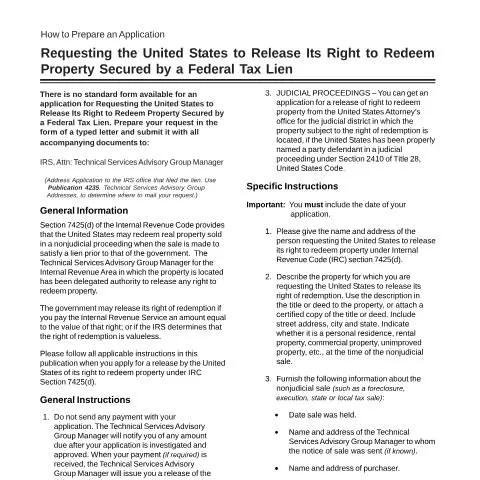
IRS Publication 487 aligns with Section 7425(d) of the Internal Revenue Code (IRC), which establishes the process by which the United States can redeem real property sold in a nonjudicial proceeding. This ensures that if a property is sold to satisfy a lien prior to the government’s, the right of redemption is clearly defined. The Technical Services Advisory Group Manager holds the authority to release this right, making it imperative for applicants to follow the guidelines laid out in the publication carefully.
This publication has seen revisions over the years, adapting to legal changes and evolving administrative procedures. As you prepare your application, understanding its historical context will help you appreciate the importance of complying with the regulations set forth by the IRS.
Step-by-Step Application Process
Initiating the application process under IRS Publication 487 requires careful attention to detail. Here’s a chronological guide to submitting your application:
- Preparation of Application: Begin by drafting a typed letter addressed to the IRS. Do not include any payment with this initial request, as you will be notified of any amounts due after the application has been processed.
- Submission: Send your application and necessary documents to the IRS office that filed the lien. Use Publication 4235 for guidance on addressing your submission correctly.
- IRS Response: After your application is reviewed, you will receive notification regarding the approval status and any required payments.
Crucial Components to Include in Your Application
When crafting your application, several specific details must be included to ensure its success. Below are the essential components:
- Name and Address: State clearly who is requesting the release along with their contact information.
- Property Description: Provide a detailed description of the property, including the title or deed information, street address, and type of property (residential, commercial, etc.).
- Nonjudicial Sale Information: Include key details about the sale, such as the date it occurred, purchaser details, and the purchase price.
- Encumbrance Details: List all encumbrances on the property, including holder information and financial specifics.
- Tax Lien Notices: Attach copies or provide details about the Notices of Federal Tax Lien affecting the property.
- Market Value Estimate: Offer an estimate of the fair market value of your property, detailing how this figure was reached.
- Contact Information: Include a phone number and email address where you can be reached for follow-ups.
A Closer Look at Encumbrances
Encumbrances can complicate the release of a property’s right of redemption. It’s vital to understand how to present this information:
| Encumbrance Type | Holder's Name & Address | Date Created | Amount Due |
|---|---|---|---|
| Mortgage | Bank Name, Address | 01/15/2000 | $150,000 |
| Property Tax Lien | County Tax Office, Address | 03/10/2020 | $5,000 |
| Home Equity Loan | Another Bank, Address | 06/25/2015 | $50,000 |
Each encumbrance must be documented accurately; otherwise, it may lead to delays in the resolution of your request.
Understanding the Aftermath: What Happens Next?
Once your application is submitted, many property owners wonder what to expect next. The IRS will conduct a thorough review to determine the validity of your request. Here’s a breakdown of the process:
- Investigation: The Technical Services Advisory Group Manager will evaluate the details provided in your application against IRS records.
- Notification: If your application is approved, you will be informed about the required payment, if applicable. If denied, you may receive an explanation; further action or documentation may be required.
- Payment Processing: Be prepared to make payments via cash, certified checks, or money orders. Uncertified funds can result in delays.
- Final Release: Once your payment is processed (if required), you will receive a formal release of the right to redeem the property.
Scenarios Requiring Special Attention
There are a variety of unique situations that may influence how you handle this process:
- Non-Purchasers: If the original property owner differs from the purchaser at the nonjudicial sale, you must clearly document this discrepancy.
- Foreign Nationals: Special rules apply if the applicant is a non-resident alien; additional identification and tax documentation may be required.
- Judicial Proceedings: Different protocols exist if the U.S government is a named party in a judicial proceeding concerning the property.
Understanding these nuances can be the difference between a successful application and a frustrating denial.
Tracking Your Application: Staying Informed
Once your application is submitted, staying informed about its status is crucial. Here’s how you can effectively track your request:
- Follow-Up: Regularly contact the Technical Services Advisory Group Manager assigned to your case. Keep your application number handy for reference.
- Document All Interactions: Keep a record of all communications and correspondence with the IRS to help resolve any issues that may arise.
- Plan for Delays: Be prepared for potential delays, particularly during peak filing seasons. Patience and persistence are key.
Being proactive in tracking your application can alleviate some of the stress associated with the process.
Conclusion: Empowering Your Property Rights
Engaging with IRS Publication 487 is not just about filling out a form; it’s about understanding your rights and responsibilities as a property owner facing federal tax liens. By meticulously following the instructions, providing accurate information, and remaining informed throughout the process, you can navigate the complexities of securing the release of a right to redeem your property effectively. Equip yourself with this knowledge, and take control of your property rights.