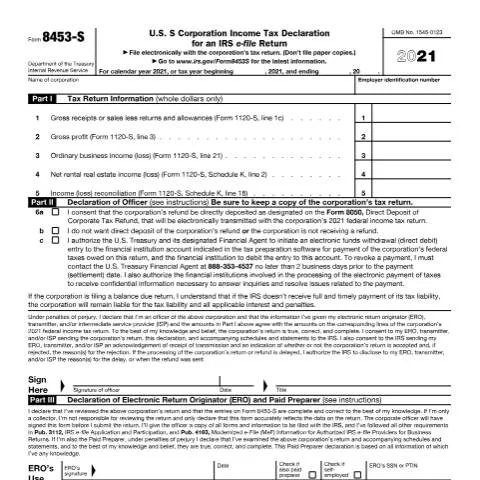
Navigating IRS Form 8453-S: A Crucial Component for Electronic Filings of S Corporations
When handling corporate taxation within the United States, understanding the intricate details of IRS Form 8453-S becomes paramount for any S Corporation. This form is not merely another piece of paperwork; it functions as a vital link in the electronic filing process, enabling corporations to authenticate their tax returns electronically. By ensuring compliance with IRS requirements, Form 8453-S safeguards both the corporation’s financial interests and its legal obligations. Let’s delve deeper into the essential aspects of this form and its role in the broader tax filing landscape.
Key Dates and Timelines: Understanding the Filing Schedule
Filing schedules can be daunting, especially with the looming deadlines that can impact your corporation's financial health. The tax year for S Corporations typically aligns with the calendar year, meaning the filing deadline is generally April 15 of the following year. However, there are crucial elements regarding Form 8453-S that deserve focused attention:
- Filing Period: Form 8453-S must accompany the electronic submission of Form 1120-S, the U.S. Income Tax Return for an S Corporation.
- Submission Protocol: Unlike traditional paper forms, Form 8453-S is strictly for electronic submissions. Do not send paper copies.
- Post-Filing Scenarios: After your submission, be aware that the IRS will issue acknowledgments regarding your return acceptance status, providing clarity on whether your filing was successful or if adjustments are needed.
The Significance of Form 8453-S within the Larger Tax Filing Process
Form 8453-S serves a pivotal role in the electronic filing ecosystem for S Corporations, acting as an authentication mechanism. Here’s how it connects to the broader tax filing process:
- Authentication: It validates your electronic Form 1120-S, ensuring the IRS recognizes it as an official submission.
- Authorization: The form authorizes the Electronic Return Originator (ERO) to file on behalf of the S Corporation, whether through a third-party transmitter or directly.
- Direct Deposits and Payments: Corporations can use this form to facilitate direct deposit of refunds and authorize electronic funds withdrawals for tax payments.
Decoding the Specifics: Detailed Breakdown of Form Sections
Understanding the nuances within Form 8453-S is critical to ensuring accurate completion. Each section of the form has specific information requirements. Let’s break down the primary components:
Part I: Tax Return Information
This section is where you input vital financial figures from your Form 1120-S:
- Gross Receipts: Carefully report gross receipts or sales, subtracting any returns and allowances. Accuracy here is crucial, as it sets the stage for further calculations.
- Ordinary Business Income: This figure reflects the corporation's primary profit. Misreporting can lead to discrepancies that may trigger audits or additional scrutiny.
Part II: Declaration of Officer
In this part, the officer of the corporation must consent to various statements, such as:
- Whether to allow direct deposit of any refunds.
- Authorization for electronic payments of taxes owed.
This section highlights the officer's responsibility and must be signed under penalty of perjury, emphasizing the seriousness of the information provided.
Part III: Roles of Electronic Return Originator (ERO) and Paid Preparer
Here, both the ERO and any paid preparer must attest to the accuracy of the information provided in the return. This declaration not only reaffirms the responsibilities of these parties but also serves as a safeguard against potential errors in the filing process.
Who Should Complete Form 8453-S? Profiling the Stakeholders Involved
Understanding who is responsible for completing this form is essential. Typically, the following stakeholders are involved:
- Corporate Officers: For any S Corporation, the officer responsible for the company's finances is usually designated to complete and sign the form.
- Electronic Return Originators: Tax professionals or software providers authorized to file returns electronically also play a crucial role in ensuring Form 8453-S is correctly filled out and submitted.
- Paid Preparers: If external tax advisors are involved, they must ensure their declarations are accurate, aligning with the signed affirmation provided by the corporate officer.
Common Pitfalls: What to Watch Out For When Completing Form 8453-S
While preparing Form 8453-S, many practitioners encounter common pitfalls. Avoiding these can save your corporation time and potential penalties:
- Incorrect Financial Figures: Double-check all amounts transferred from Form 1120-S. Any discrepancies could lead to rejections.
- Signature Requirements: Ensure the officer's signature is correctly provided. Missing signatures can result in delayed processing or return rejections.
- Submission Method: Remember, this form is exclusively for electronic submission. Sending paper copies will not meet IRS requirements.
Filing Methodologies: Online vs. Paper vs. In-Person Submission
The method you choose to submit Form 8453-S can impact the efficiency of the filing process:
| Method | Pros | Cons |
|---|---|---|
| Online | Faster processing, immediate confirmation, and easy tracking. | Requires reliable internet access and may have software fees. |
| Paper | No technology requirements; can be done without software. | Not applicable for Form 8453-S; submission will be rejected. |
| In-Person | Personal verification of submission. | Not a suitable option as Form 8453-S must be filed electronically. |
Critical Considerations: Consequences of Non-compliance and Omissions
Failing to properly complete or submit Form 8453-S can have significant repercussions:
- Penalties: If the IRS deems your submission incomplete or inaccurate, your corporation may face penalties, including fines and interest on unpaid taxes.
- Audit Risks: Inaccuracies can trigger an audit, leading to further scrutiny of your corporation’s financial practices.
- Delayed Refunds: Failure to authorize direct deposit correctly can delay any refunds due to the corporation.
Additional Resources for Navigating IRS Form 8453-S
For up-to-date information and comprehensive guidance, always refer to the official IRS website. It provides resources such as:
- The latest revisions and updates related to Form 8453-S.
- Detailed instructions for filling out the form accurately.
- Contact information for support in case issues arise during the filing process.
Understanding IRS Form F8453-S: A Comprehensive Guide
IRS Form F8453-S, or the "U.S. Individual Income Tax Declaration for an IRS e-file Signature," is an essential document for taxpayers opting to e-file their tax returns. This form serves as a signature declaration for tax returns filed electronically, ensuring that both the taxpayer and the tax preparer consent to the submission of the return. Understanding the intricacies of Form F8453-S can prevent delays in processing your return and help you avoid potential pitfalls.
Essentially, this form operates as a bridge between traditional paper filing and the digital submission environment utilized by many preparers today. By signing this form, taxpayers affirm their identity and the authenticity of their electronic filing. This is particularly crucial as tax-related identity theft becomes a growing concern. Thus, familiarity with Form F8453-S is advantageous for both taxpayers and tax professionals alike.
Who Needs to File IRS Form F8453-S?
Not everyone is required to submit Form F8453-S. Here are the primary categories of individuals who might need to file it:
- Taxpayers Using Professional Tax Preparers: If you are working with a paid preparer who files your return electronically, the IRS mandates that a Form F8453-S must be signed to confirm your consent. This is particularly true if the preparer is transmitting your return through software.
- Tax Filers with Specific Forms: Certain tax forms, such as Form 1040, require the use of Form F8453-S when filed electronically. If you are utilizing forms that need advanced calculations or additional schedules, the requirement becomes more pronounced.
- Joint Filers: Married couples filing jointly must ensure that both spouses sign Form F8453-S. This is to confirm that both parties consent to the submission of the return, and neglecting to do so can result in processing delays.
Understanding whether you need to file Form F8453-S is crucial for compliance and can assist in preventing unnecessary penalties or rejection of your electronic tax return.
Common Mistakes to Avoid When Filing Form F8453-S
Filing IRS Form F8453-S may seem straightforward, but several common pitfalls could hinder the processing of your electronic tax return. Here are some mistakes to avoid:
- Forgetting to Sign: Both the taxpayer and the tax preparer need to sign the form. A missing signature can lead to significant delays in processing your tax return, causing you to miss vital deadlines.
- Incorrect Identification Numbers: Ensure that both your Social Security Number (SSN) and your preparer's Preparer Tax Identification Number (PTIN) are filled in correctly. An error in these numbers could cause the IRS to reject your e-filed return.
- Filing Late: While Form F8453-S must accompany your electronic submission, ensure that you also adhere to the overall tax filing deadline, which is typically April 15. Failure to file on time can lead to penalties, interest on unpaid tax, and potential issues with your e-filing status.
- Not Retaining Copies: Always keep a copy of Form F8453-S and any related documentation for your records. This can be invaluable in the event of an audit or if you need to reference your filing later.
By avoiding these common mistakes, you can ensure a smoother process when filing your federal income tax return electronically.