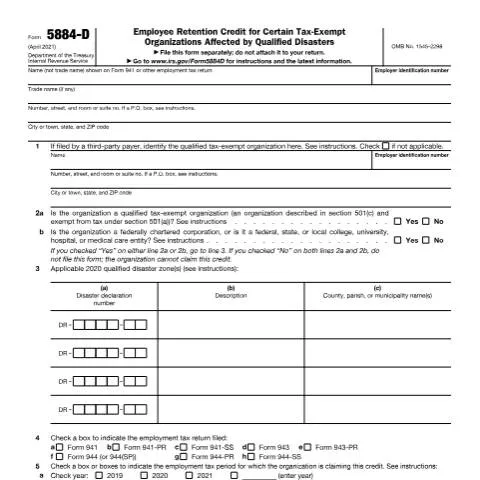
Unlocking the Potential of IRS Form 5884-D
Filing taxes can often feel like navigating a labyrinth, especially when it comes to understanding specific forms like the IRS Form 5884-D. This form, formally known as the Employee Retention Credit for Certain Tax-Exempt Organizations Affected by Qualified Disasters, plays a crucial role for tax-exempt organizations impacted by disasters. Let’s explore the intricacies of Form 5884-D, focusing on who needs it, how to fill it out correctly, and the repercussions that follow its submission.
The Significance of Form 5884-D in the Tax Filing Process
Understanding Form 5884-D requires situating it within a broader context of tax regulations. It serves as a lifeline for tax-exempt organizations dealing with the aftermath of qualified disasters. This form allows these organizations to claim the Employee Retention Credit, which can offset certain payroll tax liabilities during challenging times. Specifically, it targets organizations that align with IRS guidelines, including those classified under section 501(c) and exempt from taxation under section 501(a).
- Eligible organizations: These are primarily charities, churches, educational institutions, and other non-profit entities.
- Objective: To incentivize retention of employees during disaster recovery periods, ensuring these organizations can sustain their workforce despite financial hardships.
Who Should Complete Form 5884-D?
Deciding to file Form 5884-D is a critical step, and it’s not for everyone. Only specific organizations qualify based on IRS definitions, and understanding these criteria is essential:
Detailed Profile of Eligible Organizations
To determine if you should proceed with Form 5884-D, consider these factors:
- Tax-Exempt Status: The organization must be recognized as tax-exempt under section 501(c).
- Disaster Qualification: The organization must have been adversely affected by a qualified disaster as declared by federal authorities.
Exceptions to the Rule
Although many organizations may feel they qualify, exceptions exist:
- Non-qualified Organizations: Organizations that do not meet the criteria outlined in sections 501(c) and 501(a) cannot file this form.
- Timing of the Disaster: The disaster must align with specified IRS timelines and declarations to affect eligibility.
Step-by-Step Guide to Completing Form 5884-D
Completing Form 5884-D requires meticulous attention to detail and accurate reporting. Here’s how to navigate each section of the form:
Section Breakdown
| Line Number | Description | Key Instructions |
|---|---|---|
| 1 | Employer identification number | Provide your EIN as shown on Form 941 or other employment tax return. |
| 2 | Organization Qualification | Answer whether it is a qualified organization (501(c) and exempt under 501(a)). |
| 3 | Applicable Disaster Zones | List all disaster declaration numbers and their descriptions relevant to your organization. |
| 4 | Employment Tax Return Filed | Select the form you filed that corresponds with the employment tax period. |
| 6 | Total Qualified Wages | Calculate total wages eligible for the retention credit. |
| 12 | Credit Claimed | Enter the amount being requested for refund—this is pivotal. |
Common Pitfalls to Avoid
As you fill out Form 5884-D, keep an eye out for these frequent mistakes:
- Incorrect EIN: Double-check that your Employer Identification Number is accurate. An error here can lead to delays in processing.
- Omitting Disaster Information: Failing to specify the relevant disaster zones can lead to a rejection of your claim.
- Calculation Errors: Ensure all calculations for qualified wages are done correctly to avoid discrepancies that could hinder your credit claim.
Submitting Form 5884-D: Best Practices
Once you have completed the form, the next step is submitting it correctly. Here’s how to ensure a smooth submission:
Where and How to File
- Mail the form to the Department of the Treasury, Internal Revenue Service, Ogden, UT 84201. Be sure to send it separately from your tax return.
- Consider using a delivery method that provides tracking and confirmation.
- Make photocopies of your completed form and any supplementary documents for your records.
Important Deadlines
Filing deadlines can significantly impact your ability to claim credits. Make a note of these critical dates:
- Tax Year End: Be aware that the filing deadline for tax returns typically falls on April 15 of the following year.
- Form Submission: It is advisable to submit Form 5884-D as soon as you are ready to avoid any potential issues.
What Happens After Submission?
After you’ve mailed in your Form 5884-D, the next steps involve waiting for processing. However, understanding what to expect can be beneficial:
IRS Processing Times
The IRS generally processes forms in the order they are received. Here’s what you can expect:
- Typical processing times for Form 5884-D can take anywhere from 6 to 8 weeks.
- You will receive a notice confirming whether your credit has been approved or denied.
Responding to IRS Notifications
In the event of an approval:
- Your credit will be applied to your employment tax liabilities, which can be a significant relief during recovery from a disaster.
If your claim is denied, you will receive a detailed explanation. Here’s how to respond:
- Review the Reason: Understand the basis of the denial and whether you can rectify the issues identified.
- Correct and Resubmit: If an error was made, gather your documentation and consider reapplying with the necessary corrections.
Considering Special Circumstances
Not all situations are straightforward. Certain organizations may face unique challenges that affect their ability to file Form 5884-D:
For Foreign Entities
Organizations outside the United States seeking to claim credits must navigate additional complexities:
- Establishing your status as a tax-exempt organization under U.S. regulations.
- Understanding how foreign employment taxes intersect with U.S. tax obligations may require legal consultation.
Handling Complex or Urgent Situations
For organizations under duress due to ongoing disasters:
- Immediate filing may be critical; ensure you have all necessary documentation at hand.
- Stay abreast of any IRS notifications regarding extensions or special provisions for disaster-affected organizations.
Navigating Issues with Missing Information
It’s important to tackle missing information proactively when filing Form 5884-D:
What to Do If Information Is Incomplete
- Reach out to the IRS promptly through their official contact channels for guidance on how to proceed if you realize something is missing.
- Keep detailed records of any correspondence with the IRS regarding your inquiry or submission—this ensures transparency and accountability.
Maintaining Integrity in the Process
Under penalties of perjury, ensure all information provided is accurate. Misrepresentation can lead to severe consequences, including fines and potential criminal charges.
Final Thoughts on Leveraging Form 5884-D
Form 5884-D is more than just a tax document; it’s a vital tool for tax-exempt organizations looking to retain employees in the wake of disasters. Navigating through the complexities of this form, understanding eligibility, accurately completing every section, and submitting it correctly can significantly influence the financial stability of your organization. As you engage with the IRS process, remember that details matter—every line on that form could impact your organization's recovery efforts.
Understanding the Eligibility Criteria for IRS Form 5884-D
Eligibility for Form 5884-D hinges on various specific criteria that applicants must meet to qualify for the Employee Retention Credit. This credit is designed to incentivize businesses to keep employees on the payroll during challenging economic times, such as the COVID-19 pandemic. To ensure you qualify, you'll need to consider the following aspects:
- Business Size: The credit is available to small and midsize businesses that meet the criteria for employee count. Generally, firms with 500 or fewer employees are eligible. However, if your business has more than 500 employees, you may still qualify if you can demonstrate a significant decline in gross receipts.
- Revenue Decline: A crucial aspect of eligibility involves proving a decline in gross receipts. For the 2020 tax year, businesses must show that gross receipts were less than 50% of what they were in the same quarter of 2019. This threshold drops to a 20% reduction for 2021. Understanding your financial history is vital, so be sure to have your earnings statements and tax returns readily available.
- Impact of Government Orders: If your business was fully or partially suspended due to governmental orders during 2020 or 2021, you will likely qualify for the credit, provided the orders impacted your normal operations significantly.
- Wages Excluded from the Credit: It's important to note that not all wages qualify for the credit. Wages paid to employees who are not providing services due to a government order or other qualifying reasons can be included, but there are caps on the amount of wages eligible for the credit, particularly for high earners.
Before proceeding with Form 5884-D, ensure that you have assessed these criteria accurately. This evaluation will not only help you avoid potential penalties but will also guide you through an easier application process.
Common Mistakes When Filing IRS Form 5884-D
Even seasoned tax filers can make mistakes when filling out IRS Form 5884-D, which can lead to delays in receiving the credit or even denial of the claim. Here are some common pitfalls to avoid:
- Incorrect Employee Count: One of the first sections on Form 5884-D requires you to state your number of full-time employees. Miscounting or misunderstanding how to calculate this can result in reporting errors. Ensure you're clear on how to classify full-time employees.
- Inaccurate Reporting of Gross Receipts: Many applicants struggle with accurately calculating their gross receipts. Be mindful of what constitutes gross receipts according to IRS guidelines. If you're unsure, consider consulting your financial records or working with a tax professional.
- Neglecting to Fill Out Required Schedules: Form 5884-D may require additional schedules or worksheets to verify expenses or revenue. Failing to include these can lead to slowdowns in your application process.
- Missing Deadlines: The deadlines for submitting Form 5884-D can be confounding if you are unfamiliar with them. Stay updated on the latest IRS guidelines to ensure you do not miss critical dates. For tax credits, the filing deadline generally aligns with your business’s federal tax return due date.
To avoid these common mistakes, consider double-checking your work or seeking assistance from a tax professional. Such diligence can save you time and frustration in the long run.
How to Amend Your Form 5884-D Filing
If you find yourself in a situation where you've already submitted IRS Form 5884-D but need to correct errors or update information, the process of amending your filing is straightforward but requires attention to detail. Here is how to navigate this:
- Identify the Need for Amendment: Common reasons for amendments include calculating errors, incorrect employee counts, or missed eligibility criteria. It's crucial to identify specific inaccuracies before proceeding.
- Complete Form 5884-D Again: When amending, you will need to fill out Form 5884-D from the beginning, marking it clearly as an amendment. Include the correct information and any necessary documentation that supports your claim.
- Attach Supporting Documentation: If the amendment results from changes in your business operations or financials, provide relevant documentation. This could include payroll records, financial statements, or any government orders that impacted your business.
- Resubmit to the IRS: Send your amended form to the IRS via the appropriate mailing address indicated on the form. Make sure to keep a copy for your records and consider using a method that provides tracking.
- Follow Up: After submitting your amendment, monitor your application status, particularly if there are significant delays in processing. The IRS typically provides updates via mail.
Amending your Form 5884-D doesn’t have to be a daunting task. By carefully following these steps, you can ensure your updated information is accurately reflected in your tax records.