Navigating IRS Form 5884-C: Understanding Its Importance for Tax-Exempt Organizations
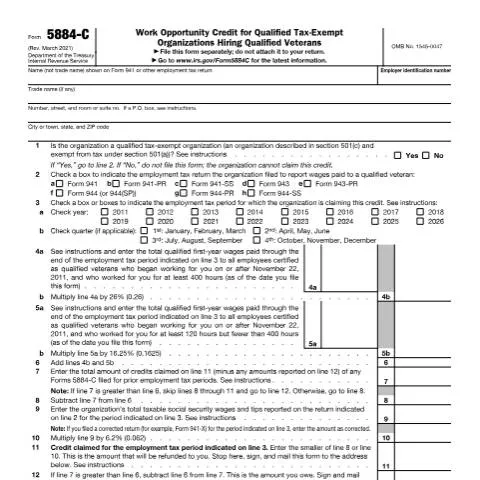
For tax-exempt organizations, understanding the nuances of IRS Form 5884-C is crucial. This form, entitled "Work Opportunity Credit for Qualified Tax-Exempt Organizations Hiring Qualified Veterans," is not just another paperwork hurdle—it represents a significant financial opportunity for eligible employers. In particular, this credit rewards organizations that hire veterans, ultimately promoting employment within this community.
Who Should Consider Filing Form 5884-C?
Before diving into the intricacies of filling out Form 5884-C, it’s essential to identify the types of organizations that should consider filing this form. The primary candidates are:
- Tax-Exempt Organizations: Organizations described in Section 501(c) and exempt from tax under Section 501(a) can claim the Work Opportunity Credit.
- Employers of Qualified Veterans: Organizations that have hired veterans who meet specific criteria, including having worked for at least 400 hours, qualify for the more substantial credit.
- Employers Seeking to Boost Workforce Diversity: The credit is designed to encourage the hiring of veterans, so organizations aiming to enhance their workforce diversity may find filing beneficial.
Understanding the Credit Calculation: A Closer Look
Calculating the credit claimed on Form 5884-C requires careful attention to detail. The form outlines two primary categories of qualified wages:
1. Employees Working 400 Hours or More
For employees certified as qualified veterans who work a minimum of 400 hours, the organization can claim a credit of 26% of the total qualified first-year wages paid through the end of the employment tax period.
2. Employees Working Fewer than 400 Hours
If the veteran works between 120 and 400 hours, the credit reduces to 16.25% of the total qualified first-year wages. Organizations should keep precise records of hours worked to maximize their claims.
| Hours Worked | Credit Percentage |
|---|---|
| 400 hours or more | 26% |
| 120 to 400 hours | 16.25% |
Key Steps to Complete Form 5884-C
Successfully completing Form 5884-C involves several critical steps:
- Initial Verification: Ensure that your organization qualifies as a tax-exempt entity as defined by IRS guidelines.
- Report Employment Tax Returns: Indicate the type of employment tax return filed (e.g., Form 941, Form 943) to report wages paid to veterans.
- Document Qualified Wages: Carefully calculate and enter the total qualified first-year wages paid to qualified veterans based on their hours worked.
- Claim the Credit: Sum the calculated credits and determine the amount to claim while ensuring no overlap with other credits.
- Submit the Form: Submit Form 5884-C separately without attaching it to your tax return.
What Happens Next: After Filing Form 5884-C
Once Form 5884-C is filed, organizations can expect a few possible outcomes:
- Credit Approved: If the IRS processes the form without issues, organizations will receive a credit that can be refunded or applied to future tax liabilities.
- Potential IRS Review: The IRS may flag certain submissions for review, especially if claims appear unusually high. Proper documentation and adherence to guidelines are crucial here.
- Rectifying Errors: If errors are found post-filing, organizations can amend their submissions via Form 941-X for correction. Careful attention to filing dates is necessary to ensure compliance.
Dealing with Complications: What to Do If Issues Arise
Organizations might encounter complications during the filing process or afterward. Here’s how to navigate these challenges:
1. Missing Documentation
If required documentation is missing, organizations should:
- Gather any available records demonstrating the employment of qualified veterans.
- Contact IRS for guidance on handling the missing information, as they may provide alternatives upon request.
2. Errors in Submission
Upon discovering errors, prompt action can mitigate repercussions:
- Use Form 941-X to amend any inaccuracies on the original submission.
- Make sure to document the changes thoroughly to present a clear case to the IRS.
3. Audit Risks
Audits can be unsettling, but preparation helps ease the process:
- Keep all records organized and readily available, including employment verification and tax documents.
- Review the organization’s claims against IRS guidelines to ensure compliance before an audit occurs.
Specific Situations: Exceptions and Considerations
Certain circumstances may influence a tax-exempt organization’s ability to claim the Work Opportunity Credit:
1. Organizations with Multiple Locations
For employers with multiple sites, special considerations apply:
- Each location can file independently, but they must report accurately on the total qualified wages to avoid double-dipping on credits.
- Tracking wages at each location is essential for accurate reporting.
2. Partnerships and Joint Ventures
In the case of partnerships or joint ventures, guidelines stipulate:
- Each partner must accurately report their share of credits based on their respective contributions.
- Documentation supporting each partner's involvement is necessary for smooth processing.
3. Foreign Organizations
International entities may face different criteria:
- Foreign organizations seeking exemption must confirm their classification under U.S. tax laws to qualify for the credit.
- Provisions for hiring veterans may vary based on international treaties and agreements.
Historical Context: Understanding the Framework Behind Form 5884-C
The Work Opportunity Credit has evolved significantly, reflecting changing labor market needs and national priorities. Originally implemented to incentivize the hiring of disadvantaged groups, the extension of this credit to veterans marks a crucial shift in supporting those who served in the military. This emphasis on veteran employment aligns with federal policies aimed at boosting job growth and economic stability in communities across the United States.
This historical context underscores the importance of tax credits like Form 5884-C as tools for not only financial relief for organizations but also as means to foster inclusion and diversity in the workforce.
Preparing for Future Changes: Staying Updated with IRS Regulations
Tax regulations, including those surrounding Form 5884-C, are subject to change. Organizations must:
- Regularly check the IRS website for updates or new guidance regarding the form and credit.
- Consider engaging with tax professionals who specialize in nonprofit tax law to navigate complex regulations.
This vigilance allows organizations to remain compliant and maximize their benefits under the evolving tax law landscape.
By diligently understanding and applying the guidelines of IRS Form 5884-C, tax-exempt organizations can not only enhance their financial health but also contribute positively to the employment landscape for veterans across the nation.
Understanding Form 5884-C: Key Definitions and Concepts
Form 5884-C, also known as the "Work Opportunity Credit," is specifically designed for employers who hire individuals from targeted groups facing significant barriers to employment. Understanding the nuances of this form is crucial for businesses looking to maximize their tax credits while ensuring compliance with IRS regulations. Here are some key definitions and concepts associated with Form 5884-C:
- Targeted Groups: This refers to specific demographics that the IRS recognizes as having difficulties in obtaining employment. These groups may include veterans, individuals receiving government assistance, ex-felons, and long-term unemployed persons. Each category comes with its own criteria and requirements, which can influence eligibility for the credit.
- Qualified Wages: Employers must determine what constitutes 'qualified wages' for their new hires. Generally, wages paid to employees during their first year of employment with the company can be considered. However, limits apply, and understanding the specific amounts can be the difference between claiming the credit or missing out on potential savings.
- Certification Process: Before claiming the credit, employers must complete a certification process indicating that the new hire belongs to a targeted group. This often involves submitting Form 8850 (Pre-Screening Notice and Certification Request for the Work Opportunity Credit) to the appropriate state workforce agency. The timeline for submission is crucial, as it must be done within 28 days of the eligible employee's start date.
Employers should keep these definitions in mind when filling out Form 5884-C to ensure they accurately represent their eligibility and maximize their potential tax savings.
Filing Procedures and Best Practices for Form 5884-C
Completing and submitting Form 5884-C can be a straightforward process if the following best practices are adhered to. Employers should consider these steps to streamline their filing procedure:
- Gather Documentation: Before filling out Form 5884-C, ensure all necessary documentation is on hand. This includes employee records, wage information, and any prior correspondence with state workforce agencies regarding certification. Having these documents ready can save time and reduce the likelihood of errors.
- Check Eligibility Criteria: Review the eligibility requirements for the Work Opportunity Credit to ensure that your business qualifies. It is vital to confirm that the new hires indeed belong to one of the designated targeted groups and that all documentation in support of this claim is accurate and available.
- Use the Latest Version of the Form: Always use the most recent version of Form 5884-C, which can be found on the IRS official website. The IRS periodically revises forms, and using outdated versions may lead to complications or even rejection of your claim.
- Consult IRS Resources: The IRS provides various resources and publications that can aid in the completion of Form 5884-C. Utilizing these resources can offer guidance on filling out the form and understanding any recent changes in tax law or filing procedures.
- Double-Check for Accuracy: Errors in your form can lead to delays or denials in processing. Ensure that all information is entered correctly, particularly Social Security Numbers (SSNs) and Employer Identification Numbers (EINs). A simple mistake can result in significant issues down the line.
- File Early: Don’t wait until the last minute to file your Form 5884-C. Early filing can provide ample time to resolve any issues that may arise, and it ensures that your claim for credits is processed in a timely manner.
By adhering to these best practices, employers can minimize the risk of complications and improve the chances of successfully claiming the Work Opportunity Credit through Form 5884-C.
Common Mistakes to Avoid When Filing Form 5884-C
When filing IRS Form 5884-C, certain pitfalls can lead to denied claims or delayed refunds. Here are some common mistakes that employers should be aware of to ensure a smooth filing process:
- Incorrect Target Group Classification: One of the most common mistakes is misclassifying an employee as belonging to a targeted group. Employers must ensure they are familiar with the criteria for each group and validate their employees’ eligibility before submitting the form.
- Failing to Obtain Certification: Many employers neglect to complete the necessary certification process via Form 8850. This pre-screening process is crucial, and failure to submit it in the required time frame can invalidate the claim for the credit.
- Inaccurate Wage Calculations: Employers often miscalculate qualified wages. It is essential to accurately track and report the total wages paid to qualified employees. Familiarity with the qualification criteria for wages can prevent errors in this regard.
- Not Retaining Business Records: Once the form is submitted, it’s important for employers to maintain all relevant records. This includes records of the employee’s eligibility and any supporting documents. The IRS may request these documents during an audit, and being unprepared can lead to significant penalties.
- Waiting Until Tax Season: Many employers wait until the end of the tax year to file Form 5884-C. It’s advisable to handle this form concurrently with payroll processing for eligible hires, as this prevents last-minute rushes and potential oversights.
By being vigilant and aware of these common mistakes, employers can streamline their process and ensure their claims for the Work Opportunity Credit are submitted correctly and efficiently.