Understanding IRS Form 1040S3S: A Crucial Step in Your Tax Journey
Filing taxes can often feel overwhelming, especially when it comes to understanding the intricate forms that accompany the process. One such form is the IRS Form 1040S3S, which plays a significant role in reporting certain non-refundable credits and payments as part of your overall tax return. Whether you are a seasoned taxpayer or filing your first return, knowing how to navigate this form is essential for ensuring compliance and maximizing your benefits. Below, we delve into the specifics of the 1040S3S, including its purpose, completion process, and the implications of its submission.
When to Prepare and Submit IRS Form 1040S3S
The timeline for submitting Form 1040S3S aligns with the general tax filing season in the United States. Typically, tax returns are due by April 15 of each year. However, it is important to note that this deadline can be pushed to the next business day if it falls on a weekend or holiday. Here’s a brief overview of significant dates you should keep in mind:
- Start of Tax Season: The IRS usually begins accepting tax returns in mid-January.
- Filing Deadline: April 15, unless extended due to weekends or holidays.
- Extended Filing Deadline: If you file for an extension, you typically have until October 15 to submit your tax return, including Form 1040S3S.
A Deep Dive into the Function of Form 1040S3S
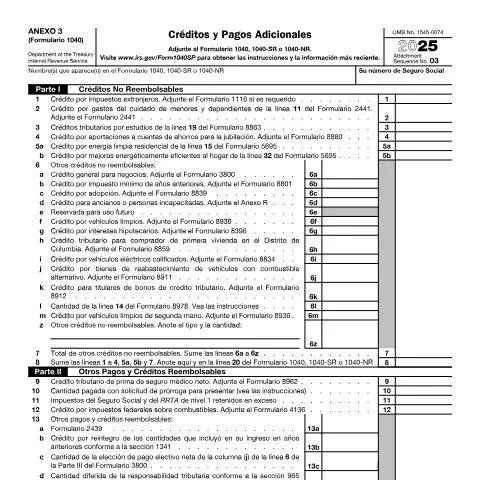
Form 1040S3S is an attachment to your main tax return—IRS Form 1040, 1040-SR, or 1040-NR. Its primary function is to detail various non-refundable credits and other payments you may claim. Understanding the specific credits listed in this form can help taxpayers reduce their overall tax liability effectively. Here’s a closer look:
Types of Credits Included
The form includes several types of non-refundable credits such as:
- Foreign Tax Credit: If you've paid taxes to a foreign government, attach Form 1116.
- Dependent Care Credit: For individuals with childcare expenses, attach Form 2441.
- Education Credits: Credits related to qualified education expenses, where Form 8863 is required.
- Retirement Contributions Credit: For contributions to retirement savings, attach Form 8880.
Each credit has specific requirements that need to be met for eligibility, often requiring additional forms to substantiate the claims made on the 1040S3S.
Who Should Be Filing Form 1040S3S?
While IRS Form 1040S3S is relevant for a broad range of taxpayers, certain profiles may find it particularly beneficial:
Taxpayers with Complex Financial Situations
Individuals who have multiple income sources, dependents, or various tax credits may find themselves needing to detail their claims using Form 1040S3S. Consider the following scenarios:
- Foreign Earned Income: Taxpayers with foreign income may claim credits to avoid double taxation.
- Education Costs: Students or parents paying for college tuition can utilize education credits.
- Dependent Care Expenses: Those with dependents who incur childcare expenses can benefit from detailed reporting.
Unique Situations: Non-Residents and Foreign Nationals
Non-resident aliens and foreign nationals filing a tax return using Form 1040N-R may also require Form 1040S3S under specific conditions. These instances involve different tax treaties and eligibility for certain credits based on residency status. Some important points include:
- Non-residents need to determine if taxes paid to their home country can be credited against U.S. taxes.
- Education credits may not apply equally to non-residents, depending on their tax treaty agreements with the U.S.
Filing as a non-resident can add layers of complexity, making it crucial to carefully review the requirements and potentially seek professional assistance.
Document Preparation and Required Attachments
The efficient completion of IRS Form 1040S3S requires a thorough understanding of what documentation is necessary. Each section of the form corresponds to specific types of credits and payments that may have additional documentation needs. Preparing ahead of time can save you from delays in processing. Below is a breakdown of common attachments required:
| Type of Credit | Required Form |
|---|---|
| Foreign Tax Credit | Form 1116 |
| Dependent Care Credit | Form 2441 |
| Education Credits | Form 8863 |
| Retirement Contributions Credit | Form 8880 |
| Residential Energy Credits | Form 5695 |
It is essential to attach these forms as applicable and ensure that all calculations are accurate to avoid any discrepancies that could lead to audits or delays.
Context and Historical Relevance of Form 1040S3S
Understanding the historical context of Form 1040S3S can provide insights into why it exists today. Tax credits have evolved through legislation aimed at encouraging specific behaviors, such as investing in education, caring for dependents, and engaging in environmentally friendly practices. Over time, the IRS recognizes the importance of these incentives in shaping tax policy. Here are some historical milestones:
- Adoption of Tax Credits: The 1986 Tax Reform Act introduced significant changes to tax credits, including education and child care credits.
- Continued Adjustments: As economic conditions change, the IRS periodically revises forms and credits to reflect current standards and practices.
This historical perspective emphasizes the importance of being aware of how these credits can affect your tax situation today.
Next Steps After Filing Form 1040S3S
Once you have filed your Form 1040S3S along with your main tax return, the journey doesn’t end there. Understanding what to expect next can help you stay proactive:
- Processing Time: The IRS typically takes between 21 to 28 days to process returns if filed electronically. Paper returns may take longer.
- Refund Status: You can check your refund status online through the IRS website, which provides real-time updates.
- IRS Communication: Be attentive to any correspondence from the IRS. If they require additional documentation, it is crucial to respond promptly.
Being aware of these steps can prepare you for any follow-up actions needed post-filing.
Understanding the Structure of IRS Form 1040-SR
The IRS Form 1040-SR, officially titled the "U.S. Tax Return for Seniors," is a simplified version of the standard Form 1040 tailored specifically for taxpayers aged 65 and older. The main aim of this form is to present a clearer layout and larger print, which helps seniors better comprehend their tax obligations and potential refunds.
One notable feature of Form 1040-SR is that it retains essential components of the standard Form 1040, such as income reporting, adjustments, and deductions, but eliminates some of the more complex aspects that are less relevant to the senior demographic. This allows for greater accessibility and ease-of-use, aligning with the IRS's commitment to make tax filing less daunting for older Americans.
For seniors, understanding the distinctions between Form 1040 and Form 1040-SR is crucial. While both forms are fundamentally similar in terms of their purpose, the 1040-SR provides a more visually accommodating format. Seniors can report income from various sources, including Social Security benefits, pensions, and wages, all within a single, easy-to-follow document.
Additionally, Form 1040-SR allows for the standard deduction, which is significantly higher for seniors. For the 2023 tax year, the standard deduction for individuals 65 and older is $1,500 more than the standard deduction for those under 65, providing a notable tax benefit.
Key Deductions and Credits Available on Form 1040-SR
When filing with Form 1040-SR, seniors have access to a variety of deductions and credits that can significantly reduce their taxable income, thereby increasing their potential refund or decreasing their tax liability. Understanding these deductions and credits will help seniors optimize their tax situation effectively.
One of the most important deductions available is the Medical Expense Deduction. Seniors can deduct unreimbursed medical expenses that exceed 7.5% of their adjusted gross income (AGI). This includes costs for prescriptions, long-term care, and qualified health insurance premiums, providing a critical financial relief avenue for many seniors facing high healthcare costs.
Another valuable tax benefit for seniors is the Credit for the Elderly or Disabled (Form 1040, Schedule R). This non-refundable credit aims to assist low-income seniors and disabled individuals, enabling them to keep more of their hard-earned money. Eligibility for this credit depends on income limits and filing status, making it essential for seniors to review their qualifications before applying.
Furthermore, seniors often have unique investment situations, such as owning rental properties or receiving income from retirement accounts, which can also impact their tax filings. Certain tax credits, like the Retirement Savings Contributions Credit (Saver’s Credit), may apply to seniors who continue to add to their retirement savings.
Navigating Tax Regulations for Seniors: Common Pitfalls and How to Avoid Them
While the IRS Form 1040-SR streamlines the filing process for seniors, there are still common pitfalls that can occur during tax season. It is crucial for seniors to be aware of these issues to avoid delays or complications with their tax returns.
One frequent mistake is failing to report all sources of income. Seniors may receive income from various streams, such as pensions, Social Security, and dividends, which all need to be disclosed on their tax returns. Missing any income can trigger audits or penalties from the IRS, so it is wise to keep thorough records of all income sources throughout the year.
Another common error is not taking advantage of available deductions and credits. Seniors may overlook medical expenses or not fully understand eligibility for the Credit for the Elderly or Disabled. Keeping detailed receipts and documentation throughout the year can help ensure that all potential deductions are claimed during tax filing.
Additionally, some seniors may misunderstand the tax implications of withdrawing money from retirement accounts. Withdrawals from traditional IRAs and 401(k) accounts are generally taxed as ordinary income, but there are specific rules regarding withdrawals post-59½ that can also provide penalty-free access to funds. Understanding these rules is critical to avoid unexpected tax liabilities.
Lastly, the timing of filing can impact a senior’s tax return. Seniors should be aware of the April 15th filing deadline and consider filing electronically, which can expedite processing and refunds. For those who may need additional time, requesting an extension through Form 4868 can provide an extra six months, but it is essential to pay any estimated taxes owed to avoid penalties.