Navigating the Complex Terrain of IRS Form 1040-SS
Understanding the intricacies of IRS Form 1040-SS can provide immense benefits for self-employed individuals residing in Puerto Rico and eligible U.S. territories. The form plays a crucial role in determining tax obligations and potential credits, especially for those claiming the Additional Child Tax Credit. When filled out correctly, it ensures compliance with federal tax laws and maximizes potential refunds, thus emphasizing its importance in the tax filing process.
Who Needs to File Form 1040-SS?
Primarily, self-employed individuals who are bona fide residents of Puerto Rico, Guam, the U.S. Virgin Islands, American Samoa, and the Northern Mariana Islands are required to file this form. The requirements extend to:
- Individuals earning income through self-employment.
- Those who received payments for services or property.
- Taxpayers who are claiming the Additional Child Tax Credit for qualifying children under specific criteria.
In certain situations, even if a taxpayer is not fully self-employed, they may still be required to file based on mixed income scenarios or filing status, emphasizing the need for understanding individual circumstances thoroughly.
Self-Employment Status
To qualify for the self-employment tax return, one must be actively engaged in business activities. The definition of self-employment can include:
- Freelancers and independent contractors.
- Small business owners.
- Individuals operating a side business while employed.
Each category has its nuances, so understanding how your income is classified is essential for accurate filing.
Decoding Each Section of Form 1040-SS
Form 1040-SS is structured in a specific manner that requires careful attention to detail. Here is a breakdown of its critical sections and what each entails:
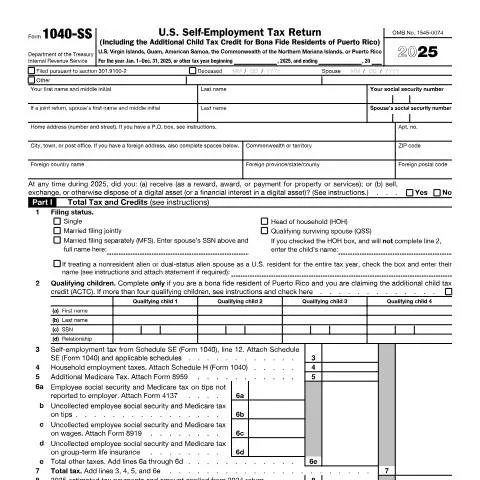
Part I: Total Tax and Credits
This part collects general information about your income and the taxes owed. Key lines include:
- Line 1: Indicates your filing status. Select from options such as Single, Married Filing Jointly, or Head of Household.
- Line 3: Self-employment tax from Schedule SE is crucial for calculating your total tax owed, as it reflects your net earnings from self-employment.
- Line 7: Summarizes your total tax obligations, which include contributions from various income sources.
Part II: Claims for Additional Child Tax Credit
For bona fide residents of Puerto Rico claiming the Additional Child Tax Credit, this section is particularly relevant. Here’s what to examine:
- Line 1: Confirms whether you have qualifying children under age 17.
- Line 2: Calculates your potential credit based on the number of qualifying children.
- Line 4: Compares your modified adjusted gross income against the limits for your filing status to determine eligibility for the credit.
Getting this part right is critical, as miscalculations can lead to missing out on significant credits.
Common Pitfalls and How to Avoid Them
The complexity of the form can often lead to errors that might delay processing or trigger audits. Here are some common pitfalls:
Missing Information
It's crucial to provide complete information, especially your Social Security Number (SSN). Failing to disclose your SSN or incorrectly inputting it can result in significant delays. Ensure:
- Every applicable field is filled out accurately.
- Joint returns have both spouses’ SSNs.
Incorrect Filing Status
Choosing the wrong filing status can drastically affect your tax outcome. Ensure you fully understand the definitions of:
- Single
- Married Filing Jointly
- Head of Household
Review IRS guidelines or consult a tax professional if uncertain.
Underreporting Income
Accurate reporting of all income sources is crucial. Underreporting due to oversight can lead to penalties. Maintain detailed records of:
- All income sources, including freelance payments and side business revenues.
- Expenses that can be deducted, making sure they are well-documented.
Documentation Checklist: What to Prepare Before Filing
Before diving into the completion of Form 1040-SS, preparing the necessary documentation is fundamental. The following items should be organized:
- Income Records: Gather all 1099 forms or any documentation reflecting your self-employment income.
- Expense Receipts: Keep detailed records for any expenses you intend to deduct.
- Social Security Numbers: Ensure you have your SSN and those of your qualifying children readily available.
Addressing Refusals, Errors, and Missing Pieces
Even with the best preparations, issues may arise during the filing process. Here’s how to handle specific scenarios:
What to Do if Your Filing is Refused
If the IRS denies your return due to errors or omissions, you will receive a notice outlining the reasons. Address these issues promptly:
- Carefully read the denial notice to understand the specific issues.
- Make corrections and resubmit the form along with any necessary documentation.
Handling Missing Information
If you realize that you missed an essential document or piece of information after submission, consider the following:
- Determine if you need to file an amended return using Form 1040-X.
- Provide accurate information and explanations for any discrepancies when contacting the IRS.
Understanding the Implications of Filing
Filing the Form 1040-SS has significant implications for your financial health. Here’s what you should be aware of:
Rights and Obligations
As a taxpayer, understanding your rights and obligations is vital. Failing to file or misrepresenting information can lead to penalties including:
- Fines and interest on unpaid taxes.
- Increased scrutiny or audits from the IRS.
Consequences of Not Filing
Not filing your tax returns can trigger severe consequences, including:
- Loss of potential refunds or credits, particularly the Additional Child Tax Credit.
- Permanent record of non-compliance, impacting future applications for loans or financial aid.
It’s essential to prioritize your tax filings to avoid these pitfalls.
The Regulatory Framework Behind IRS Form 1040-SS
Form 1040-SS is not just a tax document; it is influenced by a broader regulatory framework designed to ensure fairness in taxation. The form is governed under several federal regulations:
- Administrative Procedure Act: Ensures due process in tax administration.
- Internal Revenue Code: Outlines the specific tax laws applicable to self-employment income.
- IRS Guidelines: Establish criteria for filing and eligibility for credits.
Final Thoughts on Form 1040-SS
Navigating the intricacies of IRS Form 1040-SS necessitates a thorough understanding of both the form itself and the broader context in which it operates. Self-employed individuals in U.S. territories must remain vigilant about compliance to safeguard their financial wellbeing. Whether it's ensuring the accuracy of reporting or understanding the nuances of tax obligations, being proactive is essential in the tax filing process.
Understanding the Purpose of IRS Form 1040-SS
IRS Form 1040-SS, titled "U.S. Self-Employment Tax Return," is specifically designed for U.S. citizens or residents living abroad, particularly in countries that do not impose income tax treaties with the United States. It's a vital document for reporting income generated from self-employment, ensuring that expatriates comply with U.S. tax obligations while leveraging any applicable deductions and credits. This form is particularly relevant for self-employed individuals who are not required to file a full Form 1040 due to their unique residency status or income type.
The form is essential for calculating self-employment tax, which consists of Social Security and Medicare taxes primarily used to fund specific benefits under the Social Security Act. Understanding the nuances of this form can save expatriates money and ensure they maintain compliance with U.S. tax laws, especially since failure to file can lead to penalties and interest on unpaid taxes over time. The IRS provides specific guidelines for determining whether an individual qualifies to use Form 1040-SS rather than other forms, making it essential to review these criteria carefully.
Special Circumstances Regarding Form 1040-SS Filing
Filing Form 1040-SS may vary based on specific situations that expatriates might encounter. For instance, if an individual is a U.S. citizen but is also a resident of a foreign country, they may qualify for the Foreign Earned Income Exclusion (FEIE). This exclusion allows expatriates to exclude a certain amount of their foreign earned income from U.S. taxation, which could significantly reduce their tax liability. However, to claim this exclusion, they must also file Form 2555 alongside Form 1040-SS, establishing a connection between their foreign income and their U.S. tax obligations.
Another special circumstance to note is the impact of foreign tax credits on self-employment income. If the individual pays income taxes to a foreign government, they may be eligible for a foreign tax credit on their U.S. taxes. This credit is designed to mitigate double taxation, allowing for taxpayers to claim a dollar-for-dollar reduction against their U.S. tax liability. It's crucial to understand how these credits can interact with Form 1040-SS to ensure that the taxpayer does not overpay or underreport their income accurately.
Furthermore, expatriates need to be mindful of deadlines and regulations tied to their specific residency and income situation. For example, the standard filing deadline for Form 1040-SS is typically the same as the general tax deadline of April 15. However, those living abroad may receive an automatic two-month extension to June 15. It is important to be aware that while the extension alleviates the immediate pressure to file, taxes owed are still due by April 15 to avoid incurring interest and penalties.
Common Mistakes to Avoid When Filing Form 1040-SS
When filing Form 1040-SS, there are several common pitfalls that individuals should be aware of to ensure that their tax returns are accurate and compliant. One frequent mistake is misreporting income types. Expatriates often have multiple income streams, including wages, dividends, and rental incomes. Each type of income is treated differently for tax purposes, and failing to categorize them correctly can lead to underreporting or overreporting income, resulting in penalties from the IRS.
Another mistake is neglecting to take advantage of available deductions. Many expatriates may be unaware of deductions related to their business expenses, such as travel costs, equipment purchases, or home office expenses if they qualify. Utilizing these deductions can significantly lower taxable income, but they must be properly documented and reported on the form to be effective.
Additionally, some taxpayers fail to sign their form or neglect to include all required documentation, such as schedules or additional forms like Form 2555. Incomplete submissions can lead to delays in processing, and in some cases, a rejection of the return. It's imperative to review the filing instructions carefully and ensure all relevant information is included before submission.
Finally, expatriates should be cautious about assumptions regarding local tax obligations in their country of residence. Just because a foreign country taxes income differently or has a specific exemption does not automatically apply to U.S. tax filing requirements. Understanding the distinct requirements of both jurisdictions is critical to maintaining compliance and avoiding any legal repercussions.