Understanding the Election Form for Qualifying Transfer of Business by Insurers under Section 34CA of the Income Tax Act 1947
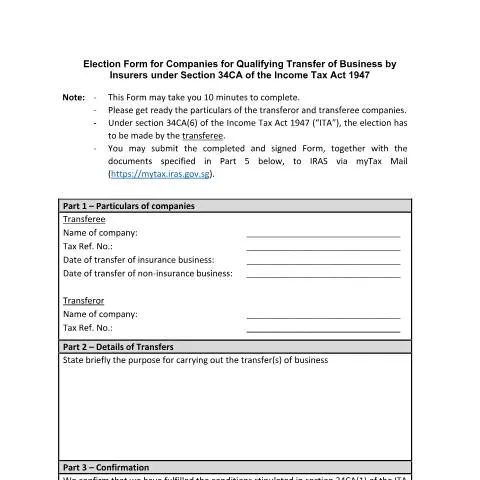
The Election Form for Companies for Qualifying Transfer of Business by Insurers is an official document issued by the Inland Revenue Authority of Singapore (IRAS). It facilitates the process for insurance companies to elect certain tax treatments related to the transfer of their business, under the provisions of Section 34CA of the Income Tax Act 1947 (ITA). This guide aims to clarify the purpose, scope, and procedural aspects of this form for relevant companies involved in such transfers.
Scope and Purpose of the Election Form
The primary purpose of this form is to formally notify IRAS of a qualifying transfer of insurance and possibly non-insurance business between companies within the insurance sector. When an insurer transfers part or all of its business to another company, certain tax implications arise, particularly concerning the treatment of gains or losses and the continuity of tax attributes.
Under section 34CA(6) of the ITA, the law stipulates that the election to adopt specific tax treatments must be made by the transferee company. This election ensures that the transfer is recognized as a qualifying transfer, allowing both transferor and transferee to benefit from the tax provisions applicable under Section 34CA.
Who Is Responsible for Submitting the Election?
The obligation to submit the completed and signed election form lies with the transferee company. This company must ensure that all relevant particulars are accurately provided, along with supporting documents, to IRAS via the myTax Mail system (https://mytax.iras.gov.sg). The submission must be made after the transfer has been executed and all conditions stipulated in the law are fulfilled.
Key Components of the Form
Part 1 – Particulars of the Companies
- Transferee: Name, Tax Reference Number, and dates of transfer for both insurance and non-insurance businesses.
- Transferor: Name and Tax Reference Number.
Part 2 – Details of Transfers
This section requires a brief statement describing the purpose of the transfer(s), providing context for the transaction and ensuring transparency for IRAS.
Part 3 – Confirmation
The companies involved must confirm that they have met all conditions specified in section 34CA(1) of the ITA, which generally relates to compliance with legal and regulatory requirements for the transfer.
Part 4 – Election Declaration
By signing this section, the companies formally elect to apply Section 34CA to their transfer. A copy of the relevant court order or legally binding agreement related to the transfer must be attached. The election is irrevocable once submitted.
Part 5 – Supporting Documents
The following documents should be submitted along with the election form, as applicable:
- A copy of the transfer proposal or agreement(s).
- A list of investment assets transferred to the transferee.
- Finalized accounts and tax computations of the transferor for the relevant assessment years.
Legal and Procedural Considerations
This process is governed by the provisions of the Income Tax Act and related regulations. The submission of the election form, together with the required documents, is a crucial step in ensuring that the transfer is recognized for tax purposes under the applicable law. IRAS emphasizes that the election once made is irrevocable, underscoring the importance of careful preparation and review before submission.
References and Further Guidance
For detailed legal and procedural guidance, companies should refer to the IRAS e-Tax Guide on the Tax Framework for Corporate Amalgamations and the specific provisions of the Income Tax Act 1947. Additional information can be obtained through IRAS’s official channels, including the IRAS website and the myTax portal.
In summary, the Election Form for Qualifying Transfer of Business by Insurers is a vital document that facilitates the correct legal and tax treatment of business transfers within the insurance sector in Singapore. Proper completion and submission ensure compliance with legal requirements and optimize tax outcomes for involved companies.