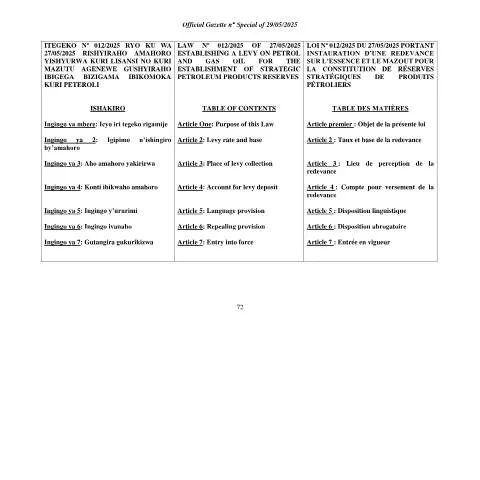
Understanding the Law on Petrol and Gas Oil Levy in Rwanda (May 2025)
The Law on Petrol and Gas Oil Levy, officially published in the Official Gazette Special of 29 May 2025, introduces a new fiscal measure aimed at supporting Rwanda’s strategic petroleum reserves. This legislation is vital for stakeholders involved in the import, distribution, and consumption of petroleum products within the country, including importers, fuel distributors, and government agencies responsible for energy security and economic stability.
Object and Scope of the Law
The primary purpose of this law is to establish a levy on petrol (gasoline) and gas oil (diesel) to fund the creation and maintenance of strategic petroleum reserves. These reserves are essential for ensuring energy security, especially during periods of supply disruptions or price volatility in the global oil markets.
This legislation applies specifically to all imports and sales of petrol and gas oil within Rwanda, with the levy being collected at the customs points in accordance with regional trade agreements, notably the East African Community Customs Management Act. It reflects Rwanda’s commitment to aligning its energy policies with regional integration efforts and sustainable development goals.
Key Provisions of the Law
Levy Rate and Base
The law stipulates that the levy on petrol and gas oil is set at FRW 50 per litre. This flat rate applies uniformly to all quantities of these petroleum products imported or sold within Rwanda, regardless of their origin or the volume involved. This standardization simplifies compliance and enforcement while ensuring a predictable revenue stream for the government’s strategic reserves program.
Collection and Deposit of Levy
The levy is to be collected at designated customs points, following procedures outlined in the regional customs management framework. Once collected, the funds are deposited into a specific account dedicated to the strategic petroleum reserves. This dedicated account ensures transparency and accountability in the management of the funds, which are crucial for maintaining the reserves and supporting energy security initiatives.
Legal and Administrative Framework
The law emphasizes the importance of clear legal provisions, including the repeal of any previous laws that may conflict with this new levy. It also specifies that the law comes into force immediately upon publication, enabling the government to implement the levy without delay.
Implications for Petroleum Sector Stakeholders
For importers and distributors of petroleum products, this law introduces an additional cost component, which may influence pricing strategies and consumer prices. However, the funds generated are intended to enhance Rwanda’s energy resilience, ultimately benefiting consumers and the economy as a whole.
Fuel retailers and consumers should be aware that the levy is embedded in the overall fuel prices at the point of sale, as it is collected at the customs level before distribution. This transparency ensures that stakeholders are informed about the purpose and use of the levy, fostering trust and compliance.
Conclusion
The Law on Petrol and Gas Oil Levy of May 2025 marks a strategic step by Rwanda to bolster its energy security framework through the creation of a robust reserve system. By setting a clear levy rate and establishing transparent collection and management procedures, the law aims to ensure sustainable funding for petroleum reserves, thereby safeguarding the country against supply shocks and market fluctuations.
Stakeholders in Rwanda’s petroleum sector should stay informed about the legal provisions and operational implications of this law to ensure compliance and contribute to national energy resilience efforts.