Understanding the Mineral Tax Law of 2024 in Rwanda
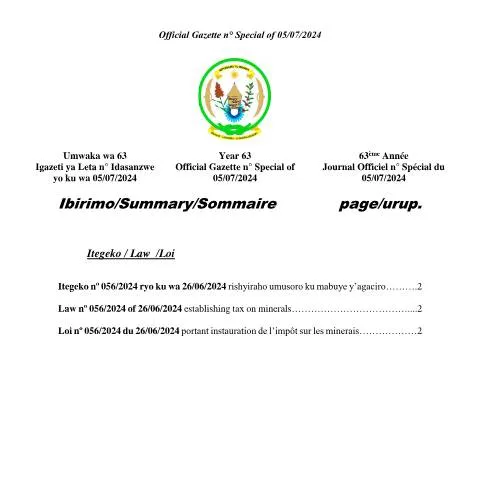
The Mineral Tax Law of 2024, officially published in the Official Gazette n° Special of 05/07/2024, marks a significant update in Rwanda's mineral taxation framework. This law aims to establish clear regulations regarding the taxation of mineral resources extracted within the country, aligning with the government's broader efforts to regulate natural resource management and revenue collection.
Objectives and Scope of the Law
The primary objective of the Mineral Tax Law of 2024 is to define the legal obligations of mineral extractors concerning tax payments, ensuring transparency and compliance in the exploitation of mineral resources. It applies to all entities involved in the extraction, processing, and export of minerals within Rwanda, including both domestic companies and foreign investors operating under licenses issued by the relevant authorities.
The law encompasses various aspects of mineral taxation, including the calculation of royalties, export taxes, withholding obligations, and exemptions. It also specifies the procedures for declaring and paying taxes, as well as the penalties for non-compliance.
Main Provisions of the Law
Taxable Minerals and Valuation
- The law distinguishes between different categories of minerals, such as those used in manufacturing and those considered rare or non-renewable.
- It introduces definitions for key concepts such as "gross value" and "net value," which are used in determining the taxable amount. Gross value refers to the mineral's market price before processing costs, while net value accounts for the processing expenses approved by the relevant authorities.
Tax Rates and Calculation
The law establishes specific rates for mineral royalties, which are calculated based on the mineral's value. These rates are set to ensure fair contribution to the national revenue while encouraging sustainable mining practices.
Export Tax and Its Implications
Export taxes are imposed on minerals leaving Rwanda, aiming to regulate the export volume and generate additional revenue. The law specifies the procedures for declaring exported minerals and paying the applicable taxes, emphasizing the importance of transparency in cross-border trade.
Declaration, Withholding, and Payment Obligations
Mining companies are required to declare their mineral production and export volumes periodically through official channels. The law details the withholding obligations of license holders, who must deduct the applicable taxes at the source and remit them to the Rwanda Revenue Authority (RRA) within stipulated deadlines.
Exemptions and Special Provisions
The law provides for specific exemptions, such as minerals used for public infrastructure or under special government agreements. It also includes provisions to prevent tax evasion and abusive arrangements, strengthening the integrity of the mineral taxation system.
Implementation and Enforcement
The Rwanda Revenue Authority (RRA) is tasked with overseeing the enforcement of this law. It will be responsible for monitoring compliance, conducting audits, and imposing penalties for violations. The law emphasizes the importance of accurate record-keeping and timely payments to facilitate effective tax administration.
Impact on Stakeholders and the Mining Sector
This legislation is expected to bring clarity and stability to Rwanda’s mineral sector, providing a transparent framework for investors and local companies. By clearly defining tax obligations and procedures, the law aims to foster a more attractive and predictable investment environment, encouraging sustainable mineral exploitation and contributing to national development.
Conclusion
The Mineral Tax Law of 2024 represents a comprehensive approach to resource taxation, aligning Rwanda’s mineral sector with international standards and best practices. Stakeholders are encouraged to familiarize themselves with the provisions of this law to ensure compliance and support Rwanda's goal of sustainable and responsible mineral resource management.