Navigating the BIR Form No. 2550Q: A Comprehensive Guide
For businesses operating in the Philippines, understanding and complying with tax obligations is critical. One of the essential documents in this process is the BIR Form No. 2550Q, also known as the Quarterly Value-Added Tax (VAT) Return. This return is not merely a formality; it plays a vital role in the broader context of the Philippines' tax system and impacts both the financial health of businesses and the fiscal responsibilities of their owners. Let’s explore the intricacies of this form, its significance, and the nuanced steps involved in successfully filing it.
Understanding the Purpose and Impact of BIR Form No. 2550Q
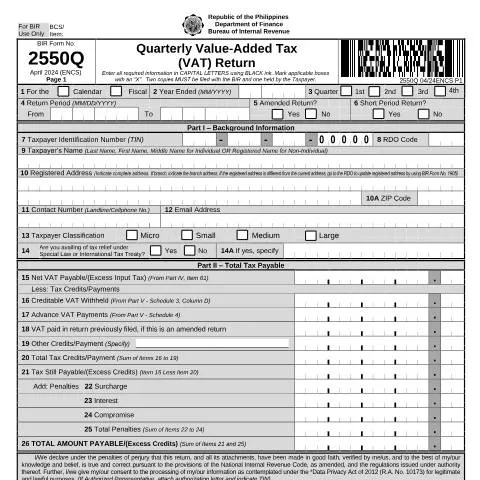
The BIR Form No. 2550Q is paramount for all VAT-registered businesses in the Philippines. This document serves as a declaration of the VAT collected on sales and the VAT incurred on purchases. The information provided in this form determines the tax payable to the Bureau of Internal Revenue (BIR) or any potential excess input tax refundable to the taxpayer.
- Taxpayer Identification: Each taxpayer must include their TIN (Taxpayer Identification Number), facilitating the BIR's tracking of tax obligations.
- Calculation of VAT: The form allows businesses to report both output tax from sales and input tax from purchases, making it essential for business owners to maintain meticulous accounts.
- Quarterly Reporting: As a quarterly return, this form necessitates timely submissions, aligning with the BIR’s calendar year deadlines to ensure compliance.
Who Needs to File BIR Form No. 2550Q?
Not all entities are required to file the BIR Form No. 2550Q. The obligation primarily falls on:
- VAT-Registered Businesses: Any business whose annual gross sales exceed the threshold established by the BIR must file this return.
- Certain Exemptions: Some organizations, such as non-profit entities, may not be subject to VAT or may have different filing requirements.
- Threshold Considerations: Businesses operating below the VAT threshold are typically subject to percentage tax instead and should consider BIR Form 2550M for monthly returns.
Understanding whether your business qualifies as a VAT-registered entity is crucial for proper compliance and avoiding penalties.
Detailed Breakdown of the Filing Process
The filing process for BIR Form No. 2550Q is critical and includes several steps that require careful attention to detail. Here is a structured approach:
Step 1: Obtain the Form
The first step in the filing process is to obtain the BIR Form No. 2550Q. This can be done through the official BIR website or authorized BIR offices. Ensure you have the most recent version, as forms are updated periodically.
Step 2: Completing the Form
When filling out the form, accuracy is paramount. The form is divided into various sections, including:
- Background Information: Include the Taxpayer Identification Number (TIN), registered name, and contact details.
- Total Tax Payable: Calculate the net VAT payable or any excess input tax from your business transactions.
- Details of Payment: Report how you will remit the payment, including payment method and relevant particulars.
It is essential to enter all information in uppercase letters and using black ink, as specified by BIR guidelines. Any mistakes or incomplete information may result in rejections or delays.
Step 3: Review and Compile Supporting Documents
Before submission, reviewing the filled-out form is crucial. Additionally, compile all necessary supporting documents:
- Receipts and invoices supporting the input and output VAT.
- Any relevant tax credit documentation.
- Proof of previous payments, if applicable.
Step 4: Submission Channels
BIR provides multiple channels for submitting the 2550Q, each with its specifics:
| Submission Method | Description |
|---|---|
| In-Person | Submit directly at the BIR Regional District Office (RDO) where your business is registered. |
| Authorized Agent Bank | Payments can be made through authorized banks where the BIR has a partnership, allowing for submission of the form simultaneously. |
| Online | Utilize the eBIRForms system, available via the BIR website, for electronic filing and payment processes. |
Choosing the appropriate submission method can streamline the process and prevent delays. Ensure to keep a copy of the filed form for your records.
Challenges in Submission: Handling Errors and Missing Information
Despite thorough preparation, issues such as errors or incomplete submissions may arise. Knowing how to address these challenges is vital:
What to Do in Case of Errors
If an error is identified after submission, taxpayers must file an amended return. This involves:
- Marking the box for "Amended Return" on the form.
- Providing all corrected information, along with any necessary supporting documents.
Dealing with Missing Information
In instances where information is missing:
- Contact the BIR RDO for guidance.
- Prepare to submit any required documentation or clarification as requested by the BIR.
Addressing these issues promptly can mitigate penalties and ensure compliance.
Profile of Filers: Variations in Filing Requirements
Different types of taxpayers may face unique requirements and scenarios when filing the BIR Form No. 2550Q. Here are a few profiles:
Corporations vs. Sole Proprietorships
Corporations may have more complex structures, potentially involving multiple branches and different types of income streams. In contrast, sole proprietorships typically have simpler tax structures but must still adhere to the same filing deadlines and requirements.
Tax Relief Provisions
Some businesses may avail themselves of tax relief under special laws or international tax treaties. It’s essential to declare this on the 2550Q to ensure compliance and to avoid any issues with tax authorities.
Foreign Entities
Foreign businesses operating in the Philippines must also file this return if they are VAT-registered. Special considerations may apply regarding residency status and the treatment of input taxes.
Understanding the Consequences of Non-Compliance
Failure to comply with the requirements of BIR Form No. 2550Q can lead to severe repercussions:
- Penalties: Delayed submissions are subject to surcharges, interest on unpaid taxes, and potential legal consequences.
- Operational Impact: Ongoing non-compliance can hinder a business’s ability to operate legally within the Philippines.
- Reputation Risks: Maintaining a good standing with tax authorities is essential for any business, as reputational damage can arise from tax-related issues.
It is crucial for businesses to prioritize compliance and stay abreast of their filing obligations to avoid these pitfalls.
Looking Ahead: Future Developments in VAT Regulations
Taxation in the Philippines, particularly concerning VAT, is subject to ongoing developments. Businesses should stay informed about legislative changes that could impact their filing obligations. Potential changes may include:
- Revisions to VAT rates or thresholds.
- Enhanced digital filing systems for improved taxpayer accessibility.
- Updates to compliance regulations that may introduce new reporting requirements.
As a business owner, being proactive about these changes can be beneficial in navigating the complexities of the Philippine tax system.
Conclusion: The Importance of Compliance and Preparedness
The BIR Form No. 2550Q is more than just a tax form; it is a crucial component of the tax ecosystem in the Philippines. Understanding its complexities, preparing diligently, and filing accurately can empower businesses to meet their obligations and thrive in a regulated environment. Continuous education and engagement with tax authorities will also foster a better understanding of the evolving landscape of VAT regulations. As the business landscape in the Philippines continues to evolve, staying informed and compliant will be key to navigating these changes successfully.
Understanding the Importance of BIR Form No. 2550Q for VAT Compliance
BIR Form No. 2550Q is essential for businesses operating in the Philippines that are registered for Value-Added Tax (VAT). This quarterly form enables the Bureau of Internal Revenue (BIR) to monitor and collect VAT efficiently, ensuring that businesses are compliant with the Republic Act No. 8424 and its amendments. Understanding the implications of this form is crucial for maintaining good standing with the BIR and avoiding penalties.
VAT is a significant revenue source for the Philippine government, making it imperative for businesses to accurately report their sales and input taxes. The importance of filing Form 2550Q cannot be overstated; it helps different stakeholders, including the government and businesses themselves. For the government, the timely and accurate completion of this form ensures the collection of tax revenues that are vital for national development and public services. For businesses, compliance not only protects them from legal consequences but also builds a positive reputation among potential clients and partners.
Moreover, companies engaging in international transactions must be particularly diligent when filing Form 2550Q. The complexities of international VAT regulations can often lead to confusion and unintended errors. Therefore, seeking assistance from tax experts or professional consultants can provide businesses with the guidance they need to navigate these complexities effectively.
Common Errors in Filing BIR Form No. 2550Q and How to Avoid Them
Filing BIR Form No. 2550Q requires attention to detail and a good understanding of VAT regulations. Common errors can lead to significant penalties or delays in processing, which can disrupt business operations. Here are some frequent mistakes to watch out for and their practical solutions:
- Incorrect Computation of VAT Payable: One common mistake is miscalculating the VAT payable based on sales and input tax claims. To avoid this, businesses should maintain accurate records of all transactions, including invoices and receipts, which can be cross-referenced during the filing process.
- Failure to Include All Sales Transactions: It's crucial to report all sales accurately, including those exempt from VAT. Businesses should implement a system to track all sales, regardless of their VAT status, to ensure comprehensive reporting on the form.
- Omitting Required Attachments: The BIR requires specific documents to accompany the filing of Form 2550Q, such as proof of payment and transaction records. Ensure that you review the list of required attachments and keep them organized to facilitate a smooth filing process.
- Late Submission: Late filing can attract penalties and interest. Businesses are advised to set reminders for the quarterly deadlines and have a submission schedule in place to avoid last-minute rushes.
Implementing a robust internal process for tracking sales and input tax, alongside regular training for staff responsible for tax filings, can significantly reduce these common errors. Furthermore, utilizing digital tools and platforms specifically designed for tax compliance may also enhance accuracy and efficiency in filing.
Navigating Changes in VAT Regulations and Their Impact on BIR Form No. 2550Q
The landscape of tax regulations in the Philippines is dynamic, with frequent updates and amendments that can impact VAT compliance. Businesses must stay informed of changes that may affect their obligations related to BIR Form No. 2550Q. For example, the implementation of the Tax Reform for Acceleration and Inclusion (TRAIN) Law introduced significant changes to the VAT system, including adjustments to tax rates and exemptions.
As a result, businesses are encouraged to regularly consult official BIR publications, subscribe to updates on the BIR website, or engage tax professionals to ensure they understand how these changes impact their filing requirements. Keeping abreast of these developments is essential not only for compliance but also for strategic financial planning.
In addition, changes in global trade regulations, such as those spurred by recent international agreements, might also influence VAT obligations. For example, businesses engaged in importing goods should be aware of how shifts in tariffs or VAT exemptions can affect their input tax claims. Staying proactive in researching these regulatory shifts can help businesses position themselves advantageously in the market.
Moreover, with the increasing digitization of tax processes in the Philippines, businesses should embrace these technological advancements for greater efficiency. The BIR encourages electronic filing and payments, which can streamline the submission of Form 2550Q and enhance accuracy. Companies should explore e-filing options to simplify their compliance processes while reducing the likelihood of errors associated with manual submissions.