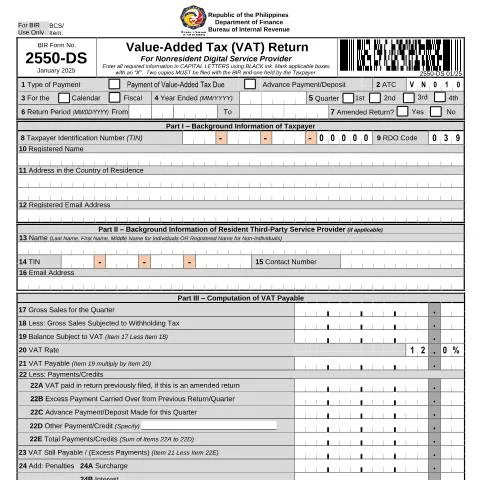
Navigating the BIR Form No. 2550-DS: A Critical Component for Nonresident Digital Service Providers
For nonresident digital service providers operating in the Philippines, compliance with the Value-Added Tax (VAT) regulations is essential. This compliance is formalized through the BIR Form No. 2550-DS, which serves as a tax return specifically designed for these service providers. Understanding the nuances of this form can significantly impact your business operations, ensuring that you both meet regulatory obligations and avoid penalties.
Decoding the BIR Form No. 2550-DS
The BIR Form No. 2550-DS is crucial for nonresident digital service providers looking to fulfill their VAT liabilities. This form not only documents the VAT collected on services rendered but also serves as the basis for the payment to the Bureau of Internal Revenue (BIR). Unlike standard VAT returns, this form emphasizes the unique situation of nonresident entities, making it essential for these businesses to understand how to complete and file it effectively.
The Unique Standing of Nonresident Digital Service Providers
Nonresident digital service providers face specific VAT obligations that differ from resident entities. The distinction primarily lies in their tax identification status and the nature of their operations. Generally, nonresidents are those who conduct business without a physical presence in the Philippines but still offer taxable services. As such, these providers must ensure they accurately report their VAT liabilities using the 2550-DS form.
Essential Steps in Completing the BIR Form No. 2550-DS
Filing the BIR Form No. 2550-DS involves several critical steps that must be meticulously followed to ensure compliance and accuracy:
- Gather Required Information: Before starting the form, collect all necessary details such as Taxpayer Identification Number (TIN), registered business name, and gross sales figures.
- Fill Out the Background Information: In the first part of the form, carefully input your TIN, RDO code, and address. Use capital letters and black ink as specified.
- Detail the VAT Computation: The VAT payable section requires precise calculations. Deduct any gross sales subjected to withholding taxes from total gross sales to find the balance subject to VAT. Multiply this figure by the applicable VAT rate.
- Sign and Declare: Upon completion, the authorized person must sign the declaration, acknowledging the accuracy of the information provided.
Each section of the form is structured to capture specific data related to your VAT obligations, making attention to detail critical.
Understanding Payment Processes and Penalties
Once the form is completed, the next step is the payment process. Understanding the payment structure is crucial for avoiding potential penalties:
- Types of Payments: The BIR Form No. 2550-DS allows for various payment methods including cash, bank debit advice, and checks. Ensure your payment method is indicated correctly on the form.
- Penalties for Non-compliance: Filing late or inaccurate forms can incur significant penalties, including surcharges and interest charges. Regularly tracking your VAT obligations through the 2550-DS can help mitigate these risks.
Deadlines and Filing Frequency
Nonresident digital service providers must comply with specific deadlines based on their return periods. The BIR requires VAT returns to be filed quarterly, with the deadline set for the 25th day of the month following the end of the quarter. For instance, returns for the first quarter, ending March 31, must be submitted by April 25.
Submitting the BIR Form No. 2550-DS: Options and Procedures
There are multiple channels available for filing the BIR Form No. 2550-DS, each with its own procedures and requirements:
| Filing Method | Description | Advantages |
|---|---|---|
| Online Filing | Utilizing the eBIRForms and the eGovPH application for electronic submissions. | Convenience: File from anywhere, receive instant confirmation. |
| Over the Counter | Physical submission at designated BIR offices or authorized agent banks. | Personal Assistance: Immediate help for any issues that arise during submission. |
| Mail Submission | Sending completed forms via postal service to the BIR. | Record Keeping: Provides a physical record of submission. |
Choosing the correct method for filing depends on the resources available to the taxpayer and their preference for handling administrative tasks.
Consequences of Inadequate Compliance
Failing to file the BIR Form No. 2550-DS can lead to serious repercussions, impacting both the business and the individual responsible for the filing:
- Legal Ramifications: Noncompliance may lead to criminal, civil, or administrative liabilities.
- Financial Implications: Businesses may incur additional taxes, penalties, or interest costs, which can significantly affect cash flow.
- Reputation Damage: Firms that show a pattern of noncompliance may find it challenging to operate in the market.
To avert such issues, maintaining up-to-date records and timely submissions is critical for nonresident digital service providers.
Taxpayer Rights and Obligations
Understanding your rights and obligations as a taxpayer is fundamental in navigating the tax landscape in the Philippines:
- Right to Information: Taxpayers have the right to receive assistance and clear information regarding their obligations.
- Obligation to Report Accurately: It is imperative that all information filed on the BIR Form No. 2550-DS is truthful and complete to avoid penalties.
- Access to Redress: Taxpayers can contest decisions made by the BIR, ensuring their voices are heard in administrative proceedings.
By understanding these aspects, nonresident digital service providers can navigate their VAT obligations more effectively and safeguard their interests.
Best Practices for Handling the BIR Form No. 2550-DS
To ensure effective filing and compliance with the BIR Form No. 2550-DS, consider implementing the following best practices:
- Record Keeping: Maintain accurate and detailed records of all transactions, ensuring that gross sales figures are readily available.
- Regular Reviews: Frequently review your VAT obligations and current regulations, as these may change, impacting how you file the form.
- Seek Professional Advice: Engage with tax professionals familiar with Philippine tax laws to ensure compliance and optimize your tax strategy.
These practices not only promote compliance but also contribute to the overall efficiency of your business operations.
Final Considerations on the BIR Form No. 2550-DS
Filings like the BIR Form No. 2550-DS is a vital step for nonresident digital service providers in the Philippines. A thorough understanding of the form's intricacies—ranging from data requirements to filing methods—ensures compliance with local tax laws, helping to avoid legal consequences and financial penalties.
As the digital landscape evolves, staying informed about your obligations as a nonresident service provider becomes paramount. Embrace these guidelines to navigate the complexities of VAT compliance successfully.
Understanding the Scope of VAT for Nonresident Digital Service Providers
In the Philippines, the imposition of Value-Added Tax (VAT) on digital services provided by non-residents reflects a growing trend in global taxation practices. Nonresident digital service providers (DSPs) are entities that deliver electronic services, such as online courses, streaming services, or software, to customers in the Philippines without having a physical presence in the country. As of January 1, 2021, under the provisions of Republic Act No. 11494 (Bayanihan to Recover as One Act), these DSPs are subjected to the same VAT regulations as local providers, thereby expanding the tax base and ensuring fair competition.
To navigate the complexities, DSPs must first determine if their services fall under the scope of VAT. Key categories include digital advertising services, subscription-based services, and other online digital products. It is essential for DSPs to assess their customer base, as VAT applicability hinges on the location of the consumer rather than the provider. A critical distinction lies in whether the service is considered a 'remote service' and whether the customer is an end-user or a business, as BIR Form No. 2550-DS specifically targets transactions with end-users.
Moreover, understanding local consumption patterns is vital. For instance, if a DSP has sufficient nexus with the Philippines through significant economic activity, even without a physical establishment, they may be deemed liable for VAT. It is advisable for DSPs to consult the Bureau of Internal Revenue (BIR) guidelines and engage local tax advisors to ensure compliance with Philippine tax laws.
Filing BIR Form No. 2550-DS: Step-by-Step Procedure
Completing BIR Form No. 2550-DS—Value-Added Tax (VAT) Return for Nonresident Digital Service Providers—requires meticulous attention to detail. The form comprises several sections, each requiring specific information about the DSP’s taxable sales, input tax, and other relevant data. Below is a step-by-step procedure for correctly filing this form:
- Gather Required Information: Before starting, ensure you have all necessary documents, including sales invoices, receipts, and any agreements with your customers in the Philippines. This also includes records of input taxes that can be claimed, which may stem from any local purchases made during the service provision.
- Download the Latest BIR Form No. 2550-DS: Obtain the most recent version of the form from the BIR website. As a digital service provider, it is crucial to use the correct form to avoid discrepancies.
- Complete the Form: Fill out the form meticulously, entering your Tax Identification Number (TIN), the period covered (indicating which quarter the return corresponds to), and the total gross sales derived from your services provided to Philippine clients. Ensure to categorize sales as either zero-rated or exempt, based on the nature of your services.
- Calculate VAT Payable: The VAT rate for most digital services is set at 12%. Multiply your gross sales by this rate to determine your VAT liability. Ensure that any input tax calculations are accurate, as they can greatly affect your net VAT payable.
- Submit the Form: Depending on whether you choose e-filing or manual submission at the nearest BIR office, ensure you adhere to the filing deadlines. For quarterly returns, these are typically due within 25 days following the end of the applicable quarter.
- Make Payment: If you owe VAT, make sure to settle the payment either online through the eBIRForms or through authorized banks. Keep a record of your payment receipt, as this may be required for future reference.
Through this meticulous process, DSPs can ensure compliance with local tax regulations, thereby minimizing the risk of penalties associated with late filing or inaccuracies.
Common Challenges Faced by Nonresident Digital Service Providers
While the integration of nonresident digital service providers into the VAT framework is a significant step forward, it is not without its challenges. Here are some common hurdles that DSPs may encounter while navigating the Philippine tax landscape:
- Cultural and Language Barriers: Nonresident providers may struggle with communication and understanding local tax regulations due to cultural differences and language barriers. Engaging a local tax consultant or legal advisor can help bridge this gap and provide clarity on obligations.
- Changes in Tax Regulations: The Philippine tax landscape is dynamic, with frequent updates to regulations. DSPs must stay informed about changes to VAT policies, compliance requirements, and forms to ensure they meet their obligations promptly. Subscribing to updates from the BIR and engaging in tax seminars can be beneficial.
- Technical Challenges: E-filing and online payment systems can present technical difficulties for DSPs unfamiliar with local platforms. It is advisable to familiarize oneself with the eBIRForms application and seek assistance if technical issues arise during submission and payment processes.
- Discrepancies in Tax Remittance: Errors in reporting sales and VAT remittance can lead to audits and potential penalties. Nonresident providers should maintain organized records and consider periodic audits of their accounts to ensure accuracy and compliance with Philippine tax laws.
Addressing these challenges is crucial for nonresident digital service providers to operate successfully in the Philippines while ensuring compliance with local regulations.