Navigating the IR429 Form: A Comprehensive Guide for Employers
When you're managing a workforce in New Zealand, keeping track of fringe benefits tax (FBT) can feel daunting, especially when it involves completing the official IR429 2026 form. This document is essential for employers who provide certain fringe benefits to their employees. Understanding how to properly fill out this form is crucial for compliance and for avoiding penalties.
Understanding the Unique Role of the IR429 Form
The IR429 form has a specific purpose that distinguishes it from other tax-related documents. Unlike the IR3 (individual tax return) or IR4 (company tax return), the IR429 is specifically designed to report fringe benefits provided to employees. This can include a wide variety of benefits—everything from employees' use of company vehicles to subsidised transportation and contributions to superannuation schemes.
Employers must submit the IR429 annually if they’ve paid FBT, ensuring the tax is calculated on the different benefits provided throughout the year. The form captures essential details that inform the tax office about the taxable values of these benefits, helping determine how much FBT is owed.
Who Needs to Submit the IR429 Form?
Any employer who offers fringe benefits to their staff is required to submit the IR429. This includes:
- Small businesses with a handful of employees.
- Large corporations that offer extensive benefits packages.
- Non-profit organisations providing benefits to their staff.
In short, if you’re an employer and you provide benefits that include the use of vehicles, subsidised transport, or low-interest loans to your employees, you’ll need to file this form.
Breaking Down the IR429: Sections and Common Pitfalls
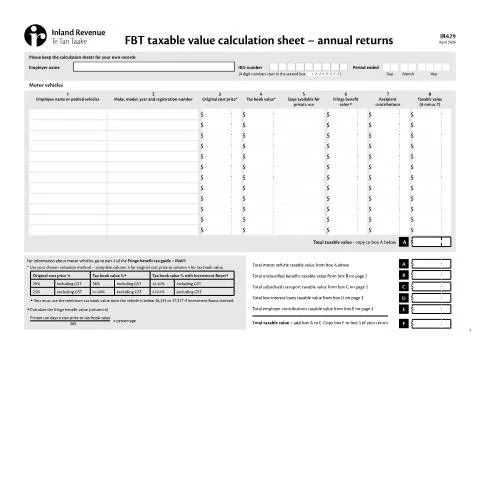
The IR429 is divided into several sections, each dedicated to specific types of fringe benefits. Being familiar with these sections is crucial for accurate reporting. Here’s a detailed look at each section and common mistakes to avoid:
1. Motor Vehicles
This section requires you to report on vehicles provided to employees. Details needed include:
- Employee’s name or pooled vehicle identification.
- Make, model, year, and registration number of the vehicle.
- Original cost price or tax book value.
- Days available for private use.
Common pitfalls include miscalculating the fringe benefit value. Ensure you’ve calculated the values for private use accurately by using the correct percentages based on the evaluation method chosen (original cost or tax book value).
2. Unclassified Benefits and Gift Cards
This section is for benefits that don’t fit neatly into other categories, such as gift cards or discount vouchers. You need to accurately report:
- The description of the benefit.
- The fringe benefit value.
- Any recipient contributions.
A frequent error is failing to report benefits that exceed the annual limit per employee. Remember, if the annual amount is $2,000 or more, it needs to be documented.
3. Subsidised Transport
If you offer subsidised transport, this part of the form is essential. The required information includes:
- Employee name or pooled transport identification.
- Description of the subsidised transport provided.
- Fringe benefit value for each employee.
Errors often arise in determining the fringe benefit value. Make sure you’re aware of the maximum fares set by public transport systems, as this can affect the value you report.
4. Low-Interest Loans
For employers who provide low-interest loans, this section is crucial. Data points to report include:
- Employee name.
- Loan year granted.
- Interest rate.
- Prescribed or market rate interest.
- Actual interest charged.
Common mistakes include not calculating the taxable value correctly, which is the difference between the prescribed interest rate and the actual interest charged. This can result in underreporting your taxable values.
5. Employer Contributions to Funds
This section requires you to report contributions made to various funds, such as:
- Sickness, accident, or death funds.
- Funeral trusts.
- Superannuation schemes.
Ensure you do not confuse types of contributions, as each has different reporting requirements. Contributions for superannuation schemes are particularly significant, as they may not be subject to the same deductions as regular salary payments.
Preparing Your Supporting Documentation
Before filing the IR429, it's essential to prepare supporting documentation for each section. This includes:
- Invoices and receipts for vehicles and other assets.
- Calculations for fringe benefit values.
- Records of employee contributions.
Gathering these documents early will make filling out the form easier and ensure you have all necessary information at your fingertips.
Channels for Submission: Online vs. Paper
Employers have different channels to submit the IR429. Whether you choose to file online or via paper forms can affect the processing time:
Online Submission
Filing online through the official tax website is generally more efficient, as it allows for immediate validation and processing:
- Faster feedback on submission status.
- Built-in prompts to reduce errors.
- Access to RealMe digital ID for secure logins.
Paper Submission
Filing by mail or in person at designated offices may take longer and could be prone to errors due to manual entry. Consider the following:
- Longer processing times.
- Potential for lost paperwork.
- Manual entry errors once received.
Ultimately, online submission is recommended for most employers seeking to ensure accurate and timely processing of their IR429.
Post-Submission: What Happens Next?
Once you’ve submitted your IR429, monitoring the status of your submission is essential, especially if you’ve filed it online. You can track your return via the same platform you used to submit it.
Getting Updates on Your Submission
After submission, the tax authority will assess the information provided. If there are any discrepancies or issues, you may receive a notification requesting additional information or clarifications. It’s important to respond promptly to any inquiries.
In Case of Errors or Missing Information
If you discover an error after submission or if you receive a notice regarding missing information:
- Prepare any required additional documents.
- Contact the relevant tax authority for guidance on how to amend your submission.
- Follow the instructions carefully to avoid penalties.
Being proactive in handling any issues that arise post-submission can help mitigate potential penalties and ensure compliance.
Common Challenges and Solutions When Filling Out the IR429
Even with a clear understanding of the form and its requirements, employers often encounter challenges. Here are some common issues and practical solutions:
1. Miscalculating Fringe Benefit Values
Accurately calculating the fringe benefit values is crucial but can be complicated. To prevent errors:
- Double-check your calculations using simple formulas.
- Refer to the IR409 Fringe Benefit Tax Guide for detailed methodologies.
2. Keeping Track of Employee Benefits
Employers may struggle to keep accurate records of all benefits provided, especially in larger businesses:
- Implement a tracking system that records each benefit provided to employees.
- Regularly update this system to ensure that all information is current.
3. Late Submissions and Penalties
Filing late can lead to penalties. To avoid this, consider:
- Setting reminders for submission deadlines.
- Utilising an online calendar to keep track of important tax dates.
Understanding the intricacies of the IR429 form is essential for employers aiming to stay compliant with New Zealand tax regulations. By familiarising yourself with each section, preparing the necessary documentation, and choosing the right submission channel, you can navigate the process more smoothly and effectively.
Final Touches: Ensuring Compliance and Accuracy
Filling out the IR429 accurately requires careful attention to detail. Be diligent in collecting the right information and documentation, and do not hesitate to consult resources provided by the tax authority or seek professional advice if you encounter complex issues. By taking these steps, you can avoid common pitfalls and uphold your obligations as an employer in New Zealand.
Understanding IR429 for Tax Residency in New Zealand
When dealing with tax responsibilities in New Zealand, the IR429 form plays a crucial role for individuals and entities. Essentially, the IR429 is utilized to determine your tax residency status, which is fundamental as it influences your tax obligations and requirements within the New Zealand tax system. Understanding the nuances involved in determining tax residency is essential, as it directly impacts how and when you file your taxes.
The residency status under New Zealand's tax legislation is categorized into three main types: resident, non-resident, and transitional resident. A resident is generally defined as someone who has a permanent place of abode in New Zealand or who meets the "183-day" rule, which states if you are physically present in the country for more than 183 days in any 12-month period, you are deemed a resident for tax purposes.
On the other hand, non-residents are typically those who do not meet these criteria. However, a transitional resident is a unique classification applicable to individuals who have migrated to New Zealand and have been non-resident for tax purposes in the prior 10 years. Understanding where you fit within these categories can save you from potential complications and ensure compliance with the New Zealand tax regulations.
It's important to note that tax residency in New Zealand can be complicated by factors such as international treaties, dual residency situations, and the specifics of income sources. Therefore, providing detailed information on the IR429 form is vital. Ensure all taxation and residency details are accurate to facilitate the IRD's review process. Misinterpretations can lead to challenges, including higher tax liabilities or issues with your immigration status if applying for specific visas that require tax compliance.
Common Mistakes on the IR429 Form
Completing the IR429 form correctly is essential to ensure that your tax residency status is accurately assessed. However, many individuals make common mistakes that can delay processing or lead to incorrect tax classifications. Here are some frequent errors to watch out for:
- Inaccurate Personal Details: Ensure that all personal information is correct, including your name, address, date of birth, and IRD number. An incorrect IRD number can lead to significant delays in processing.
- Misunderstanding Residency Criteria: It's vital to accurately interpret your residency status. Some individuals might mistakenly believe they qualify as residents based on previous years' residency or are unaware of the nuances surrounding the "183-day" rule.
- Forgetting to Include All Relevant Income Sources: When detailing your income, ensure that all sources—be it salary, rental income, or overseas earnings—are included. Omitting any income could result in incorrect tax assessments.
- Neglecting to Seek Professional Advice: Tax situations can be complex, particularly for expatriates or those with income from multiple countries. Seeking advice from a tax professional can provide clarity and prevent mistakes.
To mitigate these errors, review your form multiple times for accuracy and clarity. It’s advisable to consult with tax professionals or access the resources provided by the IRD for guidance on the correct completion of the IR429 form.
Implications of Non-Compliance with Tax Residency Regulations
Non-compliance with New Zealand’s tax residency regulations can carry serious repercussions. This extends beyond financial penalties and may affect your immigration status, especially if you are on a temporary visa or seeking residency. Understanding the implications of non-compliance is critical for anyone living or working in New Zealand, whether they are citizens or foreign nationals.
If you fail to file your taxes based on your residency status, you may face back taxes, interest, and penalties from the Inland Revenue Department (IRD). The IRD has a robust framework for identifying non-compliance and can audit your financial records, potentially leading to significant tax liabilities if discrepancies are found.
Moreover, non-compliance can affect your eligibility for certain visas. For example, the New Zealand government values compliance and good standing with tax obligations when assessing applications for residence or work visas. A history of tax evasion or non-compliance could jeopardize your visa status and future immigration plans.
Additionally, it is important to recognize that New Zealand is part of international tax arrangements, including treaties that aim to prevent double taxation and tax evasion. If you are involved in international business or have income from overseas, failing to comply with tax residency regulations could not only affect your standing in New Zealand but may also have implications in other jurisdictions.
To avoid these adverse effects, it is crucial to stay informed about your tax obligations and ensure regular compliance with New Zealand’s tax laws. This not only protects your financial well-being but also supports your status and future opportunities within the country.