Navigating the IR920: Integrating Your PAYE Intermediary
When you’re embarking on employing staff in New Zealand, understanding the IR920 form is essential. This document is not merely a bureaucratic step but a critical piece in ensuring that your PAYE (Pay As You Earn) obligations are properly managed. By linking your employer details to a PAYE intermediary, you streamline payroll processing and tax compliance. Let’s delve into the specifics of the IR920 2023 form, from its historical context to the nuances of its completion and submission.
The Historical Background of IR920
The IR920 form has evolved alongside New Zealand's taxation and employment landscape. The Inland Revenue Department (IRD) introduced this form to assist employers in effectively managing their PAYE responsibilities with the help of intermediaries. Since its inception, the form has undergone revisions to keep pace with changes in employment law, tax regulations, and digital processing standards.
In recent years, New Zealand has emphasized the importance of compliance and transparency in tax reporting, leading to a more structured approach to employing staff. The Official Information Act 1982 and the Plain Language Act 2022 highlight the government’s commitment to making administrative processes accessible and understandable for all citizens.
Understanding the Role of the PAYE Intermediary
A PAYE intermediary is an organization or individual that manages payroll on behalf of employers. This role is crucial, as the intermediary assumes responsibility for withholding employee taxes and making the necessary payments to the IRD. The IR920 form links you, the employer, with your chosen PAYE intermediary, ensuring that both parties are aligned in fulfilling tax obligations.
Step-by-Step Completion of the IR920 Form
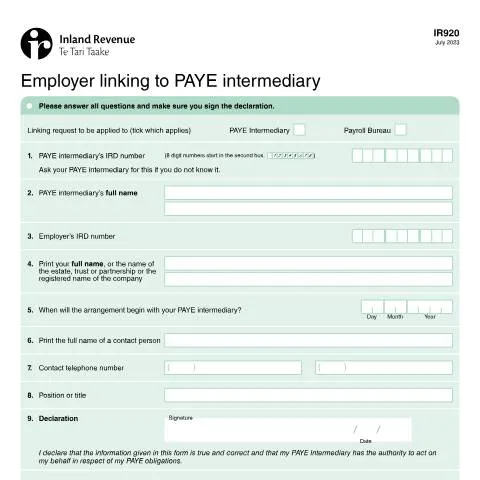
Completing the IR920 form requires careful attention to detail. Here’s a breakdown of the sections you will encounter in the form:
- PAYE Intermediary’s IRD Number: This unique 8-digit number begins in the second box. If you are unaware of this number, consult your PAYE intermediary for assistance.
- PAYE Intermediary’s Full Name: Enter the official name as registered with the IRD.
- Employer’s IRD Number: This is essential for linking your business correctly within the tax system.
- Full Name: Print your name or the name of your business entity.
- Arrangement Start Date: Specify the date on which you will begin this arrangement.
- Contact Person’s Name: Include the full name of the individual who will be the point of contact.
- Contact Telephone Number: Provide a valid contact number for communication.
- Position or Title: State your position within the organization.
- Declaration Signature: Your signature confirms the accuracy of the information provided.
- Date: Lastly, indicate the date you completed the form.
Important Details for Accurate Completion
While filling out the IR920, ensure that all information is accurate and up to date. Any inaccuracies can lead to delays or complications in processing. Here are a few tips:
- Double-check the IRD numbers.
- Confirm the start date is realistic and allows for necessary adjustments.
- Ensure your declaration is signed and dated to validate the form.
Submission Process: Where and How?
Once you have completed the IR920 form, you will need to submit it to the IRD. The submission process is straightforward:
Post this form to: Inland Revenue, PO Box 39984, Wellington Mail Centre, Lower Hutt 5045
Ensure that your form is securely packaged to prevent any loss or damage during transit. Additionally, consider sending it via a trackable delivery service for peace of mind.
When to Expect a Response
Once submitted, the IRD generally processes IR920 forms in a timely manner. However, the exact timeframe can vary based on their current workload and any particular complexities related to your submission. To keep track, you can reach out via the IRD’s digital services or contact their support team directly.
Post-Submission: The Next Steps
After submitting the IR920, your responsibilities as an employer shift to maintaining communication with your PAYE intermediary. They will handle the ongoing calculations and payments of PAYE on your behalf.
However, it's important to periodically review your payroll statements and tax obligations. Regular communication with your intermediary can help ensure that any issues are addressed promptly.
Monitoring Your Payroll Compliance
Maintaining compliance involves understanding your obligations and verifying that your intermediary is fulfilling them correctly. Here are some practical steps:
- Request regular updates or statements from your PAYE intermediary.
- Stay informed about potential changes in tax regulations that may affect your payroll.
- Schedule periodic reviews with your intermediary to align on processes and expectations.
Handling Complications: What If Things Go Wrong?
Despite careful preparation, complications may arise during the completion or processing of the IR920. Common issues include missing information, incorrect IRD numbers, or delays in processing. Here’s how to navigate these situations:
- Upon Receiving a Rejection: If your form is rejected, the IRD will typically provide reasons for the rejection. Review their feedback thoroughly to address any discrepancies before resubmitting.
- In Case of Missing Documentation: If any supporting documents are missing, promptly gather the requested information and submit it to the IRD. Delays can result in penalties or complications.
- Resolving Errors: If you discover errors post-submission, contact the IRD immediately to rectify the situation. They are generally receptive to corrections if they are reported in a timely manner.
Understanding Specific Cases: Foreign Employees and Minors
Special considerations apply when employing foreign nationals or minors:
- Foreign Employees: If you are employing non-residents, special tax regulations may apply. Ensure that your PAYE intermediary is equipped to handle these complexities, especially regarding withholding rates and eligibility for tax credits.
- Employing Minors: Ensure compliance with local labor laws regarding working age, hours, and conditions. Consulting with your PAYE intermediary can provide clarity on how these factors affect your payroll obligations.
Conclusion: Empowering Your Payroll Management with IR920
Engaging with the IR920 form is not just about ticking boxes; it’s about establishing a reliable framework for your PAYE management through a capable intermediary. By understanding each element of this process, you position yourself to effectively manage payroll compliance in New Zealand’s dynamic employment landscape.
Stay proactive, maintain open lines of communication with your PAYE intermediary, and continuously educate yourself on evolving regulations to ensure that your business thrives in a compliant manner.
Understanding the IR920 Form: Key Elements for Tax Compliance
The IR920 form, officially referred to as the “Application for a Tax Code,” is an essential document that individuals and businesses in New Zealand need to master for tax compliance. It serves as a request for a specific tax code assigned by Inland Revenue (IRD). Understanding the nuances of this form can significantly affect financial planning and tax obligations. The right tax code will influence withholding tax rates on your income, ensuring that you either pay the correct amount upfront or receive the appropriate refunds upon filing your tax return.
When filling out the IR920, specific elements require meticulous attention. Firstly, the applicant must provide their IRD number, which is unique to each taxpayer, and crucial for processing the application. Furthermore, applicants need to indicate their employment status, whether they are self-employed, employed, or receiving a government benefit. This status will determine the tax code assigned, as different categories have varying withholding rates.
Another critical component is detailing any other income sources, such as rental or investment income. This information helps the IRD assess the overall tax implications accurately. It's also advisable to understand the implications of the "M" (Main income) tax code versus the "S" (Secondary income) tax code, which comes into play for those with multiple income streams. Misclassification can lead to either overpayment or underpayment of tax, resulting in penalties or unwanted tax bills down the line.
For those unsure about their eligibility for specific codes, the IRD provides resources and guidance on their official website. Utilizing these resources can prevent errors that lead to compliance issues. Once the IR920 is completed, it can be submitted online through the IRD's digital platform, promoting a more streamlined process aligned with the country’s emphasis on digital services. It's important to keep a copy of the submission for personal records, as this can prove useful during future tax return processes.
Common Mistakes When Submitting the IR920 Form
Even with the straightforward nature of the IR920 form, taxpayers still fall prey to common errors that can complicate their tax situation. Awareness of these pitfalls is crucial for ensuring that your tax matters remain on track. One frequent mistake is neglecting to provide accurate personal details, such as your full name or address. Any discrepancies in this information can delay processing or lead to miscommunication with the IRD.
Another mistake involves misjudging the applicable tax code. Many applicants do not fully understand their income types or fail to disclose all income sources. For instance, if someone is employed part-time while also receiving rental income, they should declare both on the IR920. Choosing the wrong tax code can result in unexpected tax liabilities, especially if you accidentally declare all income under a secondary tax code without realizing the implications.
Additionally, failing to submit the IR920 on time can have consequences, such as delayed tax assessments or misalignment with your fiscal year. It is advisable to submit the IR920 as early as possible when starting a new job or when there is a change in your income situation. Utilizing the IRD’s RealMe digital ID for streamlined submissions can also facilitate timely completions.
Lastly, it’s essential to keep abreast of any changes in tax laws or codes, as these can affect your filings. The IRD regularly updates its guidelines, and being informed can save you from costly mistakes. Regularly checking the IRD’s announcements or subscribing to their newsletters can enhance your awareness and ensure compliance when submitting the IR920 form.
Resources for Navigating the IR920 Form Process
For anyone looking to navigate the IR920 form process more effectively, a variety of resources are available to assist taxpayers in understanding and completing this critical document. The IRD's official website is the primary resource, offering comprehensive guides, FAQs, and tutorials on how to fill out the IR920. These materials are designed to be user-friendly, embodying the principles of the Plain Language Act 2022, ensuring taxpayers can easily comprehend their obligations.
Furthermore, community organizations and tax advisory services can provide personalized support, especially for those who may find the process overwhelming. These organizations often host workshops and information sessions that demystify the tax code system and offer insights on tax planning strategies. Engaging with such community resources can help taxpayers make informed decisions and avoid the stress that often accompanies tax season.
Additionally, the IRD has embraced modern technology by providing an array of online tools and calculators that facilitate the tax process. Utilizing these digital resources can help taxpayers estimate their tax obligations based on their income and selected tax codes. Moreover, forums and online communities focused on New Zealand tax matters can offer peer support and shared experiences that might resonate with your own circumstances.
Lastly, taxpayers should not overlook the benefits of speaking directly with IRD representatives. The customer service team is trained to assist with inquiries related to the IR920 form and can clarify doubts or provide additional context regarding any recent changes in policies. Utilizing all these resources can empower individuals and businesses to complete the IR920 form accurately and efficiently, ensuring a stress-free tax experience.