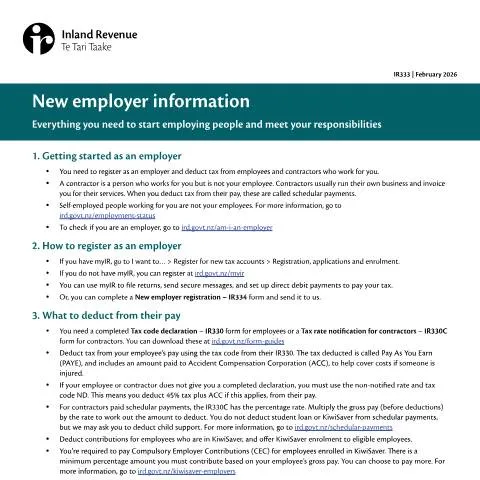
Understanding the IR333: A Critical Step for New Employers
Entering the realm of employment in New Zealand brings with it a host of obligations and responsibilities. Among these, the IR333 form, officially titled New Employer Information, plays a pivotal role. As you step into the shoes of an employer, understanding the nuances of this form can significantly influence your compliance and operational effectiveness.
The Role of the IR333 in Your Employment Journey
At its core, the IR333 form is not just a bureaucratic hurdle; it serves as a foundation for registering as an employer with the Inland Revenue Department (IRD). This registration is crucial for any entity intending to hire staff, as it establishes the legal framework for tax deductions, compliance with employment laws, and general accountability in your new role as an employer.
By completing this form, you signify your commitment to adhering to New Zealand's regulatory standards concerning taxation and employment practices. It is the first step in a broader sequence of actions that will form the backbone of your payroll and tax processes.
What Happens After Submission?
Once the IR333 form is submitted, the IRD will process your application and provide you with an Employer's IRD number. This number is essential for reporting and paying taxes on behalf of your employees. It also allows you to manage PAYE (Pay As You Earn) deductions effectively.
Step-by-Step Guide to Completing the IR333
Completing the IR333 requires careful attention to detail. Here is a structured approach to filling out the form:
- Gather Necessary Information: Before you begin, ensure you have all relevant information at hand. This includes your business details, the nature of your business, and any existing tax information.
- Navigate to the Form: Access the IR333 form through the IRD website. If you have a myIR account, you can directly fill it out online, which is often the preferred method for many new employers.
- Complete the Form: Fill in all required fields accurately. Pay special attention to sections that pertain to your business structure and anticipated payroll obligations.
- Review Your Submission: Double-check all entries for accuracy to avoid delays in processing.
- Submit the Form: Depending on your preference, you can submit the form electronically or print and mail it to the IRD. Electronic submissions are recommended for their speed and efficiency.
The Importance of Timely Submission
Timeliness in submitting the IR333 form cannot be overstated. Ideally, you should complete this form prior to hiring your first employee. Early submission allows you to establish your obligations under New Zealand law without the complications of retroactive adjustments.
New employers should be aware that any delays in registration can lead to complications with payroll processing and tax compliance, which may incur penalties from the IRD. The goal is to ensure that all processes are in place before employees begin their work, ensuring a smooth onboarding experience.
Documentation and Information Required
Completing the IR333 form requires specific information to validate your employer status. Here's a comprehensive list of what to prepare:
| Document | Description |
|---|---|
| Business Registration | Proof of your business establishment, such as a certificate of incorporation or registration. |
| IRD Number | Your existing IRD number if applicable; essential for tax purposes. |
| Details of Employees | Information about your expected employees, including their roles and anticipated salaries. |
| Tax Information | Any previous tax obligations that may impact your new employer responsibilities. |
Having this information ready will streamline the process and help prevent any potential issues with your application.
Exploring Submission Channels: Online vs Paper
When it comes to submitting the IR333 form, you have several options, each with distinct advantages. Understanding these can help you choose the best method suited to your needs:
- Online Submission: Using your myIR account to submit the form electronically is the most efficient method. It enables quicker processing times, immediate confirmation, and reduces the risk of lost paperwork.
- Paper Submission: If you prefer a physical submission, the IR333 form can be printed and mailed to the IRD. This method may take longer for processing and confirmation.
- In-Person Submission: While less common, you can also visit an IRD office to submit the form directly. This can be advantageous for those who have questions or require immediate assistance.
Responsibilities After Registration
Filing the IR333 form is just the beginning of your journey as an employer. Once registered, you are responsible for several ongoing obligations, including:
- PAYE Deductions: You must deduct taxes from your employees' wages as part of the PAYE system. Ensure you are well-versed in the correct deductions based on the tax code provided by your employees.
- KiwiSaver Contributions: If your employees are enrolled in KiwiSaver, you are required to make contributions on their behalf. Familiarize yourself with the minimum contribution rates and deadlines.
- Accurate Reporting: You will need to file employment information returns regularly, informing the IRD of gross pay and deductions. Keeping meticulous records is essential in fulfilling this requirement.
Failing to comply with these responsibilities can lead to significant penalties and complications with your employment practices, so it’s crucial to stay informed.
Calculating Deductions: A Practical Guide
Understanding how to calculate deductions correctly is vital for any new employer. The IRD provides tools and guidelines to assist you in this process:
- Payroll Software: Utilizing payroll software that meets IRD requirements is the most efficient way to manage deductions. These systems automatically calculate necessary deductions, saving you time and reducing the risk of human error.
- PAYE Calculators: For those not using software, IRD’s PAYE calculator can help you determine the correct amount to deduct based on your employees' wages.
- Tax Tables: Review the IR340 or IR341 tables available on the IRD website for detailed guidance on how much to deduct from various pay periods.
Keeping Track of Deadlines: A Calendar for New Employers
As a new employer, being aware of the critical deadlines associated with the IR333 form and subsequent employer responsibilities is essential. Here’s a breakdown:
| Process | Deadline | Notes |
|---|---|---|
| IR333 Submission | Before hiring your first employee | Ensures compliance from the start |
| Filing Employment Information Returns | 2 working days after payday (online) | 10 working days after payday (paper) |
| PAYE Payments | 20th of the following month (monthly) | Timely payments help avoid penalties |
Establishing a calendar to track these significant deadlines will help you avoid unnecessary pitfalls and ensure your business remains compliant.
Final Steps: Ensuring Compliance and Success
Completing the IR333 form and adhering to the processes associated with it is just the beginning. As a new employer, your focus should also extend to understanding and taking action on broader employment laws and practices. Establishing a supportive, compliant work environment will not only help you meet your legal obligations but also foster a positive relationship with your employees.
For further guidance, consider reaching out to employment advisory services or consulting with a legal professional specializing in employment law to ensure that you are positioned for success in your new role as an employer.
Understanding the Employer Obligations Under the IR333 Form
When you submit the IR333 form, you're not just initiating the hiring process; you're also committing to a series of responsibilities that come with being an employer in New Zealand. Understanding these obligations is critical to ensure compliance with local regulations and to foster a positive working environment. Here are some essential employer responsibilities:
- Ensuring Accurate Tax Deductions: As an employer, you are responsible for deducting the correct amount of PAYE (Pay As You Earn) tax from your employees' wages. This involves staying updated on tax rates and understanding how different employment types (e.g., casual, part-time, full-time) may impact tax calculations. Regularly checking the IRD's website for updates can help you comply.
- Maintaining a Safe Workplace: Under the Health and Safety at Work Act 2015, employers must ensure the health and safety of their employees while at work. This includes conducting regular risk assessments, providing necessary training, and ensuring that equipment and facilities meet safety standards.
- Providing Employment Agreements: Each employee must receive a written employment agreement that outlines the terms and conditions of their employment, including hours of work, salary, and duties. Compliance with the Employment Relations Act 2000 is vital to prevent potential disputes and ensure clarity for both parties.
Navigating the Immigration Aspects of Hiring
If you're hiring employees from overseas, the IR333 form is particularly crucial, as it plays a significant role in immigration compliance. Here’s how to navigate the immigration aspects effectively:
- Verifying Work Visa Status: Before onboarding any international staff, ensure that they hold a valid work visa that permits them to work in New Zealand. This may involve checking the visa's conditions, such as the length of validity and whether it restricts the type of work the employee can perform.
- Understanding Accreditation Requirements: Depending on the role and industry, you may need to be an accredited employer. This means registering with Immigration New Zealand (INZ) to ensure that you meet the necessary standards for hiring migrant workers. This accreditation process involves demonstrating your commitment to providing a supportive work environment.
- Applying for the Essential Skills Work Visa: If your new hire requires an Essential Skills Work Visa, you'll need to submit a job offer and provide evidence that you've made efforts to recruit locally. This includes advertising the position widely and demonstrating that no suitable New Zealand citizen or resident is available to fill the role.
Utilizing Digital Tools for Efficient Onboarding
In an increasingly digital world, leveraging technology can streamline the onboarding process for new employees. Here are some effective digital tools and practices that can enhance your onboarding experience:
- Online Onboarding Platforms: Consider utilizing online onboarding solutions that allow new hires to complete paperwork, such as the IR333 form, digitally. These platforms can automate document sharing and provide a seamless experience for both employers and employees.
- RealMe Digital Identity: Encourage new employees to register for a RealMe digital identity, which simplifies identity verification processes. This digital ID can be beneficial when handling other administrative tasks, such as tax file number applications and accessing government services.
- Virtual Training Modules: Implement virtual training sessions that cover workplace policies, health and safety protocols, and job-specific skills. This not only saves time but also allows for interactive and engaging learning experiences that can accommodate different learning styles.