Understanding the GST Registration Process for International Sellers
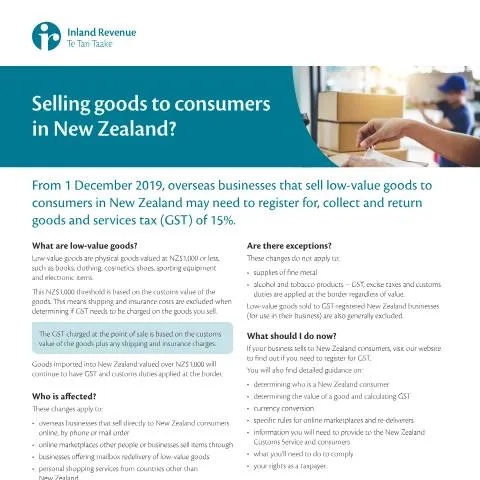
When venturing into the New Zealand market, international businesses selling goods must be aware of the goods and services tax (GST) implications. The official form AD261, titled Selling goods to New Zealand consumers?, plays a pivotal role in ensuring compliance with local tax regulations. Businesses that intend to sell low-value goods—defined as items valued at NZ$1,000 or less—must navigate the GST registration process to avoid potential penalties and ensure smooth operation within New Zealand.
The Trigger: When Must You Register for GST?
For overseas businesses, the requirement to register for GST is triggered primarily by sales exceeding NZ$60,000 to New Zealand consumers over a 12-month period. This encompasses not just physical low-value goods but also online services and digital products. Understanding the scope of what constitutes a sale under New Zealand law is essential for compliance.
- Low-value goods: Items like clothing, electronics, and sporting goods.
- Digital services: E-books, software downloads, and streaming services.
- Additional charges: Delivery, insurance, and service fees.
Failure to register when required can lead to significant repercussions, including back taxes and interest. Therefore, it is crucial to monitor your sales closely and initiate the registration process when approaching the NZ$60,000 threshold.
What Happens if Your Sales Fall Below the Threshold?
If your total supplies to New Zealand consumers do not exceed NZ$60,000, you are not obligated to register for GST. However, should your sales fluctuate and exceed this threshold unexpectedly, it is your responsibility to register promptly to avoid any compliance issues down the line.
Filling Out the AD261 Form: A Step-by-Step Guide
The AD261 form requires specific details about your business and your sales to New Zealand consumers. Here’s an overview of the key sections to complete:
- Business Information: Provide your business name, contact details, and type of goods sold.
- Sales Information: Include an estimate of your annual sales to New Zealand consumers.
- GST Registration Details: Indicate whether this is your first registration and provide any previous GST numbers if applicable.
- Banking Information: Include bank details for any GST refunds that may apply.
Ensure that all information is accurate and complete. Incomplete submissions can delay processing or result in rejection, necessitating further correspondence with the Inland Revenue Department (IRD).
Common Pitfalls When Completing the Form
While filling out the AD261 form, several common mistakes can occur:
- Incorrect estimates of sales: Be realistic about your sales projections to avoid complications.
- Missing documentation: Ensure you have the necessary supporting documents ready.
- Failure to sign: Don't forget to sign the form, as this is critical for processing.
Reviewing your form multiple times before submission can help ensure accuracy and completeness.
Submission Process: Where and How to Send Your AD261 Form
Once completed, the AD261 form can be submitted electronically through the IRD’s secure online portal. This digital-first approach streamlines the process and can result in quicker processing times compared to paper submissions.
Before submission, double-check that:
- The form has been signed and dated.
- All required fields are filled out.
- You have scanned and attached any necessary supporting documents.
After submission, you will receive a confirmation email from the IRD. Keep this for your records, as it serves as proof of your registration application.
The Follow-Up: What to Expect After Submission
After submitting your AD261 form, the IRD will process your application. Typically, you can expect to receive a response within a few weeks. During this time, the IRD may reach out for additional information or clarification regarding your submission.
Once your registration is confirmed:
- You will receive a GST registration number, which you must use on all future transactions involving New Zealand consumers.
- You will need to start collecting GST on applicable sales, which is currently set at 15%.
- Your business will be required to submit GST returns through the myIR online system, detailing sales and collected GST.
Keeping accurate records of sales and GST collected will simplify the filing process and ensure compliance with NZ tax laws.
Understanding Your Obligations as a GST-Registered Business
Once registered, your business has specific obligations under New Zealand's GST laws:
- File GST Returns: You must file GST returns on a quarterly basis, starting from the period following your registration.
- Charge GST: For every sale made to New Zealand consumers, remember to charge GST at the point of sale, calculated on the customs value of the goods plus any shipping and insurance charges.
- Maintain Records: Keep detailed records of all transactions, as these may be required during audits.
Note: Businesses that fail to adhere to these obligations risk incurring penalties, interest, and potential audits from the IRD.
What If You Encounter Issues?: Handling Refusals, Errors, and Missing Information
Should your application for GST registration be refused, or if you notice errors in your submitted form, immediate action is necessary. The IRD will provide reasons for refusals and guidance on how to address the issues. Common scenarios include:
- Refusal Due to Incomplete Information: The IRD may reject your application if critical information is missing. In such cases, review your submission against the IRD’s guidelines and reapply with complete data.
- Errors in GST Calculations: If you realize there was a miscalculation in your GST submissions, notify the IRD as soon as possible to amend your records before the next quarterly filing.
- Missing Documentation: If you fail to attach required documents, the IRD will inform you. Ensure compliance by providing the necessary papers promptly.
Being proactive in addressing these issues can save time and mitigate complications during the registration and filing process.
Special Considerations for Unique Scenarios
Several unique cases warrant special attention when completing the AD261 form and navigating the GST landscape:
- Sales from Online Marketplaces: If you're selling through platforms, ensure that you comply with both the marketplace's policies and New Zealand's GST regulations.
- Personal Shopping Services: Businesses offering personal shopping services from overseas should clarify their GST obligations, as they may also be required to register.
- Handling Low-Value Goods in Bulk: If your business sells low-value goods as part of a bulk shipment, ensure each item complies with the NZ$1,000 threshold to determine GST applicability.
By understanding these nuances, businesses can better prepare for successful operations in the New Zealand market.
Digital Landscape: Utilizing Online Resources for GST Registration
The IRD has invested significantly in digital services, making it easier for international sellers to register and comply with GST requirements. Take advantage of these online resources:
- Online Registration Process: Utilize the IRD’s online GST registration process for non-residents, which simplifies the application and tracking of your GST status.
- Guidance Resources: Access detailed guidance on determining who qualifies as a New Zealand consumer and how to accurately assess goods’ values for GST.
- myIR Online System: Familiarize yourself with the myIR system for smooth submission of GST returns and payments.
Engaging with these online tools can significantly ease the administrative burden associated with complying with New Zealand's GST framework.
Understanding the Goods and Services Tax (GST) in New Zealand
When selling goods to consumers in New Zealand, it's critical to understand the implications of the Goods and Services Tax (GST). This tax is a significant aspect of the country’s tax system, set at a standard rate of 15%, which applies to most goods and services sold in New Zealand. It is the responsibility of businesses to register for GST if their taxable turnover exceeds NZD 60,000 within a 12-month period.
For foreign sellers, the rules around GST can be particularly intricate. If you are selling goods from overseas directly to New Zealand consumers, you must be aware that from 1 December 2019, offshore sellers are required to register for GST if they sell low-value goods (i.e., goods that cost NZD 1,000 or less) to New Zealand residents. This means you need to charge GST on these sales and remit it to the IRD (Inland Revenue Department).
The process of registering for GST involves filling out the GST registration form, which can be completed online. You will need to provide details about your business, including your estimated sales and your business structure. Once registered, you will need to issue tax invoices and file GST returns every two months or six months, depending on your annual turnover.
Be mindful of the rules regarding "zero-rated" supplies, which include exported goods. If you are selling items to consumers outside New Zealand, these sales are generally zero-rated, meaning you do not charge GST. However, proper documentation is necessary to substantiate these claims, such as transport and shipping records showing that the goods left New Zealand.
Consumer Protection Laws and Your Responsibilities
When engaging with New Zealand consumers, it’s essential to be familiar with the Consumer Guarantees Act 1993 and the Fair Trading Act 1986. These laws protect consumers by ensuring that goods sold are of acceptable quality, fit for purpose, and match their description.
The Consumer Guarantees Act stipulates that consumers have certain guarantees when they purchase goods and services. For example, products must be free from defects, durable, and safe for use. If goods fail to meet these guarantees, consumers have the right to a remedy, which may include a repair, replacement, or refund. As a seller, understanding these obligations will not only keep you compliant with the law but will also enhance customer satisfaction and protect your brand reputation.
Moreover, the Fair Trading Act prohibits misleading or deceptive conduct in trade. You must ensure that all representations made about your goods are truthful and not misleading. This applies not only to advertisements but also to the descriptions you provide on your website. Any claims regarding the quality or effectiveness of your products need to be substantiated. Non-compliance with these laws can result in significant penalties, including fines and damage to your business's credibility.
It’s wise to create clear return and refund policies. Transparency about these policies is crucial, and they should comply with New Zealand’s consumer laws. Providing consumers with a straightforward way to return items will foster trust and could lead to repeat business.
Navigating Import Regulations and Customs Duties
When selling goods to New Zealand consumers from abroad, understanding the import regulations and customs duties is essential. New Zealand Customs Service governs the importation of goods into the country, and compliance with their regulations is critical for a smooth transaction.
Before shipping goods to New Zealand, it’s important to classify your products correctly based on the Harmonised System codes. These codes determine the applicable customs duties and GST that may be imposed. Incorrect classification can lead to unexpected costs and delivery delays.
Additionally, when your goods arrive in New Zealand, they will go through customs clearance. Generally, if you are shipping goods valued at NZD 1,000 or less to consumers, they will usually not incur customs duties (though GST will still apply). For goods valued over this threshold, customs duties may be levied, which can vary depending on the type of item being imported.
As part of the customs clearance process, you will need to provide detailed documentation, including invoices that accurately reflect the value of the goods, shipping details, and your GST registration number. Delays in providing this information can lead to extended shipping times and possible additional fees.
It's also advisable to collaborate with a freight forwarder or customs broker who can help navigate these processes expertly. These professionals can assist in ensuring compliance with all regulatory requirements and help mitigate potential risks associated with international shipping.
Leveraging Digital Platforms for Better Market Reach
In the current digital landscape, leveraging online platforms is crucial for effectively reaching New Zealand consumers. With a robust e-commerce infrastructure, businesses outside New Zealand can tap into this market by employing strategies that reflect local preferences.
Optimizing your website for local search is a pivotal step. This involves using local keywords relevant to your products and ensuring your website is mobile-friendly, given the high use of smartphones for online shopping in New Zealand. Consider creating content that resonates with the local culture and lifestyle, integrating te reo Māori terms where appropriate to foster a connection with consumers.
Utilizing social media can also enhance your outreach efforts. Platforms like Facebook and Instagram are immensely popular in New Zealand and can be instrumental for advertising your products. Engaging with local influencers who align with your brand can further amplify your message and provide access to a broader audience.
Moreover, consider implementing customer reviews and testimonials on your website. New Zealand consumers place significant importance on peer recommendations, and showcasing positive feedback can significantly boost your credibility and conversion rates.
Lastly, ensure that your digital marketing strategies are clear and compliant with New Zealand's advertising regulations. Transparency in your marketing communications will build trust and facilitate a better relationship with your customers.