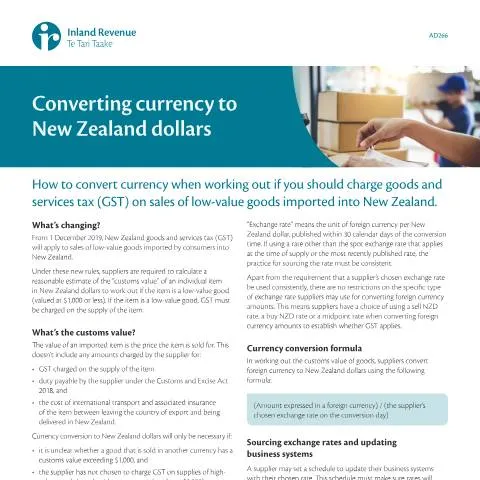
Navigating the AD266: A Critical Step in GST Compliance
Understanding the nuances of the AD266 form, officially titled Converting Currency to New Zealand Dollars, is crucial for businesses engaged in international trade. With the introduction of GST obligations for low-value goods imported into New Zealand, this document plays a pivotal role in ensuring compliance with tax regulations. Particularly for suppliers, it represents more than just a form; it’s a vital tool for navigating the complexities of tax liabilities.
Why the AD266 Matters
The GST regime underwent significant changes starting December 1, 2019, with the introduction of tax obligations on low-value imports. Under the new rules, when items are valued at NZD 1,000 or less, suppliers are required to estimate their customs value in New Zealand dollars. The AD266 form facilitates this critical currency conversion process, ensuring that businesses accurately assess whether GST should be charged on their sales.
- Customs Value: This refers to the price a good is sold for, excluding certain charges such as GST itself, duties under the Customs and Excise Act 2018, and international transport costs.
- Low-Value Goods: Determined by their customs value, which must be assessed accurately to establish GST obligations.
Breaking Down the Sections of the AD266 Form
Completing the AD266 requires careful attention to detail. Each section is designed to capture essential information regarding currency conversion and customs value estimation.
Section 1: Supplier Information
This section mandates the disclosure of the supplier's details, including name, GST registration number, and contact information. It’s imperative to ensure all information is correct, as errors may lead to compliance issues.
Section 2: Currency Details
Here, suppliers must indicate the foreign currency being converted. It’s worth noting that fluctuations in exchange rates can impact the final GST payable. Suppliers should maintain an accurate record of the exchange rate used, which can be the spot rate at the time of supply or a rate published by the New Zealand Customs Service.
Section 3: Customs Value Calculation
Calculation of the customs value using the formula provided is a focal point of the AD266. The formula ensures that suppliers convert amounts accurately to determine whether the goods fall under the low-value category. Common pitfalls in this section include:
- Using outdated exchange rates.
- Failing to account for all components of the customs value.
Key Dates: From Submission to Compliance
Understanding the timeline is essential for suppliers. Not only is it crucial for timely submissions, but it also plays a role in the overall GST compliance process.
Submission Timeline
The AD266 form must be submitted at the point of supply. This means that as soon as a sale is made, especially for low-value goods, suppliers have to ensure they are compliant. This immediacy underscores the need for real-time currency conversion capabilities.
Consequences of Late or Inaccurate Submission
Failure to accurately submit the AD266 can lead to penalties from the Inland Revenue Department (IRD). Therefore, it's prudent for suppliers to establish a systematic approach to updating their systems and training staff on this critical process.
Exceptional Cases: Special Considerations
There are circumstances where completing the AD266 might involve unique challenges. Suppliers must be equipped to handle these cases effectively.
Foreign Suppliers
For foreign suppliers, the requirements can seem daunting, especially if they are unfamiliar with New Zealand’s GST laws. Engaging a local tax advisor may be beneficial for understanding local compliance obligations.
Changing Exchange Rates
If a supplier decides to alter their chosen exchange rate outside of the scheduled updates, they must have sound commercial justifications. The importance of maintaining consistency cannot be overstated, as inconsistent use of rates can lead to audits and compliance issues.
Integrating AD266 Within the Broader GST Framework
The AD266 is not an isolated document; it fits within a larger framework of GST compliance. Suppliers must also be cognizant of other related forms and documents they may need to complete to ensure comprehensive compliance.
GST Filing Procedures
Once the customs value is established using the AD266, suppliers must properly report GST on their returns. The amount can be calculated using various exchange rates—each with its own implications on the overall GST liability.
| Exchange Rate Type | Application | Notes |
|---|---|---|
| Spot Rate | At the time of supply | Reflects real-time market value. |
| Customs Rate | Published rates | Updated regularly, providing a reliable baseline. |
| RBNZ Rate | Reference from Reserve Bank | Widely accepted, consistent updates. |
Practical Tips for Completing the AD266
Here are some best practices to consider when filling out the AD266:
- Utilize automated systems for currency conversion to minimize errors.
- Set regular intervals for updating exchange rates in your financial systems.
- Maintain records of all conversions and documentation for audit purposes.
Training and Development
Businesses should consider conducting training sessions for employees involved in GST compliance and currency conversions. Familiarity with the AD266 and related processes will minimize the risk of non-compliance.
The Future of GST Compliance in New Zealand
As New Zealand continues to adapt to changes in global trade and tax compliance, the role of documents like the AD266 will only grow in importance. Suppliers must stay informed about tax updates and be prepared to adjust their processes accordingly.
Continuous Improvement
Engaging with industry bodies, attending workshops, and seeking guidance from tax professionals can significantly enhance a supplier’s ability to navigate GST obligations. Keeping abreast of changes ensures compliance and positions businesses for success in the New Zealand market.
Ultimately, while the AD266 may appear as just another form in the administrative process, its implications stretch far beyond simple data entry. The accuracy and diligence applied in completing this form can lead to smoother operations and a robust standing in compliance with New Zealand’s tax framework.
Understanding Exchange Rates and Their Impact on Currency Conversion
When converting currency to New Zealand dollars (NZD), it is crucial to understand how exchange rates work. The exchange rate indicates how much one currency is worth in relation to another. Rates can fluctuate due to various factors, including economic stability, interest rates, and inflation. Banks and currency exchange services often offer slightly different rates, so it’s advisable to compare rates before making conversions.
For example, if you’re converting GBP (British Pound) to NZD, a rate of 1 GBP = 1.90 NZD means that for every British Pound, you will receive 1.90 New Zealand dollars. Keep in mind that this rate can change daily or even hourly, depending on market conditions.
Additionally, it’s essential to understand the concept of buying and selling rates. The buying rate is what the currency exchange service pays you when you sell your foreign currency, while the selling rate is what you pay when you buy currency. Typically, the selling rate will be higher than the buying rate, which is how the service makes a profit. Be sure to check if there are any additional fees associated with the currency conversion process, as these can also affect the overall amount you receive.
Tips for Currency Conversion When Traveling or Living in New Zealand
If you're planning a visit to New Zealand or are already living there, being informed about currency conversion can save you money and time. Here are some practical tips to consider:
- Use ATMs Wisely: Withdrawing cash from local ATMs can often provide better exchange rates compared to currency exchange kiosks. However, be cautious of any international transaction fees your bank may charge.
- Consider Using a Multi-Currency Account: Some financial institutions offer accounts that hold multiple currencies, allowing you to manage your funds more efficiently. This can help in minimizing conversion fees when you transfer funds between currencies.
- Research Currency Exchange Locations: If you need to exchange cash, look for reputable exchange services. Airports often have higher rates, so consider waiting until you are in the city. Local banks or dedicated currency exchange services might offer better rates.
- Stay Informed About Economic Events: Monitor news about New Zealand's economy, as significant events (like elections, changes in government policy, or major economic reports) can impact exchange rates. This information will help you decide the best time to convert your currency.
The Role of Online Currency Conversion Tools
With the rise of digital technology, there are various online tools available that can assist with currency conversion. These tools can provide real-time exchange rates and even predict potential fluctuations based on market analysis. However, it’s important to approach these tools with a discerning eye.
Many online converters are based on average rates and may not reflect the rates you will receive at a physical bank or currency exchange service. Therefore, while they can be helpful for quick estimates, always verify with a local financial institution before making any significant conversions.
Additionally, some platforms offer historical exchange rate data, which can be useful for understanding trends and making informed decisions about when to exchange currency. Be sure to check for reviews and credibility when selecting an online tool to ensure you are getting accurate and reliable information.
In conclusion, navigating the process of converting currency to New Zealand dollars requires careful consideration of exchange rates, fees, and the methods of conversion available. By staying informed and using the right resources, you can make more educated decisions that suit your financial needs while in New Zealand.