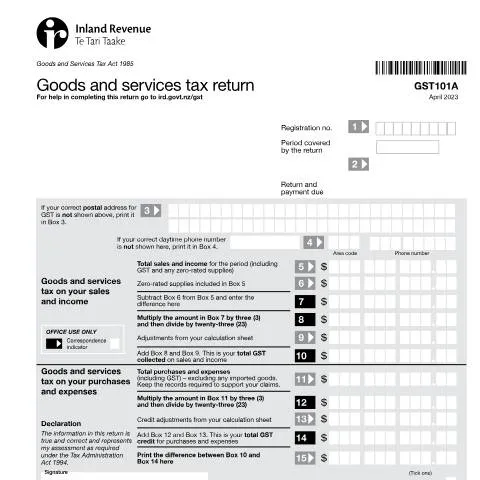
Navigating the GST101A: Unlocking Your Goods and Services Tax Return
Every business registered for Goods and Services Tax (GST) faces the important task of accurately filing their GST return, known as GST101A. This document plays a crucial role in ensuring compliance with New Zealand's taxation system, particularly for those collecting GST on sales and managing expenses. Understanding how to effectively complete and submit the GST101A is not merely a requirement; it's a vital aspect of managing your business's financial health.
Understanding the GST101A: Who Needs to File?
The GST101A is primarily intended for businesses registered for GST. This includes sole traders, partnerships, trusts, and companies that earn over NZD 60,000 in taxable supplies annually. However, there are specific scenarios where different rules apply:
- New Businesses: If you’ve recently registered for GST, you’ll need to file your first GST101A at the end of your first accounting period.
- Exempt Organizations: Certain organizations, such as charities or those providing exempt supplies, may not need to file.
- Foreign Entities: Non-resident businesses selling goods or services in New Zealand may also have obligations, depending on their sales volume and nature.
The Structural Anatomy of GST101A
The GST101A form is structured to capture essential financial information related to your GST obligations. Here’s a breakdown of key sections and boxes you’ll encounter:
- Registration Number: This unique identifier links the return to your business.
- Period Covered: Ensure you specify the correct period for which the return is applicable.
- Total Sales and Income: This encompasses all sales made during the period, including GST and any zero-rated supplies.
- GST on Sales: Report the total GST collected on your sales, a critical factor in your tax calculations.
- Purchases and Expenses: Document your total purchases, excluding imported goods, to determine the GST credit you may claim.
Step-by-Step Completion: Filling Out Your GST101A
Completing the GST101A may seem daunting, but with a systematic approach, you can navigate it with ease. Here’s how:
- Personal Details: Confirm that your postal address and daytime phone number are correct in the designated boxes.
- Sales and Income: Accurately calculate your total sales and income (Box 5) and any zero-rated supplies (Box 6). Subtract to find the net GST collected (Box 7).
- Purchases and Expenses: In Box 11, input all your purchases and expenses. Multiply the total by three and divide by twenty-three to determine the GST credit (Box 12).
- Final Calculation: Complete Box 15 by calculating the difference between your GST collected and GST credits. This figure will determine whether you owe tax or are due for a refund.
What Happens After Submission?
Once you’ve filed your GST101A, the Inland Revenue Department (IRD) will process your return. Here’s what you need to keep in mind:
- Processing Times: The IRD typically takes a few weeks to process returns, but this can vary based on the time of year and any additional information required.
- Refunds: If you’re owed a refund, providing your bank account details will expedite the process. Expect your refund to be credited directly to your account.
- Communication: Keep an eye out for correspondence from the IRD regarding your return. If there are issues, such as discrepancies or missing information, they will reach out to you directly.
Amendments and Corrections: When Errors Occur
Errors can happen, even with the best of intentions. If you realize a mistake after submitting your GST101A, don’t panic. Here’s how to manage amendments:
- Submit an Amendment Request: Use the checkbox on your GST101A to indicate that you are requesting an amendment. Clearly state the reason, whether it’s a calculation error, missing invoices, or incorrect information.
- Recalculate: Ensure that your new calculations are accurate. If you’ve increased your claims, be prepared to provide supporting documentation.
- File in a Timely Manner: Amendments should be filed as soon as you discover the error. The IRD allows amendments within specific timeframes, so check their guidelines.
Common Misunderstandings: Distinguishing GST101A from Other Forms
Many individuals confuse GST101A with other tax forms. Here’s how it differs from related documents:
| Document | Purpose | Who Files |
|---|---|---|
| GST101A | Report and pay GST collected on sales and claim GST on purchases. | GST-registered businesses. |
| IR3 Individual Income Tax Return | Report personal income for tax purposes. | Individuals earning income. |
| FBT Return | Report fringe benefits provided to employees. | Employers providing fringe benefits. |
Special Situations: Unique Cases in GST Filing
Understanding the nuances of filing GST can be particularly important for certain situations:
- Final GST Returns: If you're winding up your business, ensure all assets are accounted for, and file a final GST101A that reflects the sale of assets and any remaining tax obligations.
- Zero-Rated Supplies: If your business deals with zero-rated goods or services, make sure to accurately report these on your return, as they affect your overall GST calculations.
- Associated Persons: If you are associated with another GST entity, be mindful of how shared transactions must be reported on the GST101A.
Tracking Your GST Return: Keeping Tabs on Your Submission
Once you've submitted your GST101A, it’s essential to remain proactive in managing your obligations. Here are some ways to track your return:
- MyIR Account: Using the IRD’s MyIR online service allows you to track the status of your return and any refund or payment processes.
- Contacting IRD: If you haven’t received communication regarding your return, reach out to the IRD directly for an update. Ensure you have your registration number handy.
- Record Keeping: Maintain thorough records of your submissions, calculations, and any correspondence with the IRD for future reference.
Conclusion: Mastering Your GST Obligations
Filing the GST101A may seem like a complex task, but by understanding its components, adhering to deadlines, and keeping accurate records, you can manage your GST obligations with confidence. Whether you are a small business owner or part of a larger corporation, mastering this aspect of taxation not only ensures compliance but also enhances your financial management capabilities.
Understanding GST Registration and Compliance Requirements
Before diving into the GST return process, it is essential to understand the registration and compliance requirements for businesses in New Zealand. Under the Goods and Services Tax Act 1985, you are required to register for GST if your annual turnover exceeds NZ$60,000. This turnover threshold includes all taxable supplies made by your enterprise, so it's crucial to monitor your revenue closely. Even if your turnover is below this threshold, registering voluntarily can sometimes be advantageous, especially if you wish to claim back GST on your business expenses.
Once registered, businesses must ensure they comply with various obligations. This includes maintaining accurate financial records that must be kept for seven years, issuing tax invoices for sales over NZ$50, and issuing credit notes when necessary. Furthermore, businesses are required to file GST returns either on a two-monthly or six-monthly basis, depending on their turnover and preference. It’s advisable to keep abreast of these requirements to avoid penalties, which can be substantial, and ensure that your business remains compliant.
Common Mistakes in GST Returns and How to Avoid Them
Completing your GST return can seem straightforward, but many businesses encounter common pitfalls that can lead to inaccuracies and potential penalties. A typical error is failing to include all taxable supplies or incorrectly categorizing exempt supplies. It’s important to understand the difference between taxable, exempt, and zero-rated goods and services. For instance, while most goods are taxable, certain financial services and residential rental income are exempt from GST.
Another frequent mistake is the miscalculation of GST payable or refundable. Double-checking calculations and ensuring the correct GST rate is applied (currently 15% in New Zealand) can save you from financial headaches down the line. Additionally, businesses often neglect to reconcile their accounts with their GST returns, which can lead to discrepancies and audits by the Inland Revenue Department (IRD).
To mitigate these risks, businesses should consider implementing robust accounting software that tracks sales and expenses accurately while generating GST-compliant invoices. Regularly reviewing your financial records and being proactive in seeking assistance from tax professionals can also help maintain compliance and avoid costly mistakes.
Filing GST Returns: Step-by-Step Guide
Filing your GST return may seem daunting, but breaking it down into manageable steps can streamline the process. First, gather all necessary documentation, including sales invoices, purchase receipts, and any other relevant financial records. Ensure these documents are organised chronologically, as this will make it easier when inputting figures into your GST return.
Next, log into your IRD online account. If you have not already set up a RealMe digital ID, you will need to create one as it's essential for accessing IRD's online services. Once logged in, navigate to the GST return section, and select the period for which you are filing. Carefully input your total sales, total purchases, and any adjustments that may apply. Don't forget to calculate the GST owed or refundable accurately.
After completing the form, take time to review all entries to ensure accuracy. Once satisfied, submit your return, and make sure to note the confirmation number you receive as proof of submission. If you are due to pay GST, plan to make your payment promptly to avoid interest charges. Lastly, keep a copy of your submitted return along with all supporting documentation for your records.