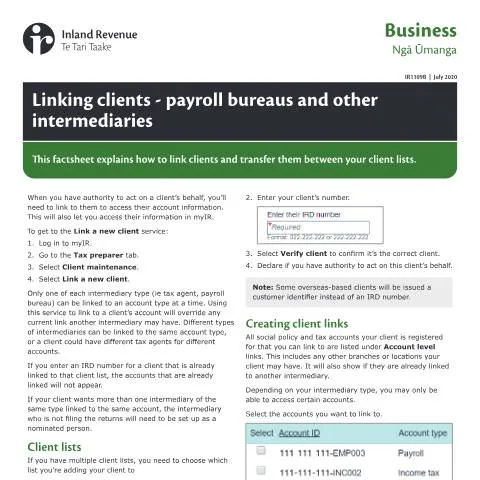
Understanding the Link Between Payroll Bureaus and Clients
In the ever-evolving landscape of taxation in New Zealand, payroll bureaus and intermediaries play a crucial role in helping clients manage their tax obligations. The IR1109B form serves as the bridge connecting these intermediaries to their clients, allowing for seamless access to important account information through the Inland Revenue Department (IRD).
For payroll bureaus, completing this form is not merely a bureaucratic task; it signifies the authority to act on behalf of their clients, ensuring compliance and accuracy in payroll processing. The process of linking clients is critical, as it facilitates efficient tax reporting and management.
Who Needs to Dive into the IR1109B Form?
It's essential to recognize that the IR1109B form is specifically designed for payroll bureaus and other intermediaries acting on behalf of clients. If you are an intermediary, understanding when and how to utilize this form is key to representing your clients effectively.
- Payroll Bureaus: Businesses managing payroll for clients must use this form to link to their clients’ IRD accounts.
- Tax Practitioners: Those providing tax-related services can also complete this form to access client information.
- New Clients: If you are onboarding a new client, this form is necessary to gain access to their tax accounts.
The Step-by-Step Process: From Initiation to Linking
The journey begins with the intermediary’s intention to link to a client’s account. Here’s how the process unfolds:
- Log into myIR: Access the myIR portal, the digital gateway to IRD services.
- Select Client Maintenance: Navigate to the Tax preparer tab and choose Client maintenance.
- Choose Link a New Client: Initiate the linking process by selecting the appropriate option.
- Enter Client Information: Input either the IRD number or the customer identifier of the client you wish to link.
- Verification: Confirm the client’s identity to ensure you are linking the correct account.
- Declare Authority: You must declare that you have the authority to act on behalf of the client.
- Select Accounts to Link: Choose which specific tax accounts you want to access.
- Review and Submit: Double-check your entries and then submit the form.
Timeline: When to Submit and What to Expect
Understanding the timeline involved with the IR1109B form can alleviate anxiety and streamline processes:
- Submission Period: The submission of the form can occur at any time as needed, especially when onboarding new clients or transferring existing ones.
- Approval Process: Once submitted, the client must approve the request, which can happen through their myIR account or via a letter sent from IRD.
- Expiration of Request: Requests have a lifespan of 15 days, after which they will expire if not approved.
Once the client approves, you’ll have access to their account within myIR, enabling you to manage their payroll and tax obligations effectively.
Linking Clients: The Nuances and Complexities
Linking is not a one-size-fits-all process. Various scenarios may arise depending on the client’s situation:
- Multiple Intermediaries: Only one intermediary of each type can be linked to an account at any given time. If another payroll bureau is already linked, your link will replace theirs.
- Overseas Clients: Some overseas clients may not possess an IRD number and instead have a customer identifier; ensure to enter the correct identifier to avoid issues in linking.
- Transferring Between Lists: If you need to transfer a client from one list to another, the procedure is similar to linking a new client. There’s no need for the client’s approval unless new accounts are being added.
Practical Tips to Navigate the IR1109B Form
Filling out the IR1109B form efficiently can save time and reduce errors. Here are some practical tips:
- Verify Client Details: Please ensure all client details, especially the IRD number or customer identifier, are accurate.
- Understand Your Authority: Only proceed if you have the necessary authorization to act on the client’s behalf. Misrepresentation can lead to penalties.
- Use the myIR Platform: Familiarize yourself with the digital tools in myIR, as they offer a streamlined process and helpful reminders.
Following Up: How IRD Processes Your Request
After submitting the IR1109B form, the Inland Revenue takes several steps to process your request:
- Confirmation of Receipt: Once submitted, you will receive a confirmation from IRD that your request has been received.
- Client Notification: The client will be notified via email or letter, depending on their method of access to myIR.
- Status Updates: You can keep track of the request status in your myIR account, ensuring you're in the loop about any actions taken on your behalf.
Understanding the Larger Picture: Contextualizing the IR1109B Form
The IR1109B form doesn’t exist in isolation; it’s part of a broader regulatory framework aimed at simplifying tax compliance in New Zealand.
As intermediaries link clients, they facilitate a more organized approach to tax reporting, which is vital for both the clients and the IRD. This interconnectedness means that understanding the nuances of the IR1109B form also enhances the efficiency of overall tax compliance processes.
Conclusion: Navigating Tax Responsibilities with Confidence
As a payroll bureau or intermediary, mastering the IR1109B form is crucial for navigating the complexities of tax responsibilities in New Zealand. With clear steps, a thorough understanding of timelines, and the importance of client cooperation, intermediaries are empowered to manage their clients’ tax obligations effectively.
By ensuring precise completion and timely submission of this form, intermediaries can build a reputation for reliability and professionalism, ultimately benefitting their clients and contributing to a robust tax system in New Zealand.
Understanding the Role of Payroll Bureaus in New Zealand's Employment Landscape
In New Zealand, payroll bureaus serve as crucial intermediaries between employers and employees, especially for businesses that may lack the resources or expertise to manage payroll effectively. These bureaus handle various aspects of payroll processing, including calculating wages, withholding taxes, and ensuring compliance with employment laws. The complexity of payroll systems, particularly with unique requirements such as KiwiSaver contributions and parental leave payments, makes the role of these bureaus invaluable.
Payroll bureaus also help businesses navigate the regulatory landscape set forth by the Inland Revenue Department (IRD). They ensure that employers meet their tax obligations correctly and on time. For example, through their services, businesses can avoid the pitfalls of late payment penalties or incorrect tax filings. This risk reduction is vital for small to medium enterprises (SMEs) that may not have a dedicated HR or finance team.
Furthermore, payroll bureaus often provide support in other areas such as employee onboarding, time tracking, and reporting. They can help streamline processes, allowing businesses to focus on their core activities rather than getting bogged down with administrative tasks. The integration of digital solutions in payroll processing, such as cloud-based systems, has significantly enhanced the efficiency of these services, making it easier for businesses to manage their payroll from anywhere, at any time.
Regulatory Compliance: The Backbone of Payroll Processing
Regulatory compliance is a fundamental concern for payroll bureaus and their clients. In New Zealand, various laws and regulations govern payroll processes, including the Employment Relations Act 2000, the Holidays Act 2003, and the Wages Protection Act 1983. Each of these acts includes specific requirements that must be adhered to, ensuring that employees receive their rightful wages and entitlements.
Payroll bureaus are tasked with staying updated on these regulations and implementing them in their clients' payroll systems. For example, changes in minimum wage legislation or shifts in parental leave policies can directly affect payroll calculations. Bureaus must ensure that such changes are reflected accurately to maintain compliance. Non-compliance can lead to significant repercussions, including penalties from the IRD and damage to the employer's reputation.
Moreover, with the introduction of the Plain Language Act 2022, there is an increasing emphasis on clarity and transparency in communication from businesses, including payroll services. Employers must ensure that their payroll processes are communicated effectively to their employees, fostering an environment of trust and understanding. Payroll bureaus can assist in crafting user-friendly communications that explain payslips, deductions, and entitlements in plain English.
Building Strong Relationships Between Employers and Payroll Bureaus
Establishing a strong partnership between employers and payroll bureaus is essential for ensuring smooth payroll operations. Clear communication is vital; businesses should articulate their specific needs and expectations clearly from the outset. Regular check-ins and feedback sessions can help ensure that the payroll bureau is aligned with the employer's objectives and can address any concerns promptly.
Employers should also take the initiative to keep their payroll bureaus informed about changes within their organisation, such as new hires, role changes, or updates to employee benefits. The more information the bureau has, the better they can manage payroll complexities. This collaboration not only enhances efficiency but also fosters a sense of trust and reliability.
In addition, businesses should evaluate their payroll bureau's performance regularly. This could involve reviewing error rates, turnaround times for payroll processing, and the effectiveness of the payroll bureau in handling compliance issues. Engaging in these practices will ensure that the employer is receiving the best possible service and can make informed decisions regarding their payroll management.
As the landscape of employment and payroll processing continues to evolve, building these robust relationships will be crucial in managing future challenges and opportunities. With the right partner, businesses can focus on growth while ensuring that their employees are compensated fairly and compliant with New Zealand's regulations.