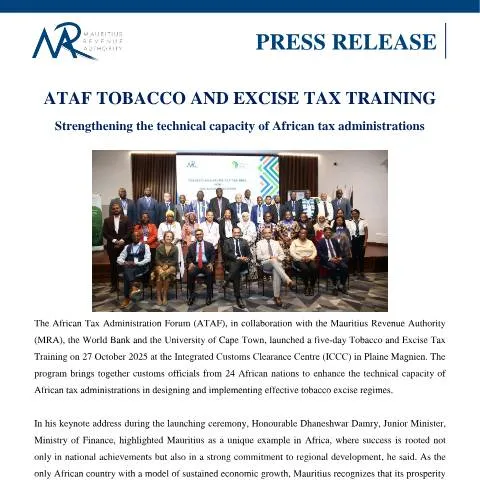
The Importance of Tobacco and Excise Tax Training for African Tax Administrations
The recent launch of the ATAF Tobacco and Excise Tax Training by the Mauritius Revenue Authority (MRA) on October 27, 2025, is a significant step towards enhancing the taxation framework across African nations. With customs officials from 24 different African countries in attendance, this five-day training program aims to strengthen the technical capabilities of tax administrations in designing and implementing effective tobacco excise regimes. The event underscores the vital role that excise taxes play in economic sustainability and public policy across the continent.
Who is Required to Submit the Official Document?
This training initiative is mainly aimed at customs officials and tax administration personnel who are involved in the management of excise taxes in their respective countries. This includes individuals from various ministries of finance and taxation departments, and those responsible for policy-making and fiscal management. Participation in this program can provide these officials with updated practices, regulatory frameworks, and the necessary skills to administer excise duties effectively.
Eligibility Criteria
- Officials from national revenue authorities
- Customs officers involved in tax collection and enforcement
- Tax policy analysts and economic planners
- Participants from regional financial institutions and organizations
Given the targeted nature of the training, it is crucial for the participating officials to possess a foundational understanding of tax laws and systems in their respective countries.
Chronological Overview: From Initiative to Implementation
The journey towards strengthening the technical capacity of African tax administrations through this training program can be outlined in a series of steps:
- Initiation: The African Tax Administration Forum (ATAF), alongside MRA, identified the need for enhanced training in tobacco and excise tax.
- Collaboration: Partnerships were formed with entities like the World Bank and the University of Cape Town to develop a comprehensive training curriculum.
- Training Launch: The program officially commenced on October 27, 2025, at the Integrated Customs Clearance Centre (ICCC) in Plaine Magnien.
- Delivery: Over five days, experts provided workshops and seminars focusing on best practices for excise tax management, compliance, and enforcement.
- Post-Training Support: ATAF will offer continuous support and advisory services to ensure the successful implementation of learned practices within the participants' home countries.
The Role of Excise Tax in National Revenues
The significance of excise taxes, especially on tobacco, goes beyond mere revenue generation. Mr. Rohit Ramnawaz, Director-General of the MRA, emphasized the contributions that these taxes make towards achieving various economic and social objectives. In Mauritius, for instance, excise duties account for approximately 14.2% of total MRA collections, showcasing their impact on the national budget.
Excise taxes can target specific products, such as:
- Tobacco
- Alcohol
- Sugar-sweetened beverages
By regulating consumption through these taxes, governments can also promote public health and environmental sustainability, making it a multi-faceted tool for policy implementation.
Understanding the Documentation Process
For officials attending this training, there are specific documents and steps to be aware of:
Required Documents
- Identification documents (e.g., national ID)
- Proof of employment within a tax administration
- Registration confirmation for the training program
Each participant must ensure these documents are prepared and submitted as part of their application process for the training program.
Submission Process
Documents must be submitted via the designated platform provided by the MRA. The submission window typically opens several weeks before the training program and closes shortly after, ensuring timely processing:
- Check the official MRA website for application opening dates.
- Prepare the required documents in digital format.
- Complete the online submission form, ensuring all fields are filled accurately.
- Submit your application before the deadline.
Potential Outcomes of the Training
The objective of the ATAF Tobacco and Excise Tax Training is not confined to mere skill acquisition. Rather, it's about fostering a deeper understanding of how effective tax administration can lead to improved tax compliance, increased revenue, and enhanced economic growth.
- Increased Revenue: Effective management of tobacco taxes can lead to significant increases in national revenue.
- Improved Compliance: Training enhances the ability of tax officials to ensure compliance with tax regulations.
- Health Benefits: Through better regulation of tobacco consumption, public health can be improved.
The training focuses on creating a collaborative network among African nations, which can lead to shared best practices and stronger regional ties.
Post-Training Support and Follow-Up
Once the training is completed, ATAF and the MRA will provide ongoing support to ensure that the participating countries can implement what they have learned effectively. This phase is crucial for translating knowledge into action, and it often includes:
- Regular follow-up sessions via webinars or workshops.
- Access to an online resource hub for continued education.
- Peer networking opportunities to foster collaboration among countries.
Each participating country is encouraged to develop a strategic plan to implement learned practices, addressing specific local challenges and regulatory environments.
The Broader Implications of Enhanced Tax Administration
The ATAF Tobacco and Excise Tax Training is part of a larger vision for economic resilience within Africa. By strengthening tax administration skills, countries can better address issues such as:
- Counterfeit goods affecting public health
- Economic inequalities exacerbated by ineffective tax regimes
- Environmental concerns related to the consumption of harmful products
As highlighted by Honourable Dhaneshwar Damry during the launch, the commitment to collective progress through enhanced tax administration is not only beneficial to individual nations but also to the wider African continent. This training seeks to create a ripple effect, where improved tax systems contribute to national development goals and regional integration efforts.
Engagement With Stakeholders: Ensuring Success
For the training to achieve its objectives, it is crucial to engage a wide range of stakeholders. This includes:
- Government officials at all levels involved in fiscal policy.
- Non-governmental organizations focusing on public health and economic development.
- Private sector representatives who can provide insights into market dynamics.
A collaborative approach ensures that the policies developed from this training are practical and responsive to the real-world challenges faced by tax administrations.
Final Thoughts on the Future of Tax Administration in Africa
The ATAF Tobacco and Excise Tax Training signifies a landmark effort in enhancing the capabilities of tax administrations across Africa. The knowledge and skills gained will play a pivotal role in shaping the future landscape of tax policy and administration on the continent. With the goal of sustainable economic growth and improved public health, the commitment to training and knowledge-sharing is more critical than ever.
As countries embrace these changes, it is essential to monitor the impact of this training on tax collection, compliance rates, and overall economic resilience. The path forward is one of collaboration, innovation, and a shared vision for a prosperous Africa.