Understanding the Integral Role of the Press Release on Tax Treaties
The Mauritius Revenue Authority (MRA) plays a pivotal role in the governance of taxation in Mauritius, and the press release dated 5 August 2022, with reference code PressRelease050822, marks a significant advancement in the dialogue surrounding Double Taxation Avoidance Agreements (DTAAs). This document is not merely a statement; it is a comprehensive overview of the collaborative efforts between the MRA and the Southern African Development Community (SADC) aimed at enhancing the skill set of tax officials across Africa. The training programme discussed within this release had far-reaching implications for tax governance, international cooperation, and economic growth.
Who Should Engage with This Document?
While the content of the press release primarily targets tax officials, it is also crucial for a wider audience including:
- Taxpayers: Understanding how tax treaties may affect personal and corporate tax liabilities.
- Investors: Knowing the implications of tax treaties on international investments is vital.
- Policy Makers: Those involved in drafting tax policies and agreements should consider insights drawn from this release.
- Academics and Researchers: Individuals studying international taxation can use this information as a case study.
Completing the Framework: The Training Programme
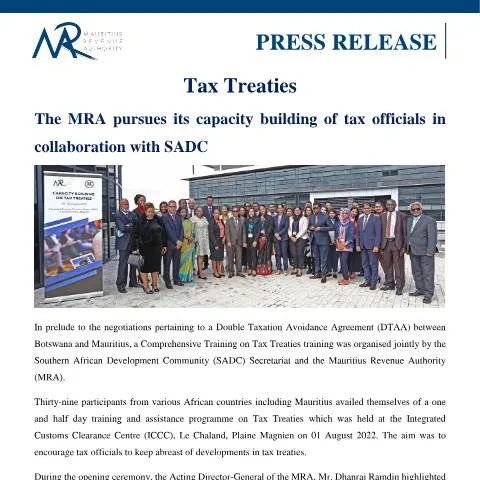
The training on Tax Treaties conducted on 1 August 2022, provided critical insights into the evolving landscape of international taxation. With 39 participants hailing from various African nations, the programme was meticulously designed to enhance understanding of tax treaties and their significance. Participants learned about:
- The latest developments in tax treaties.
- International collaboration in curtailing tax evasion.
- Strategies for effective negotiation of future tax agreements.
This capacity-building initiative demonstrates how Mauritius is stepping up as a leader in regional tax governance.
Channels for Submission and Engagement
Engagement with this press release can be performed through various channels:
- Online Platforms: The MRA encourages stakeholders to explore their official website for resources and information regarding tax treaties.
- Email Communication: Stakeholders can directly contact the MRA via [email protected] for specific inquiries related to tax treaties and their implications.
These channels facilitate a transparent and efficient communication process, ensuring that stakeholders remain informed about developments in taxation policy.
Implications of Tax Treaties for Taxpayers
For the average taxpayer, tax treaties might seem abstract, yet they hold tangible implications that can directly affect financial obligations and tax liabilities. Key benefits of these treaties include:
- Avoidance of Double Taxation: Tax treaties aim to eliminate or reduce the risk of being taxed in two jurisdictions on the same income.
- Investment Growth: By fostering a tax-friendly environment, these treaties can stimulate foreign investment, contributing to economic development.
- Information Exchange: Treaties facilitate the sharing of tax-related information between countries, fostering transparency and cooperation.
A Closer Look at Special Circumstances
Some individuals may find themselves in unique situations when dealing with tax treaties:
- Foreign Nationals: If you are not a Mauritian resident, specific protocols must be followed to benefit from tax treaties.
- Minors: Special considerations exist for minors regarding tax obligations and the application of treaties.
- Complex Situations: Businesses engaged in cross-border trade may encounter scenarios requiring expert advice to navigate treaty benefits effectively.
Follow-Up Actions Post-Submission
After engaging with the relevant tax treaties, stakeholders must remain proactive. This includes:
- Regularly checking updates from the MRA regarding treaty negotiations.
- Maintaining communication with tax advisors to remain updated on implications.
- Ensuring compliance with both local and international tax obligations to avoid penalties.
The Strategic Importance of DTAAs
This press release underscores the significance of DTAAs in promoting international trade and economic collaboration. The MRA's commitment to signing and negotiating tax treaties, evidenced by its existing 45 treaties, highlights:
- The increasing need for international cooperation in addressing tax evasion and profit shifting.
- The role of tax treaties in stabilizing the economy through enhanced foreign investment.
- Encouraging a shared understanding among member states on international taxation rules.
The Future Landscape of Taxation in Mauritius
The MRA's collaboration with SADC and commitment to modernizing tax rules is indicative of the changing dynamics in the global economy. As Mauritius interacts with a multitude of countries, these initiatives will play a crucial role in shaping:
- Tax Policy Development: Continuous adaptation of tax laws to respond to global standards.
- Capacity Building: Ongoing training initiatives for tax officials to stay current with international practices.
- Economic Resilience: Developing frameworks that foster economic growth while ensuring tax compliance.
Conclusion: A Vision for Collaborative Taxation
The MRA’s press release on tax treaties is more than just an announcement; it sets the stage for a collaborative future in taxation. The capacity-building initiatives with SADC promise to strengthen Mauritius's position as a hub for international trade and investment, demonstrating the importance of cooperative efforts in today’s interconnected world. Stakeholders are encouraged to remain informed and engage actively with the evolving landscape of tax treaties to maximize potential benefits.
Understanding the Role of Tax Treaties in Mauritius' Economic Strategy
Tax treaties play a significant role in shaping the economic landscape of Mauritius. As a small island nation, Mauritius has positioned itself as a financial hub in the region, attracting foreign investments through favorable tax policies. These treaties, often referred to as Double Taxation Avoidance Agreements (DTAAs), are essential for ensuring that investors are not taxed twice on the same income — once in their home country and once in Mauritius.
The Mauritian government has strategically signed various tax treaties with countries across the globe, which helps to enhance the country's appeal as an investment destination. As of 2023, Mauritius is a signatory to treaties with numerous countries, including India, the UK, and South Africa, establishing a framework that promotes economic cooperation and investment flows.
Furthermore, the Mauritius Revenue Authority (MRA) actively engages in educating both local and foreign taxpayers about the implications and benefits of these treaties. This education is vital in ensuring compliance and fostering a better understanding of tax obligations. The MRA also emphasizes the importance of transparent and fair tax practices, which can help build trust and reinforce Mauritius's reputation as a reliable location for international business.
Capacity Building Initiatives for Enhanced Compliance and Efficiency
Capacity building within the MRA is crucial not only for the effective administration of tax laws but also for ensuring that officials are well-equipped to handle the complexities of international taxation. In collaboration with the Southern African Development Community (SADC), the MRA has initiated several training programs that focus on various aspects of tax policy, compliance, and administration.
These initiatives are designed to provide tax officials with the necessary skills to interpret and apply tax treaties effectively. Training sessions cover a range of topics, including the impact of international tax reforms, the exchange of information for tax purposes, and best practices in tax collection and enforcement. By investing in the continuous education of its workforce, the MRA aims to enhance its operational efficiency and foster a more robust tax environment in Mauritius.
Additionally, capacity building extends to fostering a culture of collaboration among regional tax authorities. By sharing experiences and insights with counterparts in other SADC member states, the MRA not only strengthens its own capabilities but also contributes to the development of a more coordinated approach to tax administration across the region. This collaboration is essential in addressing challenges posed by globalization and digitalization in the tax landscape.
The Future of Tax Treaties and Their Impact on Foreign Relations
As Mauritius continues to evolve in the global economic arena, the future of its tax treaties will be pivotal in shaping its foreign relations. The government's proactive approach to entering into new agreements and revising existing ones indicates a commitment to adapting to changing international norms and practices, particularly in light of the OECD's Base Erosion and Profit Shifting (BEPS) initiatives.
The MRA's role in negotiating these treaties is vital, as it ensures that the agreements align with national interests while also complying with international standards. The impact of these treaties extends beyond mere tax benefits; they are instrumental in building diplomatic relations and enhancing trade agreements with partner countries.
Moreover, the evolving landscape of international taxation, particularly with the rise of digital services and cross-border transactions, necessitates that Mauritius remains agile in its treaty negotiations. By doing so, the country can safeguard its economic interests while contributing to global efforts aimed at combating tax evasion and promoting transparency.