Understanding the Sale of Abandoned/Unclaimed Goods by Public Tender
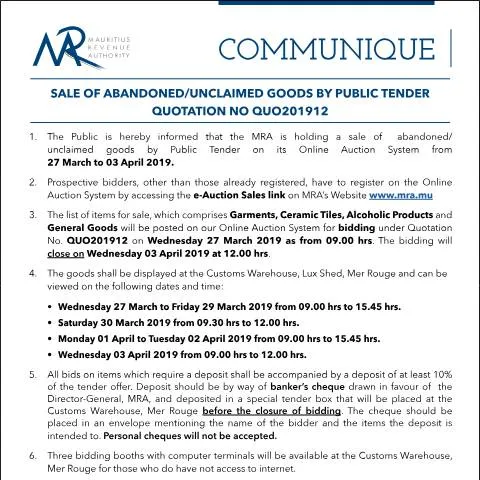
The document labeled Communique12of2019, titled Sale of Abandoned / Unclaimed Goods by Public Tender, introduces a structured process for the sale of goods that have been either abandoned or left unclaimed. Managed by the Mauritius Revenue Authority (MRA), this initiative allows individuals to participate in bidding for various items that have been held by the authorities. The sale is executed via an online auction system, which is a significant shift towards digitalization in administrative processes in Mauritius.
This process not only serves to clear warehouses of unclaimed items but also provides an opportunity for the public to acquire goods at potentially lower prices. It's essential for prospective bidders to understand the steps involved, the requirements for participation, and the critical timelines associated with the auction.
Who Can Participate and Under What Conditions?
The eligibility for participation in this public tender is generally open to all interested individuals; however, there are specific prerequisites that bidders must satisfy:
- Registration Requirement: Individuals who are not previously registered on the Online Auction System must complete the registration process before they can place bids. This can be done through the MRA website.
- Identity Verification: Bidders are required to present their Identity Cards for verification at the Port Main Gate when visiting the Customs Warehouse.
It’s important to note that registered bidders who wish to participate in this auction should keep an eye on the specific items being auctioned, as they can vary from goods such as garments to ceramic tiles and alcoholic products. Each auction round will have a unique identification number, such as Quotation No. QUO201912, which should be referenced during the bidding process.
A Step-by-Step Guide to the Bidding Process
Understanding the timeline and the sequential steps of this auction is imperative for successful participation:
- Announcement of Auction: The public announcement is made regarding the sale of abandoned goods. For instance, the current auction started on 27 March 2019 and ended on 3 April 2019.
- Registration on Online Auction System: Interested bidders must register online during the period specified in the announcement.
- Viewing of Goods: Prospective bidders can inspect the goods during the stipulated time frame, which is from 27 March to 3 April 2019.
- Submission of Bids: Bids must be submitted through the online portal or at designated bidding booths located at the Customs Warehouse.
- Deposit Requirement: Each bid must be accompanied by a deposit of at least 10% of the tender amount. This deposit needs to be made via a banker’s cheque.
- Auction Closure: Bidding closes on 3 April 2019 at 12:00 hrs.
- Announcement of Winning Bids: Winning bidders will be notified following the closure of the auction.
By adhering to this sequence, bidders can ensure that they meet all requirements and deadlines, thus enhancing their chances of successfully acquiring the goods on auction.
Essential Documentation and Preparation
Proper preparation is key to navigating the bidding process smoothly. Below is a list of required documents and actions that bidders should prepare in advance:
- Identity Verification: Valid Identity Card is mandatory for access to the venue.
- Banker’s Cheque: Prepare a banker’s cheque for the deposit, ensuring it is made out to the Director-General, MRA.
- Bid Submission: Ensure that the bid submission includes a cover envelope with the bidder's name and the items for which the deposit is intended.
This documentation must be organized ahead of time to avoid any last-minute issues. Bidders should also familiarize themselves with the details of the items they wish to bid on, which will be available on the MRA's online platform.
Exploring the Channels of Submission
There are multiple avenues through which bids can be submitted. Understanding these channels can help bidders choose the most convenient option:
| Channel | Description | Notes |
|---|---|---|
| Online Auction System | Bids can be placed directly on the MRA's e-Auction Sales link. | Registration required. |
| Physical Submission | Bids can be submitted at designated booths within the Customs Warehouse. | Ensure to bring the banker’s cheque and identification. |
Each channel has its unique advantages, with online bidding offering convenience, while physical submission allows for last-minute participation without needing internet access. Bidders are encouraged to choose the method that best suits their circumstances.
The Role of the MRA in this Public Tender Process
The MRA plays a crucial role as the governing body overseeing the auction. This includes:
- Ensuring Transparency: The MRA is responsible for providing detailed information about the items up for auction, as well as maintaining a transparent bidding process.
- Regulating Bids: The authority sets the rules governing bids, including the requirement for deposits and the manner of payment.
- Facilitating Access: By establishing viewing times for the goods, the MRA allows bidders to make informed decisions regarding their bids.
Understanding the MRA's role helps bidders appreciate the structure and support provided throughout the bidding process, thus fostering confidence in the integrity of the auction.
Addressing Common Challenges and Misunderstandings
Potential bidders may encounter various challenges during the auction process. Here are some tips on how to navigate common issues:
- Missing Documentation: If a bidder fails to bring the required documents, they may be denied access to the auction. Ensure that all necessary paperwork is prepared well in advance.
- Deposit Issues: Personal cheques are not accepted. It is critical to arrange for a banker’s cheque well beforehand to avoid disqualification.
- Technical Difficulties: For those opting to bid online, ensure reliable internet access is available. Backup plans, such as using physical bidding options, should be considered.
By proactively addressing these potential issues, bidders can enhance their experience and increase the likelihood of a successful bid.
Next Steps After Bidding: What Happens Now?
Once the bidding closes, the anticipation begins. Here's what bidders can expect following their participation:
- Review of Bids: The MRA will evaluate all submitted bids and verify compliance with the regulations.
- Notification: Successful bidders will receive notifications detailing the next steps, including payment procedures and item collection information.
- Collection of Items: After all payments are completed, bidders can arrange to collect their items from the Customs Warehouse.
Following these steps ensures that bidders are fully informed and prepared for the conclusion of the auction process.
Understanding the Broader Context of the Public Tender
The sale of abandoned goods is part of a wider effort by the Mauritian government to manage unclaimed items effectively. This initiative not only helps declutter storage facilities but also promotes community engagement and provides economic benefits through the resale of goods. Bidders should view this tender as an opportunity not just for personal gain but as part of a larger community effort.
This comprehensive understanding of the Sale of Abandoned/Unclaimed Goods by Public Tender ensures that prospective bidders are well-prepared to navigate this process effectively. By being informed and organized, they can maximize their chances of success in this unique auction.
Fill in your form directly online
No printing: type your details into the boxes of the official form, tick, then download the PDF ready to send.
- 1Type into the form boxes
- 2Tick in one click
- 3Save and download the PDF
Understanding the Legal Framework for Unclaimed Goods in Mauritius
In Mauritius, the sale of abandoned or unclaimed goods is governed by specific legal provisions that aim to protect the interests of both the public and the rightful owners of the goods. The legislation provides a clear framework for how unclaimed items are handled, ensuring transparency and fairness in the process.
The main legal reference for the sale of abandoned goods is the Public Procurement Act 2006, which outlines the procedures for public tenders, including necessary considerations regarding abandoned properties. Although abandoned goods may be considered public property after a certain period, the law emphasizes the need for prior attempts to locate the rightful owner. Public authorities must adhere to principles of good governance, ensuring that the sale process is conducted in an accountable manner.
Before proceeding to sell any unclaimed goods, authorities such as the Ministry of Commerce and Consumer Protection are required to publish notices in local newspapers, notifying the public about the items set to be sold, along with details of the tender process. It is crucial to maintain a clear record of these publications, as they serve as evidence of compliance with legal obligations and are essential should any claims arise from former owners.
The Role of Public Tenders in the Sale Process
Public tenders serve as the primary mechanism through which abandoned and unclaimed goods are sold. This method not only fosters competitive pricing but also ensures that the sale is accessible to a broader audience. To participate in such tenders, prospective buyers must register and comply with specific requirements set out by the relevant authorities.
The tendering process typically begins with the issuance of a tender notice, which outlines the timeline for submission of bids, the type of goods available for sale, and the rules regarding the condition of the items. Interested bidders must usually complete a tender submission form, which includes essential details about the bidder and their financial capability to purchase the items. Typically, this submission form must be accompanied by a deposit, which is calculated as a percentage of the estimated value of the goods to ensure the seriousness of the bidders.
After the submission period closes, a designated committee, often comprised of representatives from various government departments, evaluates the bids based on criteria such as price, compliance with regulations, and the bidder’s track record. Successful bidders are then notified and required to complete the purchase within a stipulated timeframe, while unsuccessful bidders may have their deposits refunded. This structured approach not only maximizes potential revenue from the sale of unclaimed goods but also minimizes the risk of disputes or claims from previous owners.
Best Practices for Potential Buyers in Purchasing Unclaimed Goods
For individuals and businesses looking to purchase abandoned or unclaimed goods through public tenders, being prepared and informed can significantly enhance the purchasing experience. Here are some best practices:
- Research the Goods: Prior to participating in a tender, potential buyers should attempt to gather as much information about the items being sold. This may include understanding their market value, condition, and potential resale opportunities. Buyers can often find detailed descriptions of the goods in the tender notice or the accompanying documentation.
- Understand the Terms and Conditions: Each tender will have specific terms and conditions that must be met. Buyers should thoroughly review these conditions to avoid any misunderstandings. This includes payment timelines, collection of goods, and any warranties or guarantees provided regarding the items.
- Inspect Whenever Possible: If the tender process allows for it, inspecting the goods beforehand can provide valuable insight into their condition and authenticity. Buyers should take advantage of opportunities to view the goods, which can help formulate a more precise bid.
- Prepare Financially: Buyers should ensure that they have the necessary funds available to cover the deposit and the final purchase price. It is also wise to account for any additional costs that may arise, such as transportation or restoration of the goods.
- Stay Informed About Upcoming Tenders: Keeping an eye out for announcements regarding upcoming tenders can provide potential buyers with a competitive edge. Subscribing to local government notifications or following relevant news channels will ensure that no opportunity is missed.
By adhering to these best practices, buyers can navigate the complexities of purchasing unclaimed goods and leverage the opportunities that arise from participating in public tenders in Mauritius.