The Unveiling of Abandoned Treasures: Understanding the Sale Process
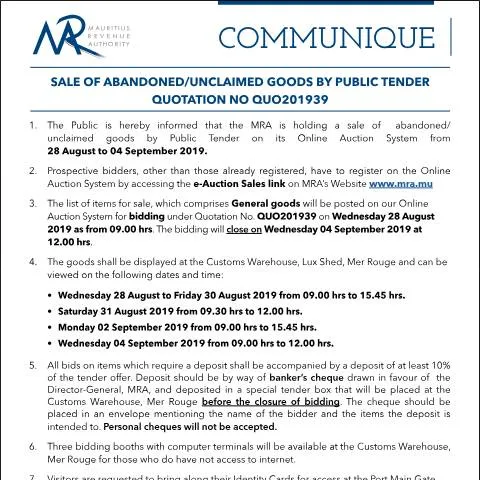
Picture a dusty warehouse filled with forgotten items—abandoned possessions waiting for a second chance at life. The Mauritius Revenue Authority (MRA) orchestrates a unique opportunity through its Sale of Abandoned/Unclaimed Goods by Public Tender. This process, initiated by Communique39of2019, opens doors for potential bidders to claim these goods, providing a fascinating glimpse into the world of auctioning unclaimed items.
Navigating the Tender Timeline: A Step-by-Step Journey
Engaging in the public tender process requires understanding the timeline that dictates various stages, from registration to bidding. Here’s how the sequence unfolds:
- Registration: Prospective bidders must register on the MRA's Online Auction System. This process starts as soon as the sale is announced.
- Viewing the Goods: The items available for bidding are displayed at the Customs Warehouse, allowing potential bidders to inspect the goods before placing bids.
- Bidding Phase: Bids are placed online, beginning on the designated date and closing after a week, ensuring ample time for participants.
- Finalization: Winning bids are confirmed, and necessary payments are processed, marking the completion of the tender process.
Who Can Participate: Eligibility and Requirements
The call to action is clear: anyone with a keen interest in unclaimed goods can participate, provided they meet specific criteria. Here’s a closer look at the eligibility requirements:
- Age Requirement: Bidders must be legally of age, typically 18 years or older, to enter into a contract.
- Identification: Participants are required to present valid identity cards when accessing the auction site.
- Registration: Individuals not already registered must ensure they complete the online registration process.
Notably, the MRA emphasizes the importance of transparency and fair play, making the process open to all but ensuring that participants are adequately identified and registered.
Completing the Bid: Key Information and Common Pitfalls
As the auction date nears, bidders must carefully complete their bids. The form requires specific information to ensure clarity and prevent errors. Here’s a breakdown of essential sections and common pitfalls:
Sections of the Bid Form
- Bidding Information: Clearly state the item number and description of the goods you intend to bid on.
- Deposit Amount: Remember to include a deposit of at least 10% of the bid amount, which is mandatory for all bids that require a deposit.
- Bidder's Details: Provide accurate personal information including full name, contact details, and identification number.
Potential Errors to Avoid
- Incorrect Deposit Amount: Ensure that the deposit is calculated correctly; failing to do so may disqualify your bid.
- Incomplete Information: Double-check all sections for completeness to avoid delays or rejections of your bid.
- Missed Deadlines: Be aware of all submission deadlines, especially when depositing the required cheque.
Viewing the Goods: Inspection at Customs Warehouse
To facilitate informed bidding, the MRA allows prospective bidders to view the items at the Customs Warehouse, located at Lux Shed, Mer Rouge. The inspection period typically spans several days, as outlined below:
| Date | Time |
|---|---|
| Wednesday 28 August | 09:00 - 15:45 |
| Thursday 29 August | 09:00 - 15:45 |
| Friday 30 August | 09:00 - 15:45 |
| Saturday 31 August | 09:30 - 12:00 |
| Monday 02 September | 09:00 - 15:45 |
| Wednesday 04 September | 09:00 - 12:00 |
This viewing period is not just a formality—it’s an essential opportunity to assess the condition and value of the goods before committing financially.
Making the Deposit: Guidelines for Successful Payment
To secure participation in the bidding process, a deposit is required. It is important to adhere to the specific guidelines outlined by the MRA:
- Deposit Method: Deposits must be made via a banker’s cheque drawn in favor of the Director-General, MRA.
- Enveloping the Cheque: Place the cheque in an envelope clearly marked with your name and the corresponding item numbers.
- Submission Location: The cheque is to be deposited in a designated tender box at the Customs Warehouse before the bidding closes.
Personal cheques will not be accepted, reinforcing the need for adherence to specified payment methods to avoid complications during the bidding process.
What Happens After the Bid: Next Steps and Procedures
Once the bidding closes, the MRA undertakes the crucial task of evaluating bids. Winning bidders will receive notifications, and the subsequent steps will include:
- Payment of Balance: Successful bidders will be required to pay the remaining balance for their purchased items.
- Collection of Goods: After payment is confirmed, arrangements will be made for the collection of the goods, which may include specific instructions from the MRA.
- Documentation: Bidders may receive documentation confirming their successful acquisition of the goods, serving as proof of purchase and ownership.
In case of disputes or issues, the MRA has established channels for addressing concerns, ensuring a robust process that protects the interests of all parties involved.
The Importance of Transparency: Regulatory Framework and Historical Context
The Sale of Abandoned/Unclaimed Goods by Public Tender is rooted in a well-defined regulatory framework designed to promote transparency and fairness in the auctioning of public goods. This practice draws upon the principles outlined in the Constitution of 1968 and the PSC Act of 1955, ensuring that procedures are not only lawful but also equitable.
This framework serves to balance public interest with individual rights, allowing for the responsible management of unclaimed goods while fostering economic opportunities through public participation. Understanding this context enriches the experience for bidders, as they engage with a process steeped in regulation and accountability.
Conclusion: Embracing Opportunities through the Tender Process
The Sale of Abandoned/Unclaimed Goods by Public Tender represents more than just an auction; it is a gateway to unique treasures that can be reclaimed by the public. By adhering to the guidelines, understanding the process, and appreciating the regulatory underpinnings, bidders can navigate this exciting opportunity with confidence.
As the date approaches, ensure that you are fully prepared—review your registrations, inspect the goods, and meticulously complete your bids. This isn’t just about acquiring items; it’s about engaging in a dynamic process that reflects the spirit of community and opportunity in Mauritius.
Understanding the Process of Tendering for Abandoned and Unclaimed Goods
In Mauritius, the sale of abandoned or unclaimed goods typically involves a structured tender process. This is initiated to ensure that the liquidation of such goods is done in a transparent and efficient manner. The authorities, notably the Public Service Commission (PSC) and relevant local government bodies, follow specific guidelines to safeguard public interest while handling these goods.
To begin with, it is essential to distinguish between 'abandoned goods' and 'unclaimed goods.' Abandoned goods generally refer to items left behind by the owner, while unclaimed goods may include items that have been held by authorities for a certain period without any claim being made. These goods can range from vehicles to household items, and their disposal must adhere to the respective protocols.
Once the decision to auction these goods is made, the relevant department usually issues a public notice inviting tenders. This notice will specify the types of goods available, the conditions of sale, and the tender submission deadline. Interested bidders must prepare their submissions carefully, ensuring that they include all required documentation, such as proof of identity and compliance with any stipulated conditions.
The tender process typically involves the submission of PSC Form 7 for individuals and businesses interested in participating. The form must be duly filled and submitted to the designated authority, which may vary depending on the nature of the goods and the local governing body overseeing the tender.
It is vital for potential bidders to familiarize themselves with the tender requirements, as incomplete submissions can lead to disqualification. Additionally, once tenders are opened, the awarding of goods is often based on a combination of the bid amount and the bidder's compliance with legal and procedural requirements.
This process ultimately aims to ensure that unclaimed or abandoned goods are disposed of in a manner that benefits the community, while also providing a chance for individuals to acquire goods at potentially lower prices than retail.
Legal Framework Governing the Sale of Abandoned Goods in Mauritius
The legal framework for the sale of abandoned and unclaimed goods in Mauritius is shaped by a combination of local statutes and administrative guidelines. Primarily, the Public Service Act of 1955 lays the foundation for various public service operations, including the disposal of abandoned goods.
Fill in your form directly online
No printing: type your details into the boxes of the official form, tick, then download the PDF ready to send.
- 1Type into the form boxes
- 2Tick in one click
- 3Save and download the PDF
According to the guidelines established under this Act, specific procedures must be followed to ensure fairness and transparency. For example, any property considered for sale must have been officially declared abandoned by the relevant authority. This declaration involves a thorough investigation to confirm that the owner is indeed unreachable or has voluntarily relinquished ownership.
The legal stipulations also encompass the requirement for public notifications. This means that citizens should be made aware of upcoming tenders through various communication channels, including local newspapers, public announcements, and official government portals such as govmu.org.
In addition to the PSC Act, the Local Government Act plays a pivotal role. Local government units are empowered to manage the sale of unclaimed goods within their jurisdictions. Furthermore, local councils often have specific by-laws that govern the tendering process, ensuring that the sale aligns with community interests and objectives.
Moreover, any revenue generated from the sales of these goods typically contributes to local government funds, which can be utilized for community development projects. This feature underscores the dual purpose of the sale process: to manage abandoned properties efficiently and to generate funds for public welfare.
Impacts on Local Communities and Environmental Concerns
The sale of abandoned and unclaimed goods through public tender not only influences economic factors within Mauritian communities but also raises important environmental considerations. When such goods are disposed of responsibly, it can help mitigate clutter in public spaces and reduce potential hazards associated with abandoned items.
One of the significant impacts on local communities is the potential for job creation within the tendering and auction sector. As more abandoned goods are put up for sale, there is a growing need for individuals skilled in auction management, logistics, and inventory assessment. This can lead to increased employment opportunities within local councils or private entities managing these sales.
Furthermore, the sale of unclaimed properties can also foster a culture of recycling and reusing goods. By allowing community members to bid on items that would otherwise be discarded, it encourages a more sustainable approach to consumption. Individuals may find useful items at a fraction of their retail price, which can help lower waste and promote environmentally friendly practices.
However, it is essential to address environmental concerns that may arise during the auction process. For instance, the disposal of certain items can pose health risks if not managed correctly—especially hazardous materials or electronic waste. Authorities are thus required to ensure that any auction of goods complies with environmental regulations and that proper waste management practices are in place.
Additionally, local councils are encouraged to collaborate with environmental agencies to promote awareness about responsible disposal and recycling options for unsold goods. This initiative could encompass educating the public on the importance of environmental stewardship while also participating in community clean-up events or workshops.
Ultimately, while the sale of abandoned and unclaimed goods offers numerous benefits to the community, a balanced approach is necessary to address both economic and environmental challenges effectively.