Navigating the Sale of Abandoned/Unclaimed Goods: Understanding Communique Q15 of 2018
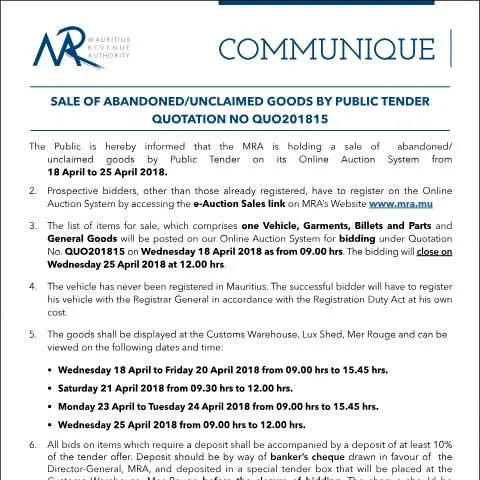
In the bustling economic environment of Mauritius, the Mauritius Revenue Authority (MRA) plays a critical role in managing unclaimed goods through public tender. The Communique Q15 of 2018 outlines a process for selling such items, a procedure that opens opportunities for both citizens and businesses. To successfully participate, understanding the specifics of this document is paramount.
Defining the Significance of the Form
While many forms exist within the Mauritian administrative framework, the Sale of Abandoned/Unclaimed Goods by Public Tender serves a unique purpose. This form is distinct from other administrative documents such as tax returns or employment applications, as it directly facilitates asset recovery and fiscal responsibility.
The document outlines the protocol for bidding on unclaimed goods, ensuring that all transactions align with statutory requirements. As a citizen, engaging with this process not only allows you to acquire items at potentially lower prices but also ensures that the government maintains a transparent and fair auction process.
Preparing Your Bid: Essential Documentation
Before diving into the bidding process, it's imperative to gather the necessary documentation. Depending on your situation, required documents may vary:
- Identity Verification: Valid identification, such as a National Identity Card, must be presented at the time of bidding to ensure authenticity.
- Deposit Requirement: A banker’s cheque amounting to at least 10% of your bid must accompany your tender offer. This cheque should be drawn in favor of the Director-General of MRA.
- Proof of Registration: If you're a new bidder, you need to register on the MRA’s e-Auction system prior to participating.
Engaging with the Online Auction System
The MRA has embraced modernity with its Online Auction System, a platform designed to facilitate seamless bidding. As a prospective bidder, you must familiarize yourself with this system:
- Access the e-Auction Sales link on the MRA website (www.mra.mu).
- If not previously registered, complete the registration process, ensuring all personal data aligns with your National ID.
- Review the list of items available for bidding, which includes vehicles, garments, and various general goods.
This online engagement not only simplifies the bidding process but also enhances accessibility for all citizens.
Understanding the Bidding Timeline
Timeliness is crucial. The auction for unclaimed goods runs from April 18 to April 25, 2018. Participants must adhere to this schedule to ensure their bids are considered. Here's a brief overview of the key dates:
| Date | Event |
|---|---|
| April 18 | Auction opens at 09:00 hrs |
| April 25 | Auction closes at 12:00 hrs |
| Viewing days | April 18 to April 24, from 09:00 hrs to 15:45 hrs, and April 21 from 09:30 hrs to 12:00 hrs |
Ensure that you partake in the viewing days to assess the goods before placing your bids.
What Happens After The Bid?
Upon the conclusion of the bidding period, successful bidders will be notified. The next steps involve necessary formalities that must be adhered to:
- Final Payment: Winning bidders must finalize payment arrangements for the remaining balance, including the registration of any vehicles as required by the Registration Duty Act.
- Pick-Up Arrangements: Items must be collected from the Customs Warehouse, Mer Rouge, after settling all dues.
Failing to comply with these post-bid requirements may lead to forfeiture of the goods, underscoring the importance of diligence in these final stages.
The Role of the MRA in the Tender Process
The Mauritius Revenue Authority oversees the entire process, ensuring transparency and adherence to relevant regulations. Their involvement includes:
- Conducting Auctions: The MRA is responsible for the valuation and organization of the auction events.
- Handling Deposits: The MRA manages the deposits collected from bidders and ensures adherence to the 10% requirement.
- Providing Support: Assistance is available for bidders who may have questions or require guidance throughout the process.
Understanding the MRA's role helps bidders navigate the auction landscape effectively.
Consequences of Non-Compliance
It’s essential to be aware of the potential repercussions that could arise from not adhering to the procedures laid out in the Communique Q15 of 2018. Non-compliance may result in:
- Bid Rejection: Incomplete or incorrectly filled forms can lead to outright rejection of your bid.
- Loss of Deposits: If the required deposit is not submitted or is in an unacceptable form, you may lose the opportunity to bid.
- Legal Ramifications: Failing to register goods properly post-purchase can lead to fines or issues with ownership.
Thus, adhering to the specified guidelines is not merely a formality but a critical aspect of the process.
Follow-Up Procedures: Staying Informed
After submitting your bid and participating in the auction, it's crucial to stay updated on the status of your application. Here are practical steps for follow-up:
- Check Notifications: Keep an eye on your email and the MRA website for announcements regarding auction results.
- Contact MRA: If you have not received a notification within a reasonable timeframe, contact the MRA directly at +230 202 0500. Make sure to have your bid details at hand for reference.
- Visit the Customs Warehouse: If you are a successful bidder, visit the Customs Warehouse to finalize your arrangements.
Proactively engaging in follow-up not only demonstrates your commitment but also ensures that you do not miss out on any critical developments concerning your bid.
Conclusion: Engaging Responsibly in the Auction Process
Participating in the Sale of Abandoned/Unclaimed Goods by Public Tender represents an opportunity to acquire valuable items while ensuring that unclaimed assets are managed responsibly by the government. By understanding the intricacies of Communique Q15 of 2018, and adhering to the procedures outlined, bidders can navigate this process effectively, contribute to a transparent auction environment, and potentially secure unique items at competitive prices.
Understanding the Process of Abandonment and Unclaimed Goods
In Mauritius, the handling of abandoned or unclaimed goods is governed by specific regulations that ensure a systematic approach to asset management. While the initial responsibility lies with the owner of the goods, several circumstances can lead to the abandonment or unclaiming of items, which may include but are not limited to: non-payment of debts, the owner's demise without heirs, or items left behind after a tenancy period.
Fill in your form directly online
No printing: type your details into the boxes of the official form, tick, then download the PDF ready to send.
- 1Type into the form boxes
- 2Tick in one click
- 3Save and download the PDF
The relevant authorities, such as the Ministry of Finance and Economic Development, play a critical role in the classification and storage of these goods. Upon determining that the goods have been officially abandoned, they are documented meticulously to trace their origins. The classification may include various categories such as electronic appliances, furniture, vehicles, and other tangible assets. This initial assessment is vital and lays the groundwork for the subsequent tendering process.
The law stipulates that after a period defined by the authorities—typically ranging from six months to a year, depending on the type of goods—the items can be declared for public sale. This timeframe allows for any potential claims by the original owners or rightful claimants. However, if no claims are made during this period, the goods will be prepared for public tender, effectively becoming assets that can generate revenue for the government.
Legal Framework Governing the Sale of Abandoned Goods
The legal foundation for the sale of abandoned or unclaimed goods is primarily established under the Public Tender Act and various local regulations that govern public asset management. Specifically, the system of hybrid law in Mauritius—integrating French civil law with English common law—provides a robust framework for addressing disputes and ensuring equitable treatment of owners and bidders alike.
One critical aspect of the legal framework is the requirement for public notification. Prior to conducting any tender, a notice must be published in a local newspaper and on relevant government websites, such as govmu.org. This advertisement serves to inform the public about the upcoming sale, including details about the types of items available, inspection dates, and the rules governing participation in the tender process. This ensures transparency and allows potential bidders to prepare adequately.
Furthermore, there are specific provisions regarding the assessment and valuation of the goods in question. A designated committee or valuation expert is typically tasked with estimating the fair market value of the items, ensuring that the sale price reflects their actual worth. Bid submissions are then collected, and the highest bid usually determines the successful purchaser. However, the authorities reserve the right to reject any bids they deem unsatisfactory, ensuring that the sale process is fair and generates appropriate revenue.
Steps for Participating in the Public Tender of Unclaimed Goods
Individuals interested in participating in the tender for abandoned or unclaimed goods must follow a series of specific steps to ensure their bid is valid. These steps include:
- Registration: Interested bidders should register through the appropriate government portal, ensuring they provide accurate information linked to their National ID Card via the MauPass system.
- Reviewing the Tender Notice: Carefully review the public tender notice for details about the items for sale, the conditions of the sale, and any applicable viewing dates.
- Inspection of Goods: Attend the designated inspection day to assess the condition of the items. This is often a critical opportunity, as bidders can evaluate whether the goods meet their expectations.
- Submission of Bids: Complete the necessary bid submission forms, such as PSC Form 7 or relevant LGSC forms, ensuring all required documentation is attached. Bids can typically be submitted online through the government portal or in person at designated offices.
- Payment of Deposit: Some tenders may require a deposit to accompany the bid. This deposit is often refundable if the bid is unsuccessful, but it demonstrates the seriousness of the bidder.
- Awaiting Results: After the bidding period closes, wait for the official announcement of winning bids, which is often communicated via email or posted on the government website.
- Finalizing Payment and Transfer of Ownership: Successful bidders will be required to finalize payment before the transfer of ownership can take place. Important documents, including a receipt of payment and any transfer papers, must be retained for future reference.
It is imperative for potential bidders to be aware of the specific dates and timelines associated with the tender process, which are often outlined in the official notices. Additionally, keeping an eye on local regulations can provide insights into any changes that may affect the process.