Navigating the Sale of Abandoned/Unclaimed Goods: A Practical Guide
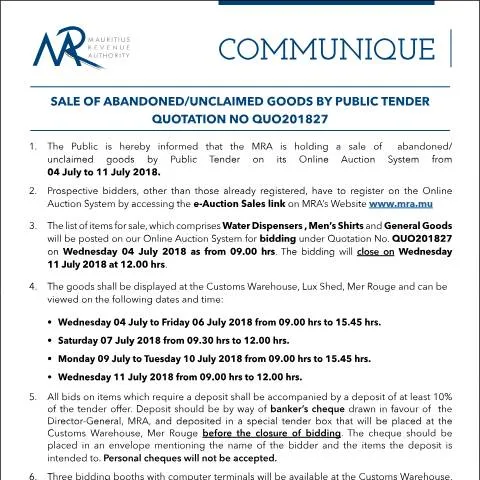
Engaging in the bidding process for abandoned or unclaimed goods in Mauritius presents a unique opportunity for individuals and businesses alike. Understanding the nuances of the Sale of Abandoned/Unclaimed Goods by Public Tender (Communique Q27 of 2018) can significantly enhance your experience. As the Mauritius Revenue Authority (MRA) makes these goods available through public tender, prospective bidders must navigate a series of steps, from registration to bidding and payment.
What Sets This Tender Apart from Other Public Auctions
Unlike other public auctions which may require different forms or procedures, the sale of abandoned goods through this tender is characterized by its specific focus on items that have been deemed unclaimed by their previous owners. This process not only fosters transparency but also provides an avenue for the MRA to recover potential revenue. The key differences include:
- Type of Goods: Items sold are primarily those left unclaimed, often including everyday items that can be surprisingly useful.
- Bidding Process: Bidders must follow a strict timeline and adhere to deposit requirements that may differ from other auctions.
- Public Tender Specifics: The tender is conducted online, necessitating familiarity with the MRA’s Online Auction System.
Understanding the Form Structure: Essential Sections Unpacked
The Quotation No. QUO201827 form, central to this process, will require careful completion. Let's delve into its critical sections to ensure no detail is overlooked:
Contact Information
Accurate contact details are essential. Ensure that your phone number and email address are correct so that the MRA can contact you regarding your tender application or any updates.
Item Selection and Description
Clearly indicate which items you are bidding on. The form will provide a section for item descriptions, where it’s crucial to be precise. Misidentifying an item can lead to confusion during the bidding process.
Deposit Information
When submitting your bid, a deposit of at least 10% is mandatory for items requiring a deposit. This must be a banker’s cheque, a detail that is crucial for compliance. Personal cheques are prohibited, and you will need to include:
- The amount of the deposit
- Your name on a separate envelope containing the cheque
The Bidding Timeline: Key Dates to Remember
Understanding the bidding timeline is critical for participants:
| Date | Activity |
|---|---|
| 04 July 2018 | Bidding Opens at 09:00 hrs |
| 11 July 2018 | Bidding Closes at 12:00 hrs |
| 04-11 July 2018 | Goods Display Hours |
Consequences of Oversights: Rights and Obligations
When engaging with this tender, understanding your rights and obligations is paramount. Neglecting to comply with submission guidelines or missing the bidding deadline can lead to:
- Disqualification: A bid that doesn’t meet the submission criteria will be rejected.
- Legal Implications: Failure to follow through on a successful bid may lead to penalties.
Being diligent ensures that you maintain your standing as a responsible bidder.
Addressing Issues: What to Do if Your Application is Rejected
In instances where your bid is rejected, it is essential to know the next steps. The MRA provides a clear process for addressing grievances. Should you encounter issues such as:
- Missing documents
- Incorrect payment methods
- Late submissions
It is advised to contact the MRA directly via their official communication channels — either through a phone call or email. Ensure to provide your quotation number for efficient processing.
The Role of Administration: How Your Bid is Processed
The back-end processing of tenders by the MRA involves stringent checks to ensure compliance with their regulations. Once bids are submitted, the MRA will:
- Verify deposited funds and compliance with deadlines
- Communicate outcomes directly to bidders
Tracking your submission can be done via the MRA’s Online Auction System. This system not only allows for bidding but also provides an avenue for monitoring the status of your bid.
Conclusion: Seizing Opportunities with Informed Bidding
Participating in the sale of abandoned or unclaimed goods provides an intriguing opportunity for bidders. By understanding the nuances of the Sale of Abandoned/Unclaimed Goods by Public Tender, including the specific form requirements and the bidding process, you can position yourself as a knowledgeable participant. Remember to adhere strictly to the guidelines, remain aware of timelines, and utilize the MRA’s resources for a successful bidding experience.
Understanding the Process of Public Tender for Abandoned Goods
The sale of abandoned or unclaimed goods in Mauritius is governed by specific regulations, primarily aimed at ensuring transparency and accountability in the disposal of such items. The process begins when goods are deemed unclaimed, usually after being held by authorities for a designated period, which can vary depending on the type of items and the governing body involved. For instance, the public health authorities may have different retention periods for medical equipment compared to local municipalities managing lost personal property.
Once the items are classified as abandoned, they enter a formal tender process that is advertised publicly to encourage transparency and competition. Interested parties must prepare to engage with the Public Service Commission (PSC) or the Local Government Service Commission (LGSC) as necessary. These tenders are often published in local newspapers, official government websites, and portals such as govmu.org, highlighting the importance of utilizing electronic platforms for dissemination of information. The notices typically include details such as the type of goods available, the location, and the deadline for submitting offers.
Documentation and Eligibility for Participation in Tenders
To participate in the tendering process for abandoned goods, potential bidders must prepare and submit several essential documents. Firstly, bidders are required to complete the relevant tender submission form, which can vary according to the specific authority managing the sale. For example, PSC Form 7 may be used for certain government-held items, while a different form may be applicable for local government sales.
Applicants will also need to provide proof of identity, typically a copy of their National ID Card linked to the MauPass system, as this ensures a proper validation of the bidder's identity against the Central Population Database. Furthermore, bidders may be required to submit evidence of financial stability, such as recent bank statements or other proof of funds, which assures the authorities of their capability to fulfil any financial obligations arising from the tender process.
Additionally, it is advisable for bidders to review the specific conditions laid out in the tender notice, as there may be unique requirements or limitations depending on the nature of the goods. Bidders that do not comply with these requirements may find their submissions disqualified, thus underlining the importance of thorough preparation and attention to detail.
Post-Tender Process: Payment and Collection of Goods
Once the tender evaluations are complete and the successful bidders have been identified, the next steps involve payment and collection of the goods. Successful bidders will typically receive a notification outlining the specific payment instructions, including the acceptable methods of payment—such as bank draft or cash—and the deadline for completing the transaction. It is critical for bidders to adhere to these instructions meticulously to avoid potential penalties or forfeiture of their bids.
After payment is confirmed, arrangements must be made for the collection of the goods. Depending on the items in question, the collection process could vary. Some local authorities may designate specific collection points, while others may facilitate deliveries directly to the winning bidders. It's imperative for bidders to schedule their collections promptly, as delays could lead to additional storage fees or, in some cases, the reallocation of items to other interested parties.
Furthermore, bidders should be fully aware of the condition and value of the items they are purchasing. Frequently, abandoned goods are sold "as is", meaning that there is no warranty or guarantee provided by the selling authority concerning the quality or functionality of the goods. Bidders are encouraged to exercise due diligence before placing bids, including inspecting items where possible, to ensure they are making informed decisions.