Unlocking the Process of Public Tender for Abandoned Goods
In the ever-evolving landscape of public service and procurement in Mauritius, understanding the nuances of the Sale of Abandoned/Unclaimed Goods by Public Tender is essential. This process not only enables the Mauritius Revenue Authority (MRA) to clear unclaimed assets but also offers an opportunity for citizens to acquire goods, often at a fraction of their market value. This article dissects the timeline, procedures, and key considerations necessary for successful participation in this public tender.
Engagement Timeline: Key Dates for Public Tender
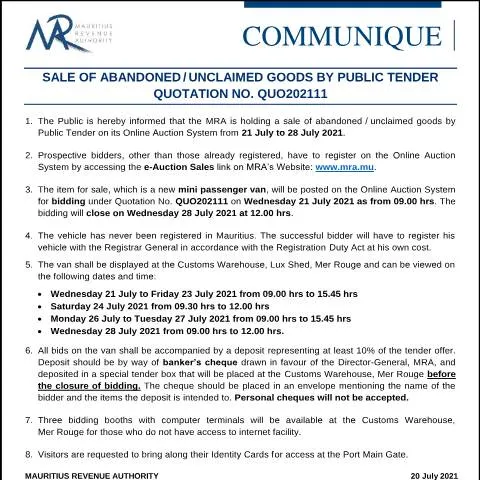
One cannot underestimate the importance of staying informed about critical dates within this tender process. For the Quotation No. QUO202111, the public tender spans a specific period:
- Bidding Period: Open from 21 July to 28 July 2021.
- Viewing Period: The goods can be viewed from 21 July to 28 July 2021 during designated hours.
After the bidding closes, successful bidders will receive notifications regarding the outcome of their bids. Ensure to mark these dates on your calendar, as missing them could mean losing out on an advantageous purchase opportunity.
A Step-by-Step Journey: From Registration to Winning Bid
To engage in the tender process, certain steps must be meticulously followed:
- Registration: Prospective bidders, especially those not previously registered, must first register on the MRA's Online Auction System.
- Deposit Requirements: It is imperative that bids are accompanied by a deposit of at least 10% of the tender offer. This deposit is uniquely required to validate your bid.
- Bidding Process: Bidding opens at 09:00 hrs on 21 July and closes at 12:00 hrs on 28 July. Ensure your bids are submitted within this timeframe.
- Post-Bid Procedures: Following the tender closure, successful bidders are responsible for registering their purchased goods with the Registrar General.
Who Can Participate? Understanding Eligibility and Requirements
The tender is open to a broad spectrum of participants, but specific eligibility criteria must be adhered to:
- Individuals must possess a valid National Identity Card to participate.
- Those wishing to bid for the abandoned goods must be registered users of the MRA's Online Auction System.
- Potential bidders should ensure they have the financial means to pay both the winning bid and any additional costs associated with the registration of the vehicle.
It’s essential to note that foreigners and entities other than individuals may face additional documentation requirements to participate. Always check the latest announcements from the MRA regarding such specifics.
Diving Deeper: Form Sections Explained
Each section of the official tender form plays a crucial role in ensuring clarity and completeness. Here we delve into the form’s requirements:
| Section | Description | Key Considerations |
|---|---|---|
| Bidder Information | Personal details and contact information. | Ensure accuracy; any discrepancies can lead to disqualification. |
| Deposit Amount | Indicate the amount being bid. | Minimum 10% deposit must be provided via banker's cheque. |
| Lot Description | Details about the item being bid on. | Double-check the lot number and description for correctness. |
| Signatures | Signature confirmation from the bidder. | Ensure the signature matches your identity card to avoid challenges. |
Implications for Bidders: Rights and Responsibilities
Understanding what being a bidder entails is vital. Upon placing a bid, you acquire certain rights but also responsibilities:
- Rights: Bidders who win have the right to claim ownership of the item as long as they comply with registration requirements.
- Obligations: Winning bidders must settle the remaining balance of their bid and handle registration with the Registrar General.
- Consequences of Non-Compliance: Failing to meet the obligations may result in forfeiture of both the deposit and the right to the item.
Being diligent about these responsibilities can safeguard you against unnecessary complications.
Unique Considerations: Special Cases in Tender Participation
Certain scenarios may complicate the tender process for specific bidders. These include:
- Foreign Nationals: Must present additional documentation, potentially including work permits or residency evidence.
- Minors: Participants under the age of 18 require a guardian or trustee to place bids on their behalf.
- Complex Financial Situations: Bidders facing financial constraints should consider their ability to meet the deposit and final payment requirements.
Engaging in this tender requires forethought and preparation, particularly for those in unique circumstances.
Submission Channels: Choosing Your Method for Tender Participation
Understanding the various channels through which tender submissions can be made is crucial:
- Online Submission: Most participants will use the MRA's Online Auction System for bidding, providing a straightforward method to place bids electronically.
- In-Person Bidding: For those without internet access, physical bidding booths are available at the Customs Warehouse, where bids can be placed via computer terminals.
- Deposit Submission: Regardless of the method of bidding, deposits must be placed in a sealed envelope in the designated tender box at the Customs Warehouse.
Each method has its advantages, so consider your circumstances when deciding how to participate in the tender.
Navigating Potential Pitfalls: Avoiding Common Mistakes
While we have discussed the steps and requirements, avoiding common pitfalls is equally important. Here are some key areas to watch out for:
- Failure to register in advance can bar participation. Ensure you complete this step ahead of the bidding period.
- Inaccurate bid amounts or details may lead to disqualification. Carefully review all information before submission.
- Missing the deposit deadline can result in automatic disqualification from the tender.
Being aware of these potential issues can save time and resources, enabling a smoother bidding experience.
Final Thoughts: Engaging with the Public Tender Process
Participating in the Sale of Abandoned Goods by Public Tender opens doors to unique opportunities. Whether you're a seasoned bidder or a novice, understanding the detailed procedures, requirements, and implications involved can significantly enhance your experience. Always refer to the official announcements from the MRA for the most accurate and timely information.
For queries or further assistance, contacting the MRA directly is highly recommended:
MAURITIUS REVENUE AUTHORITY Custom House, Mer Rouge, Port Louis, Mauritius T: +230 202 0500 | F: +230 216 5946 E: [email protected] | W: www.mra.mu
Understanding the Public Tender Process for Abandoned Goods
The sale of abandoned or unclaimed goods in Mauritius operates under a structured public tender process that ensures transparency and fairness. This process is governed by specific regulations, allowing government bodies to efficiently manage properties or items that are left unclaimed. Understanding this process is essential for potential bidders and stakeholders.
Typically, the authority responsible for these sales publishes a tender notice that includes all relevant details—such as the nature of the goods, bidding conditions, and deadlines for submission. Interested parties must register through the appropriate channels, often requiring them to submit PSC Form 7, which verifies their eligibility to participate in public tenders. As a potential bidder, it's crucial to stay updated by regularly checking the govmu.org portal for announcements related to upcoming sales.
Eligibility and Requirements for Bidders
To participate in the sale of abandoned goods, individuals and businesses must meet specific eligibility criteria. Generally, bidders must:
- Be a registered entity or individual with a valid National ID, verified through the MauPass system.
- Submit a completed tender application, which often includes PSC Form 7, ensuring that all provided information is accurate and up-to-date.
- Fulfill any financial prerequisites, such as demonstrating financial stability or making a deposit, if required by the tender conditions.
Moreover, it's advisable for potential bidders to familiarize themselves with the items up for auction by attending pre-tender viewings. This allows bidders to inspect the condition and value of the goods, which can include anything from vehicles to electronics. Note that bids are often made in Mauritian Rupees (MUR), reinforcing the need for bidders to be aware of the current economic context, which may influence their bidding strategy.
Post-Tender Procedures and Item Collection
Once the tender has closed and winners have been announced, it is crucial for successful bidders to understand the subsequent steps necessary for the collection of their acquired goods. The winning bidders will receive a notification detailing the terms of collection, payment methods, and any necessary documentation required for the handover.
Typically, this process involves:
- Payment of the full tender amount, which must be completed within a specified timeframe. Payment options are usually provided via the government's e-filing systems, streamlining the transaction process.
- Submission of identification documents and a copy of the tender acceptance notification. It is essential to present these documents during the collection to avoid any delays.
- Arranging for transport and logistics to collect the items, which may involve coordinating with the tender authority to secure necessary permits for transporting large or bulky items.
Overall, understanding the procedures that follow a successful bid is just as important as the bidding process itself. This ensures a smooth transition from the acquisition of goods to their actual possession, helping bidders capitalize on their new assets efficiently.