Unlocking Opportunities: Engaging with the Sale of Abandoned/Unclaimed Goods
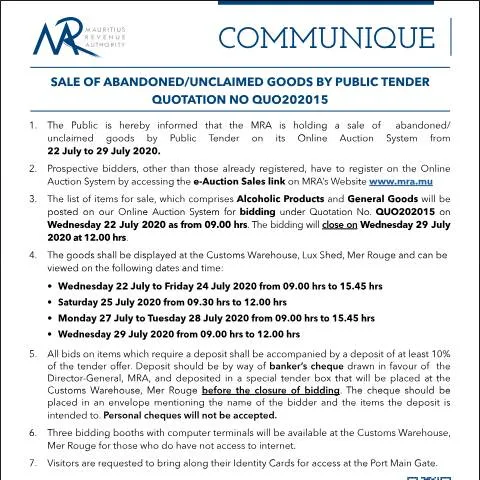
When it comes to acquiring unique items at a fraction of their market values, the Mauritius Revenue Authority (MRA) provides a remarkable opportunity through the sale of abandoned or unclaimed goods via public tender. This initiative, officially documented under Quotation No. QUO202015, was launched on July 22, 2020. For individuals and businesses looking to diversify their holdings or simply find a great bargain, understanding the nuances of this sale is essential.
Understanding the Legal Framework: Why This Sale Exists
The legal foundation for the sale of abandoned or unclaimed goods is rooted in the Mauritius legal system, which blends French civil law and English common law. The PSC Act of 1955 provides the necessary provisions governing public tenders. Abandoned goods often arise when items shipped internationally are not claimed by their owners, and the authority must clear these goods to make way for new shipments while also generating revenue. This process ensures an orderly approach to asset disposal while adhering to regulatory compliance.
Public Tender: The Mechanics of Bidding
Launching the bidding process involves several steps that bidders must navigate to participate successfully:
- Registration: Prospective bidders must register on the MRA’s Online Auction System by accessing the e-Auction Sales link on the official MRA website.
- Viewing Items: Goods available for bidding will be displayed at Customs Warehouse, Lux Shed, Mer Rouge with specified viewing times.
- Bidding Dates: Bidding opens on July 22, 2020, and closes on July 29, 2020, at 12:00 hrs.
- Deposit Requirement: Bids need to be accompanied by a deposit of at least 10% of the tender offer.
- Final Submission: Cheques must be placed in a designated tender box before bidding closes.
Who Can Participate? Special Considerations
While the public is invited to participate, some specific considerations apply:
- Individuals: Any adult individual can take part in the tender, provided they register and adhere to bidding rules.
- Minors: Individuals under 18 years of age must have a signed consent from a parent or legal guardian to engage in bidding.
- Businesses: Registered businesses can submit bids, but must demonstrate legitimacy through documentation, such as a business registration certificate.
The Importance of Accurate Bidding
One of the essential factors in participating in this auction is the accuracy of bids. Bidders must ensure that their offers are well-calculated and reflect the true value of the item. Failing to bid accurately could lead to financial loss or disqualification from future auctions.
Viewing the Goods: What to Expect
The goods available for auction are not merely abstract listings; they are tangible items that bidders can inspect before making significant financial decisions. The MRA facilitates this through organized viewing sessions:
| Date | Time |
|---|---|
| July 22 - July 24, 2020 | 09:00 - 15:45 |
| July 25, 2020 | 09:30 - 12:00 |
| July 27 - July 28, 2020 | 09:00 - 15:45 |
| July 29, 2020 | 09:00 - 12:00 |
During these times, bidders are encouraged to inspect the items closely, as this can significantly influence their bidding strategies.
Common Misunderstandings: Distinguishing This Sale from Other Auctions
While the MRA’s auction of abandoned goods might seem similar to other local sales, it is crucial to recognize its distinct characteristics. The sale specifically targets unclaimed items, often including goods like alcoholic beverages and general merchandise, which might not be available in traditional marketplaces.
Unlike regular public sales or flea markets, this auction operates under strict regulatory guidelines. Participants must understand compliance requirements and bidding protocols, which differ from casual buying and selling scenarios. This auction is governed by formal processes and regulations that ensure fairness and transparency.
Consequences of Neglect: What Happens if Bidding Fails?
Should a bidder neglect to meet specific requirements or make errors in their submission, there are critical repercussions:
- Disqualification: Bids that do not meet the deposit requirement or are submitted after the deadline will be disqualified.
- Financial Loss: Participants who fail to secure their bids may miss out on significant savings or unique acquisitions.
- Impact on Future Bids: Consistent errors or disqualification can impact one's ability to participate in future auctions.
Addressing Issues: What to Do in Case of Errors
In the event of an error during the bidding process, immediate actions can mitigate the impact:
- Contact MRA: Reach out to the MRA via the provided contact details to clarify any concerns or errors in your submission.
- Documentation: Keep copies of all submissions, including payment receipts and confirmation emails, should any disputes arise.
- Monitor Notifications: Regularly check for updates regarding your bid status or any notifications from the MRA.
Preparing for the Bidding Day: Essential Tips
Preparation is key to successfully navigating the bidding process:
- Review the Listing: Familiarize yourself with the items going up for auction, including their conditions and any potential issues.
- Set a Budget: Determine a maximum amount you are willing to spend to avoid overspending in the heat of bidding.
- Plan Your Visit: If you plan to view items physically, ensure you account for potential delays to secure your spot during viewing hours.
Engaging in the MRA's public tender for abandoned or unclaimed goods can open doors to exceptional opportunities for individuals and businesses alike. By fully understanding the processes involved, participants can maximize their potential for success and ensure compliance with all bidding requirements.
Understanding the Legal Framework for Abandoned and Unclaimed Goods
The sale of abandoned or unclaimed goods by public tender in Mauritius is governed by various legal provisions that ensure a transparent and fair process. The primary regulatory framework includes the Public Procurement Act, which defines the procedures for government contracts and public tenders, and the Civil Code of Mauritius, which outlines the rights and obligations concerning ownership and possession of goods. When goods are deemed abandoned or unclaimed, a series of legal steps must be followed to ascertain their status before they can be sold through public tender.
Under Article 2276 of the Civil Code, an owner of movable property is presumed to abandon their property if it has been unclaimed for a period exceeding three years. However, specific criteria must be met, such as attempts to contact the owner and the evaluation of the property's condition and value. Additionally, before initiating a sale, authorities must issue a public notice, allowing for a grace period during which the owner could reclaim their goods. This legal framework not only protects the rights of the original owners but also ensures that any sales conducted are legitimate and justifiable.
Process of Public Tender for Abandoned Goods
The public tender process for selling abandoned or unclaimed goods in Mauritius typically involves several key steps that are crucial for both compliance and transparency. Initially, the relevant authority must identify the goods and classify them as abandoned or unclaimed based on the aforementioned legal criteria. Once this classification is made, a detailed inventory of the goods should be prepared, documenting their condition, estimated value, and any distinguishing features.
Subsequently, the authority is required to publish a public notice on the official government website and in local newspapers, outlining the details of the goods to be sold, including images, descriptions, and the terms of sale. This notice must be accessible to the general public and should be posted at least two weeks prior to the scheduled tender date to allow potential bidders ample time to prepare.
Interested parties are required to submit their bids by a specified deadline, using the designated tender form, typically named something like Public Tender Form 12A. These submissions must include identification details, proof of financial capability (e.g., bank statements), and, in some cases, a deposit to secure the bid. After the closing date, the tenders are reviewed, and a decision is made based on compliance with the submission requirements and the bid amount. The winning bid is then announced publicly, and the successful bidder is notified to complete the transaction within a stipulated timeframe.
Post-Tender Responsibilities and Regulations
Once a public tender for abandoned or unclaimed goods has concluded and a successful bidder has been announced, several post-tender responsibilities come into play to ensure compliance with legal and administrative protocols. The winning bidder is tasked with fulfilling the payment requirements outlined in the tender documentation. Typically, this includes paying the total bid amount along with any applicable taxes, administrative fees, or other costs associated with the sale of the goods. The Mauritius Revenue Authority (MRA) plays a crucial role in overseeing these financial transactions to ensure proper tax compliance.
Moreover, the successful bidder must arrange for the collection of the goods within a specified timeframe, often detailed in the tender terms. Failure to collect the items in a timely manner may result in penalties or the forfeiture of the bid amount. It is vital for the bidder to adhere to these conditions to avoid legal complications.
In addition, authorities conducting the sale are required to maintain precise records of the transaction, including documentation of the tender process, bidder information, and details of the goods sold. These records are essential for audit purposes and to ensure transparency in public procurement activities. Furthermore, should any disputes arise post-sale, having a reliable record helps facilitate resolutions.
Finally, it is worth noting that the regulations surrounding abandoned goods may evolve, reflecting changes in public policy or legal standards. Therefore, stakeholders involved in the tender process, including bidders and public authorities, should remain informed about any updates or amendments to ensure compliance and smooth operations.