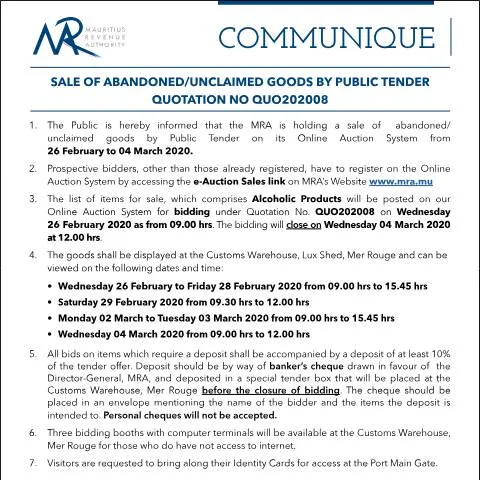
Unlocking Opportunities: Participating in the Sale of Abandoned/Unclaimed Goods
The sale of abandoned or unclaimed goods by public tender is not just another bureaucratic process; it is a treasure trove for savvy bidders seeking excellent deals on items that have been left unclaimed. On the 26th of February 2020, the Mauritius Revenue Authority (MRA) opened the gates for interested individuals to engage in this highly anticipated auction. Whether you are a business owner looking to stock up on inventory or an individual wanting to acquire unique items, understanding the framework of this sale can significantly enhance your bidding experience.
Chronology of Events: From Tender Announcement to Bidding Closure
The timeline for the sale is a critical aspect that participants must note. This sale unfolded over a span of several days, with specific dates marking different phases:
- Announcement of Sale: The sale was officially announced on 26 February 2020.
- Online Bidding Period: Bidding commenced on the same day, 26 February 2020, and continued until 04 March 2020 at 12:00 hrs.
- Preview of Goods: Prospective bidders were invited to view the goods at the Customs Warehouse from 26 February to 04 March 2020, with specific viewing hours outlined for each day.
Detailed Viewing Schedule
| Date | Time |
|---|---|
| 26 February 2020 | 09:00 hrs - 15:45 hrs |
| 27 February 2020 | 09:00 hrs - 15:45 hrs |
| 28 February 2020 | 09:00 hrs - 15:45 hrs |
| 29 February 2020 | 09:30 hrs - 12:00 hrs |
| 02 March 2020 | 09:00 hrs - 15:45 hrs |
| 03 March 2020 | 09:00 hrs - 15:45 hrs |
| 04 March 2020 | 09:00 hrs - 12:00 hrs |
Understanding the Bidding Process: Steps and Requirements
Engaging in the public tender process requires careful adherence to specific protocols. The MRA mandates that all bids be accompanied by a deposit, which is a crucial step for all bidders. Here's a breakdown of the requirements:
- Deposit: A minimum deposit of 10% of the tender offer is mandatory. This deposit must be made via a banker’s cheque.
- Submission: The deposit cheque should be submitted in a special tender box located at the Customs Warehouse, Mer Rouge. It is essential to ensure that the cheque is enclosed in an envelope marked with the bidder's name and the corresponding items.
- Internet Access: Bidders without internet access can still participate in the auction through designated bidding booths equipped with computer terminals at the Customs Warehouse.
Accessibility and Identity Verification
For security reasons, visitors are required to present their Identity Cards at the Port Main Gate to gain access to the auction area. This measure ensures a controlled environment conducive to fair bidding.
Who Can Bid: Eligibility Criteria and Special Considerations
The opportunity to bid on abandoned or unclaimed goods is open to the general public. However, certain considerations apply:
- Individuals: All Mauritian citizens with a valid National ID card can participate.
- Businesses: Registered businesses wishing to bid must ensure they have the proper documentation and authorizations in place.
- Foreign Bidders: Non-citizens are permitted to bid but may face additional requirements, including verification of identity and adherence to local regulations.
Post-Bid Process: What Happens After Bidding Closes?
Once the bidding period concludes, the process doesn't end there. Here's how the MRA follows up on the bids:
- Bid Evaluation: All submitted bids will be evaluated by the MRA, and successful bidders will be notified.
- Payment of Remaining Amount: Successful bidders will need to settle the remaining payment after the deposit has been accounted for.
- Collection of Goods: Detailed instructions on how to collect the purchased items will be provided to the winning bidders.
Consequences of Non-Compliance
It is imperative that bidders adhere strictly to the stipulated guidelines. Failure to comply with the payment deadlines or incorrect bid submissions may lead to the forfeiture of both the item and the deposit.
Regulatory Framework: The Legal Backbone of the Sale
The sale of abandoned or unclaimed goods operates under a framework designed to ensure transparency and fairness while maximizing the recovery of value. This framework is grounded in legal precedents and provisions under the Mauritian law:
- Public Tender Law: The sale is executed under the guidelines established within the Public Service Commission Act 1955.
- MRA Regulations: The MRA oversees the auction process, ensuring adherence to defined rules and procedures.
A Unique Opportunity: Distinguishing This Sale from Other Auctions
It is essential to recognize what sets this public tender apart from other forms of bidding and auctions:
- Type of Goods: The items sold are generally unclaimed goods, often including unique finds that are not readily available through traditional retail channels.
- Public Access: Unlike private auctions, this process is open to everyone, promoting inclusivity.
- Transparent Process: The MRA ensures a fair bidding environment through structured opportunities for participation.
Engagement Beyond Bidding: Community Benefits of the Auction
The public tender for the sale of abandoned or unclaimed goods extends beyond individual benefits. It serves the community in several ways:
- Economic Recovery: The sale contributes to the nation's economy by recovering potential losses from abandoned goods.
- Encouraging Recycling: By facilitating the sale of unclaimed items, the auction promotes the recycling and repurposing of goods within the community.
Conclusion: Preparing for the Next Auction
As this auction illustrates, the sale of abandoned or unclaimed goods is an excellent opportunity to engage with valuable assets that otherwise would be lost. It is crucial for bidders to remain informed about future auctions and stay prepared by ensuring compliance with all regulations and procedural requirements. The MRA continues to enhance its auctioning processes, placing emphasis on transparency and accessibility. Thus, keeping abreast of upcoming sales through their official channels, like the MRA's website, will aid prospective bidders in seizing these valuable opportunities.
Understanding the Legal Framework for Abandoned Goods in Mauritius
The sale of abandoned or unclaimed goods in Mauritius is governed by a combination of local legislation and practices. The key legislative frameworks include the Inventory and Sales Regulations and the Auctioneer’s Act, among others. Abandoned goods refer to items that have been left unclaimed for a specified period, typically after the conclusion of a contractual agreement, where the rightful owner has failed to collect their belongings. It is crucial to understand that the process for handling these goods must adhere to the principles of fairness and transparency, reflecting the values enshrined in the Constitution of Mauritius.
Generally, the authorities involved in this process include the Ministry of Finance and Economic Development, which oversees the financial aspects of the sale, and the relevant local authorities responsible for conducting the auction. Under the Public Procurement Act, the sale of these items must be advertised publicly, ensuring that potential buyers are aware of the upcoming tender. It is essential for the sale process to maintain ethical standards, ensuring that the proceeds from the sales are appropriately handled and used for public benefit.
The Implications for Bidders: Rights and Responsibilities
Individuals interested in bidding for abandoned goods must be aware of their rights and responsibilities. When a public tender is announced, prospective bidders usually have the right to inspect the items before the bids are placed. This right is crucial for ensuring that bidders are making informed decisions about their purchases. Inspections are typically carried out at designated locations, and details regarding inspection schedules are usually included in the tender announcement.
Furthermore, bidders are responsible for understanding the terms and conditions associated with the tender. This includes being aware of the payment methods accepted, the timeline for collection of the items post-purchase, and any associated fees or taxes that may apply. For instance, the Mauritius Revenue Authority (MRA) may impose a Value Added Tax (VAT) on certain types of goods. Bidders are encouraged to ensure their financial readiness, as failure to comply with payment terms could result in the forfeiture of the auctioned items.
Moreover, once a bid is won, the responsibility of ensuring the legalities associated with ownership transfer falls on the bidder. It's advisable for buyers to retain all documentation related to their purchase, including receipts and any certificates of authenticity if applicable, to avoid future disputes regarding ownership.
Environmental Considerations in the Sale of Abandoned Goods
In recent years, environmental sustainability has taken a significant role in public policies, including the sale of abandoned goods. The government has emphasized the importance of ensuring that the sale process does not contribute to environmental degradation. This includes ensuring that any goods that may pose a risk to the environment—such as electronics or hazardous materials—are handled appropriately, often requiring proper disposal methods before being offered for sale.
As part of the tender process, it is becoming increasingly common for the local authorities to include an assessment of the environmental impact of the goods being auctioned. This aligns with the broader goals of sustainable development in Mauritius, which aims to preserve natural resources while promoting economic growth. Bidders must also be mindful of environmental regulations when bidding on certain items. For instance, acquiring vehicles or machinery may require the buyer to adhere to specific emissions standards or registration processes post-purchase.
Additionally, there is a growing awareness of the potential for upcycling and recycling abandoned goods. Buyers are encouraged to consider the life cycle of the products they are purchasing. The government promotes programs that support innovative uses for abandoned goods, reducing waste and encouraging the circular economy. During the bidding process, prospective buyers are often reminded of their role in promoting sustainability and responsible consumption.