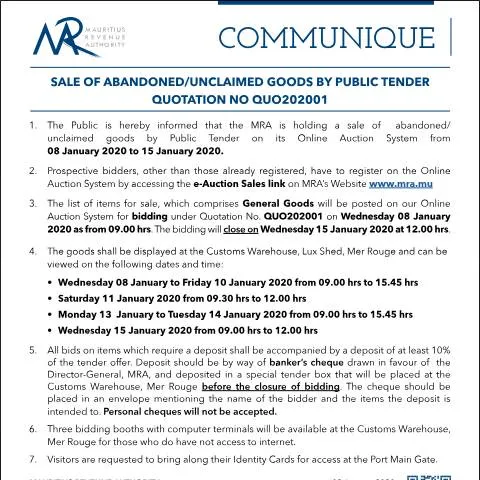
Understanding the Context of the Sale of Abandoned Goods
The Sale of Abandoned/Unclaimed Goods by Public Tender represents a unique opportunity for both the Mauritius Revenue Authority (MRA) and potential bidders. It is essential to grasp the significance of this event, primarily designed to clear unclaimed items while supplying the public with the chance to acquire goods at potentially lower prices. This initiative serves two main purposes: it reduces storage costs for the MRA while allowing citizens to participate in a transparent bidding process.
The Timeline: Key Dates to Remember
One of the most crucial aspects of engaging with this public tender is keeping track of significant dates:
- Start Date: Bidding opens on January 8, 2020, at 09:00 hrs.
- Viewing Days: Interested bidders can inspect goods from January 8 to January 15, 2020, on the following schedule:
- Wednesday, January 8, to Friday, January 10: 09:00 hrs - 15:45 hrs
- Saturday, January 11: 09:30 hrs - 12:00 hrs
- Monday, January 13, to Tuesday, January 14: 09:00 hrs - 15:45 hrs
- Final Viewing on Wednesday, January 15: 09:00 hrs - 12:00 hrs
- Closing Date: Bidding concludes on January 15, 2020, at 12:00 hrs.
Understanding this timeline is essential for preparing and submitting bids successfully, ensuring that no opportunities are missed in this competitive bidding environment.
Channels for Submission: Online vs. In-Person Bidding
Bidders have the flexibility of using either the online platform or attending in person at the Customs Warehouse in Mer Rouge. Here are the differences between these two submission methods:
| Method | Requirements | Advantages |
|---|---|---|
| Online Auction | Must register on the MRA's Online Auction System | Convenience of bidding from anywhere with internet access |
| In-Person Bidding | Access to a bidding booth at the Customs Warehouse with a computer terminal | Ability to view items physically and ask questions on the spot |
Depending on your comfort level with technology and proximity to the auction site, you can choose the method that suits you best.
Preparing Your Bid: Documentation and Requirements
Before placing a bid, ensuring you have the necessary documentation is vital. Here’s what you need:
- Identity Verification: Bidders must present their National Identity Cards when accessing the port.
- Deposit Requirement: A deposit of at least 10% of your tender offer is mandatory. This deposit must be made via a banker’s cheque made out to the Director-General of the MRA.
- Envelope Submission: The cheque should be placed in an envelope that clearly states the bidder's name and the items for which the deposit is intended.
- No Personal Cheques: Only banker’s cheques are acceptable; personal cheques will not be considered.
These preparations will streamline your bidding process, reducing the likelihood of complications.
Navigating the Form: Key Sections and Common Pitfalls
Filling out the official bidding form correctly is vital. Each section contains specific requirements that bidders must adhere to. Let’s break down the essential sections of the form:
- Section 1: Personal Information
- Ensure your name is spelled correctly and matches your identity card.
- Provide an accurate contact number and email address for future correspondence.
- Section 2: Item Selection
- Clearly indicate the items you wish to bid on.
- Check the item description against the auction listing to avoid discrepancies.
- Section 3: Bid Amount
- State your bid clearly, ensuring it adheres to the minimum bid requirements.
- Double-check the amount to ensure it reflects your intended offer.
Providing inaccurate information or failing to follow the form’s instructions can lead to disqualification from the bidding process.
Following Your Bid: What Happens Next?
Once the bidding has closed, bidders must remain attentive to developments regarding their submissions. The MRA typically follows a structured process to determine successful bidders:
- Auction Results: Results will be announced shortly after bidding closes, and you can check them on the MRA's auction platform.
- Notification: Successful bidders will be contacted directly via the contact information provided on their bids.
- Payment Instructions: Winning bidders will receive detailed payment instructions, along with deadlines for completing the transaction.
Should you not receive a notification, you may consider following up with the MRA to inquire about your bid status.
Engaging with the MRA: Communication Channels
Staying in touch with the MRA throughout this process is crucial. They provide multiple channels for communication:
- Phone: You can reach the MRA at +230 202 0500.
- Email: For direct inquiries, use [email protected].
- Website: Visit www.mra.mu for online resources, including the auction system and additional information.
Utilizing these channels can help clarify any doubts and facilitate your participation in the auction process.
Conclusion: Maximizing Your Auction Experience
Taking part in the Sale of Abandoned/Unclaimed Goods by Public Tender can be an exhilarating experience, offering the chance to acquire valuable items. By understanding the bidding process, preparing your documentation thoroughly, and staying updated on all auction developments, you can maximize your chances of success. Remember, this event not only aids in clearing unclaimed goods but also creates opportunities for citizens to engage in a dynamic auction environment.
Understanding the Process of Public Tender for Abandoned Goods
The sale of abandoned or unclaimed goods by public tender in Mauritius is a structured process governed by several legal frameworks. The procedure begins when authorities identify goods that have been unclaimed or abandoned, typically after a stipulated period. These goods can range from personal property to vehicles and are often handed over to the relevant authorities for custody. According to local regulations, once goods are classified as abandoned, they may be prepared for public tender to recover some value for the state or local government.
The process is initiated by a public notice, often appearing in local newspapers and online platforms, detailing the nature of the goods, their estimated value, and the date and location for the tender. This is crucial, as it provides potential bidders with critical information to assess whether they wish to participate. The notice should include specific details about the tender process, such as the submission timeline, any requisite forms (like PSC Form 7), and a comprehensive list of items available for auction.
Potential bidders should be keenly aware that they must register for the tender, typically requiring the submission of personal identification, contact information, and any relevant tax compliance documents to the Mauritius Revenue Authority (MRA). This ensures that all participants are legitimate and helps maintain transparency in the bidding process.
Legal Framework Governing the Sale of Unclaimed Goods
In Mauritius, the legal foundation for the sale of abandoned or unclaimed goods is primarily founded in the Public Administration Act and the Local Government Act. These statutes outline the responsibilities of various departments in managing unclaimed property and set the parameters for conducting public tenders. Additionally, the provisions in the PSC Act 1955 stipulate the protocols for handling such property to ensure compliance with national regulations.
It is essential for participants to familiarise themselves with any existing local government bylaws that may impose additional requirements or regulations on the tender process. For instance, certain types of goods, such as those relating to personal identity or sensitive information, might necessitate more stringent privacy measures or destruction protocols before being auctioned. This legal backdrop emphasizes the importance of adhering to proper procedures to avoid disputes or legal issues arising from the sale of such goods.
Moreover, all public tenders must follow principles of fairness and transparency to uphold public trust. Bidders should be aware that the evaluation of bids can be influenced by several factors, including the completeness of required documentation, the offered price, and adherence to submission deadlines. Understanding these factors can significantly improve a bidder's chance of success.
Tips for Successfully Bidding on Unclaimed Goods
Bidding for abandoned or unclaimed goods can be a lucrative opportunity if approached correctly. Below are essential tips for potential bidders looking to participate in the tender process:
- Research the Items: Before the bidding date, carefully research the items being auctioned. The public notice should provide a basic description, but it's wise to do your due diligence to assess the market value of similar items. This knowledge will enable you to make informed bidding decisions.
- Inspect the Items (if possible): Authorities often allow potential bidders to inspect items prior to the tender. Take advantage of this opportunity to assess the condition and functionality of the goods. This inspection can provide insight into whether the items are worth the investment.
- Prepare Your Documentation: Ensure all required documents are prepared ahead of time. This includes identification, tax compliance certificates, and any necessary registration forms. Submitting a complete application can prevent disqualification due to administrative errors.
- Establish a Budget: It is crucial to set a firm budget before the tender begins. Bidding can become competitive, and emotions may lead you to exceed your financial limits. Define your maximum bid amount beforehand to stay within your budget.
- Follow Up Post-Tender: If you are successful in your bid, ensure that you are aware of all post-tender requirements, such as payment deadlines and arrangements for item collection. Prompt action post-tender can help avoid complications.