The Mechanism Behind the Sale of Abandoned and Unclaimed Goods
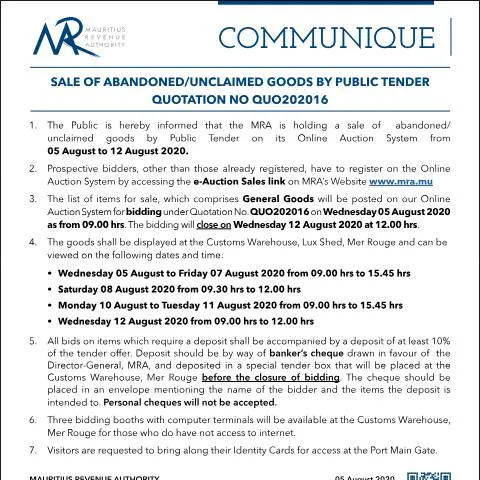
The Sale of Abandoned/Unclaimed Goods by Public Tender is a crucial initiative led by the Mauritius Revenue Authority (MRA). This procedure not only serves as a mechanism for the disposal of goods that have remained unclaimed, but it also represents an opportunity for the public to acquire potentially valuable items. A significant aspect of this process is its online auction system, which reflects the government's commitment to modernize public services and enhance accessibility for all stakeholders involved.
Understanding the Auction Timeline
The auction period for this specific sale, under Quotation No. QUO202016, commenced on 05 August and concluded on 12 August 2020. During this time frame, interested bidders could participate in the auction through the designated online platform. The systematic breakdown of the auction timeline is as follows:
- 05 August 2020: Auction opens at 09:00 hrs.
- 12 August 2020: Auction closes at 12:00 hrs.
Viewing and Inspection of Goods
Prior to placing bids, bidders were encouraged to inspect the goods physically. The items were displayed at the Customs Warehouse, Lux Shed, Mer Rouge. The allocated times for viewing were:
- 05 August to 07 August 2020 from 09:00 hrs to 15:45 hrs
- 08 August 2020 from 09:30 hrs to 12:00 hrs
- 10 August to 11 August 2020 from 09:00 hrs to 15:45 hrs
- 12 August 2020 from 09:00 hrs to 12:00 hrs
This viewing period allowed prospective bidders to thoroughly assess the condition and value of the items available for auction, helping them make informed decisions prior to bidding.
Registration Process for Bidders: A Step-by-Step Guide
Individuals looking to participate in the auction needed to follow a series of steps for registration. Specifically, those who were not previously registered on the Online Auction System had to complete the following:
- Access the MRA’s official website and navigate to the e-Auction Sales link.
- Fill out the required registration form, providing necessary details such as personal identification and contact information.
- Submit the completed registration form to receive confirmation of registration and further instructions.
This formal registration process is significant as it ensures that only eligible individuals can participate in the bidding, thereby maintaining the integrity of the auction.
Deposit Requirements: Ensuring Serious Bidding
To foster a serious bidding environment, the MRA mandated that all bids for items requiring deposits be accompanied by a banker’s cheque. The deposit must consist of at least 10% of the tender offer and must be drawn in favor of the Director-General of the MRA. Here’s how the deposit process works:
- Deposits must be placed in a special tender box located at the Customs Warehouse, Mer Rouge, before the auction closes.
- Each cheque should be enclosed in an envelope clearly stating the bidder's name and the specific items the deposit pertains to.
- Personal cheques are explicitly not accepted, ensuring a level of security and responsibility among bidders.
The Role of Online Auctions in Modern Governance
The transition to online auctions reflects a broader trend towards digital governance in Mauritius. By facilitating auction processes through electronic platforms, the MRA is not only optimizing operational efficiency but also expanding accessibility for bidders across the island. This move has several implications:
- Increased Participation: Individuals from various regions can participate in the auction without geographical constraints.
- Transparency in Bidding: The online platform records all bids, ensuring fairness and reducing the potential for disputes.
- Efficiency in Transactions: The digital platform streamlines the entire bidding process, from registration to payment.
Alternatives for Non-Digital Access
Recognizing that not all bidders may have internet access, the MRA provided alternatives during the auction period. This initiative included:
- Three bidding booths equipped with computer terminals at the Customs Warehouse.
- Assistance from MRA personnel for those unfamiliar with online bidding procedures.
Such provisions ensure inclusivity and empower all members of the public to take part in the auction, regardless of their technological literacy.
Special Considerations: Foreign Bidders and Minors
The auction process is inclusive, but certain special conditions apply when it comes to particular demographics such as foreign bidders and minors. Here’s a closer look:
Foreign Bidders
Foreigners interested in participating in the auction must adhere to additional regulations:
- They must provide valid identification documents, such as a passport, during the registration process.
- Foreign bidders should ensure compliance with local laws regarding the acquisition and ownership of goods in Mauritius.
Minors
For bidding participants under the age of 18, parental or guardian consent is mandatory. The following steps are necessary:
- The minor must be accompanied by a parent or legal guardian during the registration and bidding process.
- A signed consent form from the parent or guardian must be submitted along with the registration details.
Post-Auction Procedures: What Happens Next?
After the conclusion of the auction, a series of procedures follow to ensure the smooth transfer of goods to the successful bidders. This phase includes:
- Auction Results: The MRA will announce the successful bids shortly after the auction closes.
- Payment Instructions: Successful bidders will receive detailed instructions on how to complete the payment for their items.
- Collection of Goods: Once payment has been confirmed, arrangements will be made for the collection of goods, which must be done at the Customs Warehouse.
A Final Note on the Importance of Compliance
Participation in the Sale of Abandoned/Unclaimed Goods by Public Tender is not just a transaction; it is an exercise in civic engagement. Bidders are encouraged to adhere strictly to the outlined procedures in order to enhance the effectiveness of the auction process. From thorough preparation before bidding to respectful interaction during the collection of goods, compliance with the rules set forth by the MRA is paramount.
As such, understanding the intricacies of this process can significantly improve one's experience and potentially yield exciting opportunities in acquiring previously unclaimed items. The commitment to transparency, efficiency, and public participation exemplified by the MRA through this auction process signifies a progressive step towards enhancing public services in Mauritius.
Understanding the Process of Public Tender for Abandoned Goods
The sale of abandoned or unclaimed goods in Mauritius is conducted through a public tender process overseen by various governmental authorities. This procedure is essential for maintaining order in the management of property and ensuring that proceeds from such sales are appropriately handled. Understanding the intricacies of this process is crucial for both potential bidders and the general public.
The protocol begins with the identification and inventory of the unclaimed goods. Items that have been deemed abandoned typically include a wide range of personal property, including vehicles, electronics, and furniture. Authorities responsible for managing these goods—predominantly local government bodies—compile a detailed list of items slated for sale. This list is published on official government portals such as govmu.org and often includes photographs, descriptions, and conditions of the goods.
Once the inventory has been finalized and made public, interested parties must submit their bids within a specified timeframe. Bidders are required to complete relevant tender documents (e.g., LGSC Form 7) and submit them alongside any required deposits. It is essential for potential bidders to familiarize themselves with the specific terms and conditions outlined in the tender notice, including payment methods, collection procedures, and any applicable fees.
Legal Considerations in the Sale of Abandoned Goods
The sale of abandoned goods in Mauritius operates under a framework of legal stipulations designed to protect the rights of all parties involved. The Constitution of Mauritius, alongside the PSC Act 1955, provides a legal basis for the management of such sales, ensuring that they are conducted fairly and transparently.
One of the key legal aspects is the requirement for public notices to be issued well in advance of the tender date. This notice must include details regarding the nature of the goods, the location of the sale, and instructions for submission of tenders. The transparency of this process is crucial for maintaining public trust and ensuring that potential buyers have ample opportunity to prepare their bids.
Moreover, it is important to note that bidders must ensure they are not encumbered by legal issues that could affect their ability to purchase abandoned goods. For example, individuals with unresolved debts or ongoing legal proceedings may find their bids scrutinized more closely. Potential buyers should conduct their due diligence to ensure they are in a position to transact without legal complications.
Best Practices for Bidding on Abandoned Goods
For those considering participating in the tender for abandoned goods, there are several best practices that can enhance the likelihood of a successful bid. First and foremost, it is advisable to thoroughly review all publicly available information concerning the goods on sale. This includes not only the tender notice but also any additional background information that may be provided on government websites.
Additionally, bidders should consider visiting the location of the goods, if possible. While photographs may give a good initial impression, viewing items in person can provide valuable insights regarding their condition and authenticity. This is particularly important for high-value items or those that require functioning parts, such as vehicles or electronics.
Furthermore, understanding the bidding process itself is key. Bidders must be aware of the minimum bid increments and the acceptable payment methods for successful tenders. It’s prudent to prepare for contingencies, such as unexpected bidding competition, and to have a predetermined maximum bid to avoid overspending.
Finally, after the tender process concludes, successful bidders will need to adhere to the timelines and conditions set forth for payment and collection. Being diligent about these requirements will ensure a smooth acquisition process and minimize complications in the transfer of ownership.