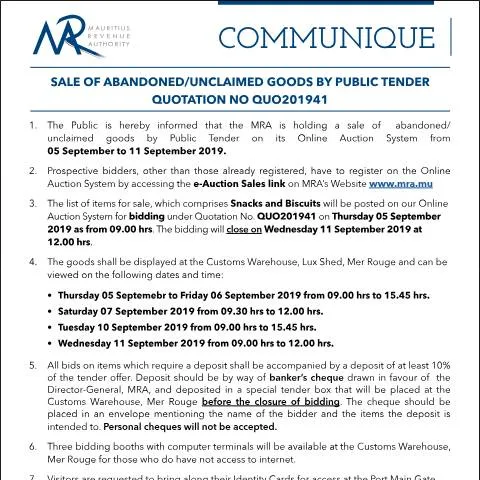
Navigating the Sale of Abandoned/Unclaimed Goods
Engaging in the bidding process for abandoned or unclaimed goods in Mauritius offers a unique opportunity for prospective buyers to acquire items at potentially lower costs. However, this process is not without its complexities. Understanding the nuances of the Sale of Abandoned / Unclaimed Goods by Public Tender, particularly the Communique 41 of 2019, is essential for bidders interested in participating.
The Role of the Auction System in Unclaimed Goods Sales
The Mauritius Revenue Authority (MRA) is responsible for holding public tenders for the sale of unclaimed goods, which serves a dual purpose. Firstly, it clears out inventory that has fallen into disuse, and secondly, it generates revenue. The auction operates from the Online Auction System, a digital platform designed to facilitate bidding.
“Participating in the public tender process can lead to significant opportunities if correctly navigated.”
Auction Timeline
- Public Tender Date: 05 September 2019 to 11 September 2019
- Item Viewing: 05-06 September (09:00 - 15:45), 07 September (09:30 - 12:00), 10 September (09:00 - 15:45), and 11 September (09:00 - 12:00)
- Bidding Closure: 11 September 2019 at 12:00 hrs
Understanding the Registration and Bidding Process
Before placing a bid, prospective bidders must register on the MRA's Online Auction System. This process ensures that all participants are verified and can successfully place bids during the auction. It is critical to complete this step well in advance of the bidding closure.
Detailed Steps for Registration
- Access the e-Auction Sales link on the MRA website (www.mra.mu).
- Fill in the required registration fields accurately.
- Submit any identification documents as required to confirm your identity.
Registered bidders will gain access to a list of items available under Quotation No. QUO201941, including snacks and biscuits among other goods.
Executing Your Bid: Key Considerations
Once registered, bidders are encouraged to explore listed items meticulously. The MRA provides specific viewing times for potential buyers to inspect the goods in person at the Customs Warehouse.
Preparing Your Bid
Each bid on items requiring a deposit must be accompanied by a banker’s cheque representing at least 10% of the tender offer. This deposit serves to assure the MRA of the bidder's commitment.
- Deposit Specifications:
- Cheques must be made out to the Director-General, MRA.
- Deposits should be submitted in a special tender box located at the Customs Warehouse.
- Personal cheques are not accepted.
Accessing the Auction: Your Physical Presence
For those without internet access, the Customs Warehouse will feature three bidding booths equipped with computer terminals, providing an alternative method for participation. It is advisable for all bidders to bring their Identity Cards for access to the Port Main Gate.
Post-Bid Follow-Up: What Happens Next?
After the bidding process concludes on 11 September, the MRA will process all bids and inform participants of the outcomes. Successful bidders will receive further instructions regarding the collection of their purchased items.
Handling Unsuccessful Bids
Participants who do not win bids will not incur any additional charges nor will they need to worry about the deposit, as it will be refunded following the conclusion of the auction.
Dealing with Errors and Discrepancies
In the event that there are errors or omissions in your application or bid submission, prompt action is necessary. It's advised to contact the MRA directly through the contact details provided in the auction announcement for resolution.
- Contact Number: +230 202 0500
- Email: [email protected]
Consequences of Inaction or Oversights
Failure to follow through with the bidding process—such as missing the deposit deadline or submitting incorrect information—may result in disqualification from the auction. Therefore, diligence is essential for those looking to secure items through this public tender.
Conclusion: Empowering Your Participation in the Bidding Process
Understanding the detailed steps of the process is crucial for anyone looking to engage in the sale of abandoned or unclaimed goods. The MRA's structured framework ensures that participants have a clear pathway to follow. Staying informed and proactive can significantly enhance your chances of a successful bid.
Understanding the Process of Public Tender for Unclaimed Goods
In Mauritius, the sale of abandoned or unclaimed goods through public tender is a structured process governed by specific guidelines to ensure transparency and fairness. This mechanism plays a crucial role in managing items that have been left unattended or forfeited, allowing for their reselling in a manner that benefits the public purse. The process begins with the identification of goods that have been unclaimed for a stipulated duration, often determined by the Ministry of Finance and Economic Development.
Typically, goods may include vehicles, electronics, or furniture, which can be valuable assets that contribute to local auctions. The authorities responsible for overseeing this process include the Mauritius Revenue Authority (MRA) and the relevant law enforcement agencies, which are tasked with the proper documentation and management of these items before they proceed to tender.
Before a public tender is announced, a detailed inventory of the unclaimed goods is created. This inventory serves as a basis for potential buyers and is usually made available on the official government portal. Interested parties can access this information to gauge the potential items up for auction. Subsequently, a public notification is published, detailing the auction date, time, and location, alongside any specific conditions for participation.
It's important to note that potential buyers must meet certain eligibility criteria to participate in the tender process. For instance, individuals might need to register their intent to bid and may be required to submit a deposit, ensuring serious participation. Once these conditions are met, interested buyers can attend the public tender, where goods are sold to the highest bidder. Understanding these steps is essential for prospective bidders who wish to navigate the tender process efficiently and legally.
Legal Considerations and Responsibilities of Bidders
Engaging in the public tender process for abandoned or unclaimed goods carries with it important legal considerations that potential bidders must be aware of. First and foremost, bidders should ensure they understand the terms and conditions outlined in the tender documentation. This documentation typically includes information on payment terms, transfer of ownership, and any liabilities associated with the goods purchased.
Fill in your form directly online
No printing: type your details into the boxes of the official form, tick, then download the PDF ready to send.
- 1Type into the form boxes
- 2Tick in one click
- 3Save and download the PDF
One key responsibility of bidders is to conduct their due diligence prior to bidding. This includes assessing the condition of the items, understanding their provenance, and recognizing any potential legal repercussions stemming from their acquisition. For example, if an item is subject to existing liens or legal claims, the new owner might inherit these issues unless they are explicitly resolved before the sale.
Bidders should also be aware of how goods are sold 'as-is.' This means that once a bid is won, the purchaser accepts the item in its current state, and no warranties or guarantees are provided by the selling authority. Potential buyers are thus encouraged to inspect items closely and seek expert assessment if necessary. Failure to do so can lead to significant financial loss, particularly if the goods require extensive repairs or are not usable.
Furthermore, it is crucial for bidders to comply with any applicable tax obligations following their purchase. The MRA oversees tax regulations in Mauritius, and all purchases made through public tenders may be subject to Value Added Tax (VAT) or other applicable duties. Ensuring compliance with these regulations is essential to avoid legal complications post-purchase.
The Impact of Digital Transformation on Public Tender Processes
In recent years, Mauritius has seen a significant shift towards digitalization in its public service operations, including the sale of unclaimed goods via public tender. The integration of technology has streamlined processes, making it more efficient for both the authorities and the bidders. The government's commitment to enhancing e-services through platforms such as govmu.org has transformed the way tenders are announced and bids are submitted.
With digital portals, bidders can now access information about upcoming tenders, review tender documents, and submit their bids online. This shift not only increases accessibility for potential bidders but also promotes greater transparency in the tendering process. Online platforms allow for real-time updates on the status of tenders, which can reduce the possibility of misinformation or fraudulent activities.
Moreover, the use of digital signatures and electronic document submissions has reduced the need for physical paperwork, thus contributing to more environmentally friendly practices. This evolution in processes also aligns with global trends toward digital governance, making Mauritius a competitive player in the region regarding administrative efficiency.
However, the transition to a digital framework requires that all participants familiarize themselves with the new systems. Bidders must ensure they have the necessary digital literacy to navigate online platforms effectively. Training sessions and resources are often made available through government initiatives, underscoring the authorities' commitment to inclusivity and support for all citizens engaging with these new technologies.
Additionally, security considerations are paramount in this digital era. The government has implemented stringent measures to protect the integrity of the tendering process, ensuring that bidders’ information remains secure and that transactions are conducted safely.