Understanding the Context of the Public Tender for Abandoned Goods
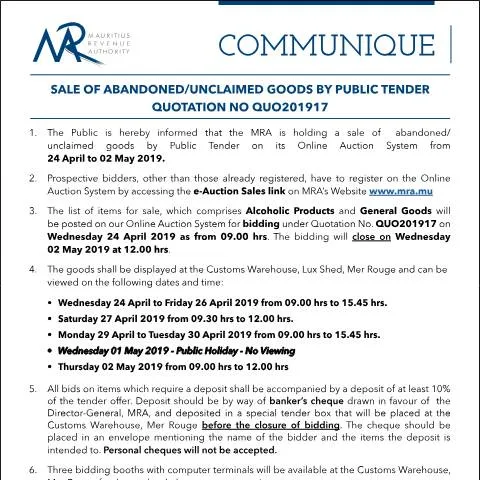
The Sale of Abandoned/Unclaimed Goods by Public Tender, communicated through official channels by the Mauritius Revenue Authority (MRA), is an essential mechanism that facilitates the disposal of items left unclaimed. These goods range from alcoholic products to general merchandise, which have been abandoned or unclaimed, often due to various reasons—be it financial issues, relocation, or compliance failures by the original owners.
This process not only serves the purpose of clearing warehouse space but also presents a unique opportunity for the public to acquire potentially valuable items at a competitive price. Understanding this tender's prerequisites and timelines is crucial for prospective bidders, especially as the tender operates within a specific time frame and requires precise administrative compliance.
Key Dates and Milestones
The timeline for the tender is clearly delineated, providing potential bidders with crucial dates that must be adhered to in order to successfully participate. The bidding period is set to run from 24 April to 02 May 2019, and it is vital for interested parties to engage within this window.
- Start Date: Bidding opens on 24 April 2019, with the goods becoming available for viewing.
- Closing Date: Bidding concludes on 02 May 2019 at 12:00 hrs.
Furthermore, the schedule for viewing the items is limited to specified dates. Bidders can inspect the goods at the Customs Warehouse during the following hours:
- 24 April to 26 April: 09:00 - 15:45 hrs
- 27 April: 09:30 - 12:00 hrs
- 29 April to 30 April: 09:00 - 15:45 hrs
- No viewing on 01 May due to a public holiday
- 02 May: 09:00 - 12:00 hrs
Who Can Participate and Special Considerations
Participation in the public tender is open to any interested individual or entity, including those who are not already registered on the MRA's Online Auction System. However, potential bidders must register beforehand to engage in the bidding process effectively.
For specific categories of bidders, such as foreigners or minors, additional scrutiny might be necessary. It's advisable for these individuals to consult with the MRA to clarify any requirements or restrictions that may apply.
Registration Process for New Bidders
New bidders must navigate the registration process on the MRA's website. Accessing the e-Auction Sales link is paramount, and completing this registration is a prerequisite for participation in the auction.
Scenarios Requiring Special Attention
- Foreign Participants: Ensure compliance with local laws and regulations regarding bid participation.
- Minors: May require parental consent and the presence of a guardian during the bidding process.
- Complex Situations: If the bidder has previously participated in similar tenders, it is essential to review any outstanding obligations associated with previous bids.
Steps for Completing Your Bid
This tender involves a clear set of steps to submit a valid bid. To enhance your understanding, let’s break down the process:
- Review the List of Items: Familiarize yourself with the available goods for sale as posted on the Online Auction System starting from 24 April 2019.
- Inspection: Attend the viewing sessions to assess the condition and value of the items you wish to bid on.
- Prepare Your Deposit: For items requiring a deposit, ensure you have a banker’s cheque ready, equal to at least 10% of your bid amount. Personal cheques are not accepted.
- Submit Your Bid: Place your completed bid along with your deposit cheque in the designated tender box located at the Customs Warehouse.
Canvassing the Administrative Treatment of Bids
Once bids are submitted, the MRA undertakes a thorough evaluation process. Bidders should remain informed about how their bids are processed and the subsequent stages of the tender.
It is important to note that the MRA provides several avenues to track the status of your bid:
- Check for updates directly on the MRA’s Online Auction System.
- Reach out to MRA's customer service for inquiries regarding your bid status.
Following the closing of the bidding period, successful bidders will be notified and must complete any remaining formalities to finalize their acquisition.
Consequences of Non-Compliance or Errors
Participants should be aware of the implications of submitting incomplete applications or failing to comply with the tender requirements. Such oversights can result in bid disqualification.
Handling Rejections and Correcting Errors
If a bid is rejected, bidders should seek clarification from the MRA about the reasons behind the decision. Being proactive in addressing any discrepancies can sometimes lead to a resolution.
In the case of missing documents or errors in the submitted bid, participants are advised to rectify these issues promptly. Resubmitting corrected documentation may still allow for bid consideration, provided it is done within the confines of the tender’s timelines.
The Impact of Abandoned Goods Sales on the Community
Selling abandoned goods via public tender not only generates revenue for the government but also fosters community engagement by providing citizens with the chance to obtain items at potentially lower costs. This initiative reflects a continuous effort to promote transparency in public procurement and manage state resources efficiently.
Moreover, buyers should be cognizant of their responsibilities post-purchase. Once the transaction is completed, ownership of the items transfers to the winning bidder, who is then accountable for any legal or environmental considerations associated with the goods acquired.
Historical Context and Legal Framework
The procedural guidelines surrounding the sale of abandoned goods are rooted in a broader legal framework established under the Mauritius Constitution of 1968 and the Public Service Commission Act of 1955. The nuanced combination of French civil law and English common law shapes the administrative processes that govern these transactions.
Understanding this context provides insight into how such policies are developed and implemented, underscoring the importance of regulatory compliance in all bidding activities.
| Date | Event | Action Required |
|---|---|---|
| 24 April 2019 | Bidding Opens | Review items and register on the MRA Online Auction System |
| 02 May 2019 | Bidding Closes | Submit bids and deposits before 12:00 hrs |
| Post Bidding | Notification of Winners | Complete remaining formalities if successful |
In summary, engaging in the Sale of Abandoned/Unclaimed Goods by Public Tender requires careful attention to detail and a comprehensive understanding of the processes involved. By being well-informed, prospective bidders can maximize their chances of success while ensuring compliance with the legal frameworks that govern these transactions.
Understanding the Public Tender Process for Abandoned Goods
The sale of abandoned or unclaimed goods by public tender in Mauritius is governed by specific procedures and regulations aimed at ensuring transparency and fairness. One must understand the various stages involved in the public tender process, beginning with the identification of the goods to be sold, which typically includes items that have been left unclaimed for a defined period.
Initially, agencies must compile an inventory of these goods. This inventory is usually categorized based on the type of goods, their condition, and estimated value. It is vital to follow the prescribed procedures, ensuring that the goods are appropriately assessed and documented before they are offered for sale.
Once the inventory is completed, the next step involves issuing a public notice inviting tenders. This notice, often published in local newspapers and through official government channels, serves to inform potential bidders of the upcoming sale. The notification typically includes important details such as the date and location of the tender, a description of the goods, and any terms and conditions applicable to the tender process.
Fill in your form directly online
No printing: type your details into the boxes of the official form, tick, then download the PDF ready to send.
- 1Type into the form boxes
- 2Tick in one click
- 3Save and download the PDF
Potential bidders must also be made aware of the necessary documentation required for their applications. This may include proof of identity, a letter of intent, and, in some cases, a deposit to demonstrate seriousness in bidding. All of these elements collectively help to maintain the integrity of the tendering process.
Legal Framework and Compliance in the Sale of Abandoned Goods
In Mauritius, the legal framework governing the sale of abandoned goods is multifaceted, drawing from both French civil law and English common law principles. As set out in the respective guidelines, this hybrid legal system ensures that the rights of all stakeholders are respected while facilitating the efficient disposal of unclaimed items.
Compliance with various regulations is paramount in this process. Agencies involved in the tender must adhere to the provisions outlined in the Public Procurement Act, ensuring that all tenders are conducted in a manner that is equitable and transparent. This includes proper advertising of the tender, as well as ensuring that goods are sold to the highest bidder in a fair competitive environment.
Additionally, it is essential to keep comprehensive records throughout the entire process, documenting every step from the initial inventory to the final sale. These records serve as a safeguard against disputes and also enable audits to ensure compliance with statutory requirements. In the event of a dispute, these records are invaluable for demonstrating adherence to legal obligations.
Furthermore, agencies must be mindful of the potential environmental implications of disposing of unclaimed goods. Adhering to environmental regulations when selling items, especially electronics or materials that may be hazardous, is crucial. This can include ensuring that such goods are disposed of in an environmentally compliant manner if they are not sold as part of the tender process.
Best Practices for Bidders in Public Tenders for Abandoned Goods
For individuals or entities looking to participate in public tenders for the sale of abandoned goods, understanding best practices is essential to maximize the chances of success. Preparation is key—potential bidders should conduct thorough research regarding the types of goods being offered and their market value. This knowledge will enable bidders to make informed decisions and submit competitive offers.
In addition to research, bidders should prepare the necessary documentation well in advance. This includes gathering ID proof, financial records, and any other relevant documentation that may support their bid. Understanding the requirements laid out in the tender notice and ensuring all stipulations are met is crucial for avoiding disqualification.
Attending pre-tender briefings, if offered, can also significantly enhance a bidder’s understanding of the process and requirements. These briefings often provide insight into the evaluation criteria, enabling bidders to tailor their submissions to align with what the evaluation committee considers important.
Post-bid submission, it is prudent for bidders to remain engaged with the tendering authority. Inquiries regarding the status of the tender or seeking clarification on aspects of the process can demonstrate professionalism and a vested interest in the outcome. This could also prove beneficial for future tenders as it helps build a rapport with the relevant authorities.
Lastly, staying informed about the outcomes of the tender process can provide invaluable lessons for subsequent bidding opportunities. Whether successful or not, analyzing the reasons behind the decision helps bidders refine their approach for future tenders.