Navigating the Sale of Abandoned and Unclaimed Goods: A Practical Guide
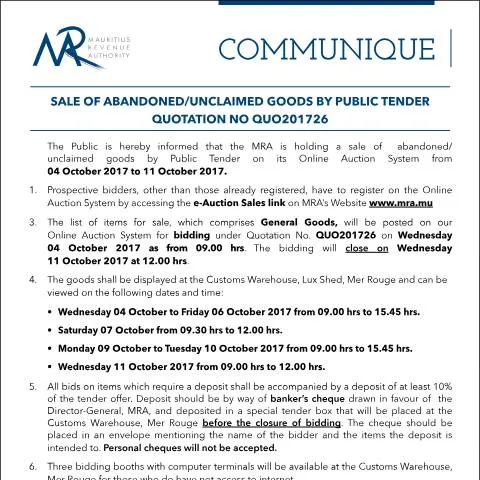
The opportunity to acquire goods that have been abandoned or remain unclaimed can be a gateway to excellent bargains for keen bidders in Mauritius. However, it is essential to understand the specificities and requirements encapsulated in the Sale of Abandoned / Unclaimed Goods by Public Tender (CommuniqueQ26of2017) to engage successfully in the bidding process. This document is pivotal for prospective bidders wishing to participate in public tenders held by the Mauritius Revenue Authority (MRA).
The Timeline of Events: Key Dates and Activities
Timing is crucial for potential bidders. The sale of abandoned and unclaimed goods is scheduled to occur from 04 October 2017 to 11 October 2017. Below is a detailed outline of the significant events during this period:
| Date | Activity |
|---|---|
| 04 October 2017 | Bidding opens at 09:00 hrs. |
| 04 - 06 October 2017 | Viewing of goods at Customs Warehouse from 09:00 hrs to 15:45 hrs. |
| 07 October 2017 | Viewing of goods from 09:30 hrs to 12:00 hrs. |
| 09 - 10 October 2017 | Viewing of goods from 09:00 hrs to 15:45 hrs. |
| 11 October 2017 | Final opportunity to view goods until 12:00 hrs; bidding closes. |
It is imperative for participants to adhere to these timelines to avoid missing out on the chance to bid on potentially valuable items.
Understanding the Target Audience: Who Should Consider Bidding?
This public tender attracts various bidders, including individual entrepreneurs, businesses, and even collectors interested in unique items. Here’s a breakdown of the profiles of bidders who may find this sale particularly appealing:
- Small Business Owners: Individuals looking for cost-effective inventory options for their shops.
- Collectibles Enthusiasts: Those who seek rare or vintage items that may not be available in traditional retail.
- Investors: Individuals who recognize the potential resale value of purchased goods.
Additionally, it is crucial to note that registered bidders will find it easier to participate. Those who have not yet registered should do so promptly via the Online Auction System accessible through the MRA website.
Participating in the Tender: Steps to Follow
To navigate the tender process effectively, bidders should be aware of the following structured steps:
1. Registration on the Online Auction System
New participants must register through the MRA’s e-Auction Sales link. The importance of completing this registration cannot be overstated, as it is the gateway to participating in the auction.
2. Viewing Goods
Once registered, bidders should utilize the available viewing days. The ability to inspect goods before bidding is a critical factor that can influence purchasing decisions. Participants should take notes on items they are interested in and assess their condition.
3. Preparing Bids
It is essential to prepare bids carefully. For items requiring a deposit, bidders need to ensure they have a banker’s cheque ready, amounting to at least 10% of the tender offer.
4. Bidding Process
Bidding will be conducted online, with an opportunity for those without internet access to use designated bidding booths available at the Customs Warehouse. This provision ensures inclusivity for all interested parties.
5. Submission of Deposits
Deposits must be placed in a special tender box at the Customs Warehouse before bidding closes. Ensuring that this step is completed correctly is vital for a valid bid.
What to Expect After Bidding: Outcomes and Next Steps
Once the bidding process concludes on 11 October 2017 at 12:00 hrs, several outcomes can occur:
- Winning Bidders: Those who successfully win bids will be notified. They will then be required to complete the purchase by fulfilling payment obligations.
- Unsuccessful Bidders: Individuals who do not win their bids do not incur any further obligations but can participate in future tenders.
All arrangements regarding the collection of won items will be communicated promptly, along with required documentation needed for the final transaction.
Document Preparation: Essential Paperwork for a Seamless Process
Preparing the necessary documentation before engaging in the tender process is vital. Below is a list of essential documents that bidders should have on hand:
- Identity Card: Required for entry into the Customs Warehouse and verification during the bidding process.
- Banker’s Cheque: To accompany bids requiring a deposit, ensuring it is drawn in favor of the Director-General, MRA.
- Registration Confirmation: Proof of registration on the Online Auction System to validate bidding eligibility.
Having these documents in order will significantly enhance the efficiency of the bidding experience.
Contingencies: Addressing Issues That May Arise
Despite meticulous planning, bidders may encounter challenges during the bidding process. It is essential to understand the procedures in place to address such issues:
1. What Happens in Case of Refusal
Should a bid be refused, bidders have a right to inquire about the reasons behind the rejection. Understanding the rationale can aid in refining future bidding strategies.
2. Errors in Bids
In the event of an error in the submitted bid, promptly contacting the MRA can clarify how to rectify the situation. Timely communication is critical in these instances.
3. Missing Documentation
If certain documents are missing during the auction process, it is advisable to resolve these discrepancies as quickly as possible. Bidders should maintain an open line of communication with MRA officials present at the event.
Final Remarks: The Value of Participation in Public Tenders
Engaging in the sale of abandoned and unclaimed goods presents a unique opportunity for bidders in Mauritius. By understanding the intricacies of the process encapsulated in the CommuniqueQ26of2017, interested individuals can navigate the tender with confidence. This public sale not only opens avenues for acquiring valuable items but also fosters a culture of transparency and fairness in public dealings.
As the auction approaches, prospective bidders should remain vigilant about all communications from the MRA, ensuring a thorough understanding of the procedures and requirements for participation. The wealth of opportunities awaits; it is merely up to the bidding community to seize them. With clarity on the rules, an organized approach to documentation, and a strategic bidding method, success is within reach for those willing to engage actively in this public tender process.
Understanding the Public Tender Process for Abandoned Goods
The sale of abandoned or unclaimed goods by public tender is a significant aspect of asset management in Mauritius, governed by the relevant authorities to ensure transparency and fairness. The procedure typically involves several stages, starting from the identification of goods that have remained unclaimed for a specified period, usually following a legal notification process. Goods may include a wide array of items such as vehicles, electronics, and personal effects left unclaimed at various municipal and governmental locations.
Initially, local authorities, such as the Local Government Service Commission (LGSC), are responsible for assessing the status of these goods. They establish criteria to determine what qualifies as abandoned or unclaimed. Generally, this includes items that have not been retrieved by the owner within a specific timeframe, often stipulated in local bylaws. Once the goods are categorized, an inventory is compiled, ensuring accurate description and valuation, which is crucial for the subsequent tender process.
Legal Framework and Compliance Requirements
The legal framework governing the sale of abandoned goods through public tender in Mauritius is primarily guided by the relevant provisions of the Public Service Commission (PSC) Act and local government regulations. Compliance with these legal standards is essential to uphold the integrity of the tendering process.
One important aspect is the notification process. Authorities are required to publicly announce the upcoming tender through various channels, ensuring that the process is accessible to all potential bidders. These announcements typically include details such as the nature and quantity of goods available, tender submission dates, and instructions for participation. Interested parties must adhere to stipulated deadlines and procedures outlined in the tender notice. Additionally, bidders are often required to provide certain documents, including identification and proof of residency, to ensure all participants meet eligibility criteria.
Post-Tender Sale and Disposal of Goods
Once the public tender has closed, the evaluation of bids begins. This is conducted by designated officials to ensure that the selection process is fair and based on pre-established criteria, such as the highest bid, compliance with submission requirements, and the bidder’s ability to complete the transaction smoothly.
Upon the selection of a successful bidder, the next steps involve the finalization of the sale agreements. Documentation is crucial during this stage, as it outlines the terms of the sale, including payment conditions and timelines for the removal of goods. It is important to adhere to these agreements to avoid any disputes that may arise post-sale.
In the event that the goods remain unsold after the tender process, local authorities may resort to alternative disposal methods, which could include recycling or donation to charitable organizations, ensuring responsible management of unclaimed items.
The entire process, from tender announcement to the final sale, is documented to maintain transparency. Records are kept to ensure audits can be carried out if necessary, serving as a safeguard against potential misuse of the public tender process.