Understanding the Significance of the Sale of Abandoned/Unclaimed Goods
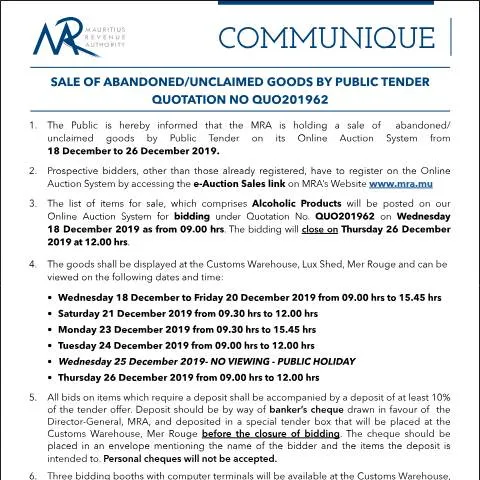
The Sale of Abandoned/Unclaimed Goods by Public Tender, as outlined in Communique 62 of 2019, is not just another governmental procedure; it represents a vital financial recourse for the Mauritius Revenue Authority (MRA) and potential bidders alike. The public tender, running from 18 December to 26 December 2019, offers a unique opportunity for individuals and businesses to acquire goods that have been left unclaimed, often at competitive prices. Such sales serve dual purposes: clearing out surplus inventory for the MRA and providing a platform for buyers to acquire items that may have otherwise gone to waste.
Who Initiates the Bidding Process?
Prospective bidders interested in participating in this sale must navigate the MRA’s Online Auction System. This system is designed to streamline the bidding process, making it accessible to a wider audience beyond those who may be familiar with traditional auction formats.
- Individuals must register on the Online Auction System if they are not already registered.
- Registration can be completed through the e-Auction Sales link available on the MRA website.
- It's essential for bidders to understand the terms associated with placing bids, including deposit requirements and the timing of auctions.
Key Aspects of the Public Tender
Understanding the timeline and procedures associated with the public tender is crucial for effective participation. The process consists of several key dates and actions that prospective bidders must note:
- Start of Bidding: The auction begins on 18 December 2019 at 09:00 hrs.
- Viewing Days: Interested parties can inspect the goods from 18 to 24 December 2019, with the exception of 25 December, which is a public holiday.
- Closing of Bidding: Bids must be submitted by 26 December 2019 at 12:00 hrs.
Comprehending the Form Structure: Each Section Decoded
The Public Tender Form is structured to gather essential information while ensuring that the bidding process remains transparent and efficient. Each section of the form must be completed meticulously to avoid any discrepancies. Below is a breakdown of the significant sections within the form:
| Section | Description | Common Pitfalls |
|---|---|---|
| Bidder Information | Details including full name, address, and identification. | Entering incorrect ID numbers; ensure accuracy. |
| Item Details | Specification of items being bid on. | Failing to match the item number with listed goods. |
| Deposit Information | Details of the cheque deposit requisite for bidding. | Using personal cheques; only banker's cheques are valid. |
| Signature | Confirmation of consent and understanding of terms. | Omitting to sign; this voids the form. |
Addressing Issues: Missing or Incorrect Documentation
Filing a bid does not always guarantee success. In cases where documentation is incomplete or errors exist in the submitted form, bidders may face challenges. Here’s how to navigate these obstacles:
- Follow-Up: If notified of a missing document or error, promptly contact the MRA’s customer service for clarification.
- Submission of Additional Documents: Be prepared to submit any additional paperwork as required by the MRA before the tender closure.
- Understanding Refusals: If a bid is rejected, the reasons will be specified. Bidders should ensure all criteria are met and consider re-applying in subsequent tenders.
Understanding the Administrative Process: What Happens Next?
Once the bidding process concludes, the MRA undertakes a series of administrative steps to manage the outcomes of the public tender:
- Evaluation of Bids: All submissions are evaluated, focusing on compliance with the bidding rules.
- Notification: Successful bidders will receive a notification regarding their successful bids and subsequent payment instructions.
- Collection of Goods: Post-payment, arrangements for collecting the purchased items will be provided to the winning bidders.
It’s vital for bidders to keep abreast of notifications and adhere to the timelines stipulated by the MRA to ensure a smooth transaction process.
Why This Form is Unique: Differentiating from Similar Documents
It may be tempting to conflate the Sale of Abandoned/Unclaimed Goods by Public Tender with other similar procedures or forms used by the MRA. However, there are distinct differences that set this public tender apart:
Fill in your form directly online
No printing: type your details into the boxes of the official form, tick, then download the PDF ready to send.
- 1Type into the form boxes
- 2Tick in one click
- 3Save and download the PDF
- Specificity of Goods: This tender exclusively focuses on abandoned or unclaimed goods, unlike regular auctions which may include a broader range of items.
- Deposit Requirement: The necessity of a deposit significantly impacts the bid process, distinguishing it from other forms where deposits may not be required.
- Online Auction Format: This auction takes place primarily through an online platform, enhancing accessibility and modernizing traditional bidding practices.
Engaging with the Online Auction System: A Practical Guide
For those new to the MRA’s Online Auction System, understanding how to navigate this digital platform is essential. Below are practical steps to ensure a smooth experience:
- Registration: Access the MRA’s website and click the e-Auction Sales link for registration. Ensure all personal details are accurate.
- Browsing Items: Once registered, explore the list of items available for bidding. The items will be displayed starting from 18 December 2019.
- Placing Bids: Carefully enter your bids, ensuring compliance with all requirements including deposit amounts.
- Monitoring Bids: Regularly check your bids and be prepared to adjust your offer based on the ongoing auction dynamics.
Maximizing Your Chances of Success in the Tender
To improve your chances of successfully acquiring goods in this public tender, consider the following tips:
- Engage Early: Don’t wait until the final hours to place your bid — early engagements can help you gauge competition.
- Bid Strategically: Consider your maximum bid limit and stick to it to maintain budget control.
- View Items Personally: If possible, attend the viewing days to personally inspect the goods, allowing for a more informed bidding decision.
Final Considerations
Participating in the Sale of Abandoned/Unclaimed Goods by Public Tender is an essential opportunity for bidders looking to acquire unique items while assisting the MRA in managing unclaimed property. With detailed knowledge of the bidding process, adherence to regulations, and strategic planning, bidders can navigate this process effectively. Ensure to stay updated on timelines, complete all necessary documentation, and monitor your bids closely. For any uncertainties, the MRA is available for assistance via their contact channels.