Understanding the Context of Public Tender Sales in Mauritius
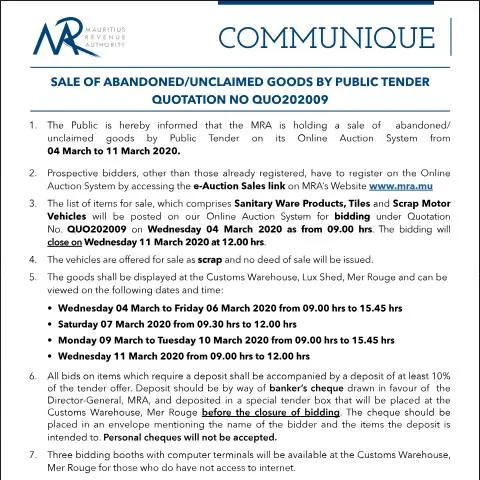
In Mauritius, the sale of abandoned or unclaimed goods by public tender represents a unique opportunity for savvy bidders to acquire various items, ranging from sanitary ware to scrap vehicles. This process, governed by the Mauritius Revenue Authority (MRA), stems from legislation designed to manage unclaimed assets effectively. The official communiqué, specifically Communique09of2020, outlines the procedure for the public tender sale that commenced on March 4, 2020, and concluded on March 11, 2020. Understanding the nuances of this process is critical for potential bidders who wish to participate.
Identifying the Key Stakeholders
The main entity responsible for managing the sale of abandoned goods is the MRA. It plays a pivotal role in ensuring that the auction process is transparent and accessible. In this context, bidders wishing to participate in the auction must comply with several requirements, including registration and adherence to specific timelines.
- MRA (Mauritius Revenue Authority): The regulatory body overseeing the sale.
- Potential Bidders: Individuals or businesses who are interested in acquiring items through the auction.
- Customs Warehouse: The location where the goods are stored and can be inspected by bidders before the auction.
Registration and Preparation: Your First Steps
Before engaging in the bidding process, potential bidders must register on the MRA’s Online Auction System. This requirement ensures that only qualified individuals partake in the auction, promoting a fair competitive environment.
Navigating the Registration Process
To register on the Online Auction System, bidders should follow these steps:
- Access the MRA Website: Visit the official MRA website and navigate to the e-Auction Sales link.
- Complete the Registration Form: Fill out the required information, ensuring accuracy to avoid issues later.
- Confirmation of Registration: Upon successful registration, bidders will receive a confirmation email, allowing them to place bids.
A critical aspect of registration is the need for bidders to have a valid National ID. This acts as a safeguard against fraudulent activities and ensures accountability in the bidding process.
Deciphering the Form: A Closer Look at the Details
The official document detailing the sale contains specific sections that bidders need to pay close attention to. Each part plays a vital role in ensuring that the bidding process runs smoothly.
Key Sections of the Form
- Quotation Number: QUO202009, essential for identifying the specific auction.
- List of Items: Clear identification of what is being sold (e.g., sanitary ware, tiles, scrap vehicles).
- Bidding Dates: Auction commenced on March 4, 2020, and closed on March 11, 2020.
- Deposit Requirements: 10% of the tender offer must accompany bids.
- Viewing Schedule: Specific days and times for potential bidders to inspect items.
Bidders should carefully review each section to avoid errors during completion and submission. Any oversight can lead to disqualification from the bidding process.
Submitting Your Bid: Methods and Requirements
Once registered and informed about the auction items, the next phase involves the submission of bids. The MRA provides various channels for this process, catering to different preferences among bidders.
Channels for Bid Submission
The submission of bids can be accomplished through the following methods:
- Online Bidding: The preferred method for many, allowing bidders to participate from anywhere with internet access.
- In-Person Bidding: Bidders without internet access can utilize computer terminals set up at the Customs Warehouse, ensuring inclusivity.
- Deposit Submission: Bids requiring a deposit must be accompanied by a banker’s cheque, positioned in a designated tender box before the bidding deadline.
Important Considerations When Bidding
Potential bidders must be aware of a few critical points:
- Banker’s Cheque Only: Personal cheques are not accepted, which underscores the need for preparation ahead of time.
- Identification: Bidders must present their Identity Cards when accessing the Customs Warehouse to ensure compliance with security protocols.
Understanding the Timeline: Key Dates and Their Significance
Adherence to the timeline is vital in the bidding process. The public tender sale operates on a strict schedule, ensuring that all participants are on the same page.
Key Dates to Keep in Mind
| Date | Event |
|---|---|
| March 4, 2020 | Start of the public tender auction |
| March 11, 2020 | Close of bidding at 12:00 hrs |
| March 4–11, 2020 | Viewing period for items at Customs Warehouse |
Staying informed of these dates is crucial for any bidder intending to participate in the auction. Missing a deadline may result in the loss of a valuable opportunity.
Preparing Your Documentation: What You Need
Before engaging in the bidding process, the proper preparation of documentation is essential. This preparation varies depending on the bidder's specific situation.
Required Documents for Bidding
- Identity Card: Essential for verification purposes when accessing the auction site.
- Banker’s Cheque: Required for bids that necessitate a deposit, made out to the Director-General of the MRA.
- Bidding Form: Completeness and accuracy are crucial; ensure all necessary fields are filled out correctly.
Ensuring that these documents are prepared in advance significantly eases the bidding process and minimizes the risk of disqualification due to incomplete submissions.
What Happens After the Bidding Closes?
The conclusion of the bidding process leads to several outcomes that bidders should be aware of. Understanding what to expect can alleviate anxiety and confusion.
Post-Bid Procedures
Once the bidding period closes, the following steps generally occur:
- Bid Evaluation: The MRA will review all bids received, assessing compliance with the outlined requirements.
- Notification of Winning Bidders: Successful bidders will be informed through official communication regarding their winning status and next steps.
- Payment Instructions: Winning bidders will receive guidance on how to complete the payment for their acquired items.
It’s crucial for bidders to monitor their communication channels closely for updates following the auction's closure.
Consequences of Non-Compliance
Bidders must adhere strictly to the instructions provided. Failure to comply, whether through inadequate documentation or missed deadlines, may result in forfeiting the right to bid and loss of deposits.
Final Thoughts: Navigating the Tender Process Successfully
Engaging in the sale of abandoned or unclaimed goods by public tender in Mauritius can be a fruitful endeavor for informed bidders. The importance of understanding the registration process, bid submission methods, and compliance with timelines cannot be overstated. By meticulously preparing documentation and remaining attentive to all details within Communique09of2020, potential bidders can maximize their chances of a successful outcome.
Ultimately, mastery of this process hinges on preparation and awareness. For those ready to navigate this auction landscape, the rewards can indeed be worthwhile.
Fill in your form directly online
No printing: type your details into the boxes of the official form, tick, then download the PDF ready to send.
- 1Type into the form boxes
- 2Tick in one click
- 3Save and download the PDF
The Legal Framework for Sale of Abandoned Goods
The sale of abandoned or unclaimed goods in Mauritius is governed by specific legal provisions aimed at protecting the rights of both the owners and the buyers. Under the Public Procurement Act and relevant regulations, authorities are required to follow strict protocols to ensure transparency and fairness in the tendering process. This includes a comprehensive assessment of the items to be sold, their valuation, and the obligation to notify potential claimants before the sale proceeds. For instance, the relevant government agency must publish public notices on their official website as well as in local newspapers to inform the public of the upcoming sale, ensuring that all stakeholders are adequately informed.
Additionally, it is crucial to understand that the classification of goods as "abandoned" does not occur arbitrarily. There is a defined period, typically set at no less than six months, during which the owners can reclaim their items after they have been considered unclaimed. This period can be subject to extensions based on specific circumstances, providing a fair opportunity for owners to retrieve their possessions before they are put up for tender. The criteria for deemed abandonment are often detailed in the regulations governing the specific public entity handling the auction, whether it be for vehicles, personal property, or other categories of goods.
Steps Involved in Participating in the Tender Process
Engaging in the tender process for abandoned goods in Mauritius requires potential buyers to follow a series of important steps to ensure compliance and a successful bid. Firstly, interested individuals should regularly check the announcements made by the respective authorities, such as the Ministry of Finance or the relevant public service body, to obtain details about upcoming auctions. This information often includes the types of goods available, viewing dates, and the submission deadlines for tender applications.
Secondly, once the details of the auction have been announced, interested parties must prepare their tender submission. This entails filling out the official tender form, often designated as Tender Form 1, and attaching all necessary documents such as identification (National Identity Card), proof of address, and any other documents specified in the tender notice. It's important to note that incomplete submissions may lead to disqualification, so thoroughness is key.
Once the tender application is submitted, bidders may need to attend a public opening of bids, where the tenders are read aloud, ensuring transparency in the bidding process. Successful bidders will be notified of their success and will be required to pay the winning bid amount within a specified timeframe, typically within seven days of notification. Failure to do so could result in the forfeiture of the bid, emphasizing the necessity to be prompt and organized during this phase.
Post-Tender Responsibilities and Ownership Transfer
After winning a bid for abandoned goods, the responsibilities of the buyer extend beyond simply paying the bid amount. Following payment, the new owner must ensure compliance with any specific local regulations regarding the possession of certain types of goods, especially vehicles or items that require registration. For instance, vehicles may necessitate a transfer of registration with the National Transport Authority (NTA), which has its own set of requirements including proof of ownership, clearance of any outstanding taxes, and an inspection of the vehicle.
Moreover, it is advisable for buyers to conduct a thorough inspection of the goods before the transfer of ownership. While the goods are sold "as-is," understanding the condition and any potential liabilities associated with the items can prevent future disputes or financial losses. Buyers should also consider obtaining receipts and any documents provided during the tender process as they serve as proof of legitimate ownership, which can be crucial in the event of future claims or disputes.
Finally, the successful bidder is encouraged to inform the agency managing the auction about their post-purchase contact details to receive any future communications regarding the goods or any other relevant public notices. This ensures that the new owner is kept in the loop for any issues that may arise regarding claims or disputes about the goods acquired, further solidifying their position as the rightful owner.