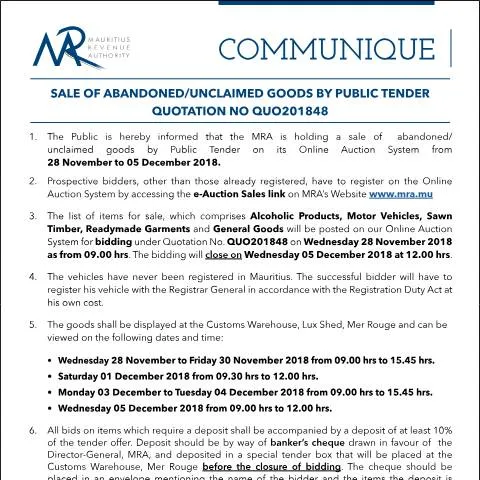
Understanding the Sale of Abandoned and Unclaimed Goods by Public Tender
The sale of abandoned and unclaimed goods represents a crucial process for the Mauritius Revenue Authority (MRA) to manage property that has gone unclaimed or has been abandoned. The official announcement, which emerged from Communique48of2018, outlines the structure and process through which these items will be auctioned. Such sales typically attract interest from a diverse array of bidders, including individuals ranging from collectors to businesses seeking inventory.
The Context and Importance of Unclaimed Goods
Every year, numerous goods become unclaimed or abandoned due to various circumstances such as unpaid duties, unresolved legal issues, or simply being left behind. These goods can range in nature from luxury items to everyday consumer products. The MRA’s initiative to auction these items serves multiple purposes:
- Economic Recovery: It allows the government to recover some revenue lost through unpaid duties.
- Resource Reallocation: Abandoned goods can be reintroduced into the economy, providing opportunities for businesses and consumers alike.
- Space Management: It helps free up space in customs warehouses, which otherwise would be occupied by unclaimed items.
Engaging with the Process: A Step-by-Step Guide
Participating in the public tender for abandoned goods involves several steps that bidders must adhere to rigorously. The timeline for the bidding process as per the MRA's announcement is as follows:
- Registration: Bidders must register on the Online Auction System to participate. This is a critical step that must be completed before the auction begins.
- Bidding Period: The auction will run from 28 November to 05 December 2018, with specific timings allotted for viewing the goods and placing bids.
- Deposit Requirement: Bidders interested in items requiring a deposit need to prepare a banker’s cheque for at least 10% of the bid amount.
- Bidding and Payment: Bids must be placed through the designated online platform, ensuring deposits are submitted appropriately to meet the bidding criteria.
Decoding the Essential Documentation
Among the most vital components of participating in the tender process is understanding the documentation required. Here is a closer look at what bidders must prepare:
Registration Documents
- Identity Verification: Bidders must present a valid National ID Card to verify their identity during registration and at the auction event.
- Banker’s Cheque: This cheque must be drawn in favour of the Director-General, MRA, and is essential for any bid that requires a deposit.
Understanding the Bid Structure
When preparing bids, bidders should pay close attention to the lot descriptions and the specific requirements attached to each item.
| Item Category | Deposit Required | Viewing Times |
|---|---|---|
| Alcoholic Products | 10% of bid | 28 Nov - 30 Nov, 09:00 - 15:45 |
| Motor Vehicles | 10% of bid | 28 Nov - 30 Nov, 09:00 - 15:45 |
| Sawn Timber | 10% of bid | 01 Dec, 09:30 - 12:00 |
| Readymade Garments | 10% of bid | 03 Dec - 04 Dec, 09:00 - 15:45 |
| General Goods | 10% of bid | 05 Dec, 09:00 - 12:00 |
Who Can Participate in the Tender Process?
The tender process is open to a variety of participants, including:
- Individuals: Citizens who hold a valid National ID and are interested in acquiring unclaimed goods.
- Businesses: Local businesses seeking to resell or utilize these goods as part of their inventory.
- Collectors: Individuals looking for specific items of interest that may become available during the auction.
However, there are several considerations for potential bidders. It is advisable for bidders to review their financial capacity to ensure they can meet the deposit and bid amounts. Additionally, those unfamiliar with auction processes should consider doing preliminary research or seeking assistance from experienced bidders.
A Closer Look at the Bidding Mechanics
Understanding how the bidding works is essential for successful participation. The MRA's online auction system is designed for efficiency and transparency. Here are key points regarding the mechanics of bidding:
Setting Bids
- Bids can only be placed during the specified bidding period, starting at 09:00 hrs and closing at 12:00 hrs on the final day.
- Bids must be submitted electronically through the Online Auction System after registering properly.
- In-person bidding booths will be available for those who lack internet access, ensuring inclusivity in the bidding process.
After the Bidding Process
Once the bidding closes, the MRA evaluates bids based on the highest offers. Successful bidders will then be notified and are required to complete further processes, including:
- Finalizing payment and any additional documentation required.
- Registering any motor vehicles with the Registrar General as mandated.
- Arranging for the collection of their purchased goods from the Customs Warehouse.
Potential Challenges and How to Navigate Them
While the opportunity to acquire unclaimed goods can be appealing, prospective bidders should be mindful of challenges that may arise:
- Technical Issues: Since bidding occurs online, bidders should ensure they have reliable internet access and are familiar with the online platform.
- Financial Commitments: Participants must be prepared to manage deposit requirements and ensure sufficient funds are available for bidding.
- Understanding Goods Condition: Viewing items before bidding is crucial, and bidders are encouraged to attend scheduled viewing times to assess the condition of goods firsthand.
Maximizing Your Bidding Strategy
To increase the chances of a successful bid, bidders should consider the following strategies:
- Research: Investigate market rates for the items of interest to establish a sensible bidding limit.
- Networking: Engaging with other bidders may reveal insights into effective bidding strategies and expected competition.
- Time Management: Plan to place bids early to avoid last-minute technical difficulties, as internet congestion can often occur near the closing time.
By preparing adequately and engaging thoughtfully with the process, bidders can navigate the auction successfully and potentially secure valuable goods.
The Role of the MRA in the Public Tender Process
The Mauritius Revenue Authority not only facilitates the auction process but also ensures compliance with local laws and regulations governing the sale of abandoned goods. The MRA plays a pivotal role in:
- Ensuring transparency in the bidding process.
- Providing support and information to potential bidders.
- Overseeing the legal compliance of the auction and the subsequent registration of sold goods.
As such, prospective bidders are encouraged to engage with MRA resources thoroughly, including the official website and customer service channels, for any clarifications or support needed during the bidding process.
Final Considerations for Bidders
Participation in the public tender for abandoned and unclaimed goods is an opportunity laden with potential. Individuals and businesses can take advantage of this initiative to acquire items at competitive prices while supporting the government's efforts to manage unclaimed goods effectively. By understanding the entire process, from registration through to bid placement and payment, bidders can position themselves for a successful auction experience.
The sale of these goods, as facilitated by the MRA, ultimately serves the dual purpose of economic recovery and resource reallocation, presenting a valuable opportunity for those who are adequately prepared.
Understanding the Process of Public Tender for Abandoned Goods
The sale of abandoned or unclaimed goods through public tender in Mauritius is governed by specific regulations aimed at ensuring transparency and fairness. The process begins with the identification and classification of items that have been declared abandoned or unclaimed by their rightful owners. This may include various categories of goods, ranging from vehicles and electronics to household items.
Once the goods are identified, the relevant authorities, such as the local government units or the Ministry of Finance, initiate the tender process. This involves the preparation of detailed inventories that describe the goods for potential buyers. Each item is assessed for its condition and estimated market value, which becomes essential for setting reserve prices during the tender.
Potential bidders are required to register for the tender by submitting PSC Form 7 and paying a nominal fee, which may vary based on the local government’s regulations. It is crucial for bidders to familiarize themselves with the specific terms and conditions outlined in the tender documents, as these will govern the sale and include important information regarding the inspection of goods, payment terms, and collection procedures.
The tendering procedure typically follows a timeline: announcements are made via official channels, bids are collected, and a public opening of the bids takes place, allowing for accountability. Successful bidders must adhere strictly to payment deadlines; failure to do so risks forfeiting the right to the goods and potentially incurring penalties.
Fill in your form directly online
No printing: type your details into the boxes of the official form, tick, then download the PDF ready to send.
- 1Type into the form boxes
- 2Tick in one click
- 3Save and download the PDF
Legal Considerations and Rights of Bidders
When participating in a public tender for abandoned goods, bidders should be aware of their legal rights and obligations under Mauritian law. The Public Procurement Act governs the tendering process, ensuring that all proceedings are compliant with local regulations. Additionally, it is vital for bidders to understand that by placing a bid, they are entering into a contractual agreement with the selling authority.
One essential aspect to consider is the requirement for due diligence. Bidders are encouraged to conduct thorough inspections of the goods prior to bidding, as items are sold 'as is', meaning there are no warranties or guarantees regarding their condition or usability. It is advisable to take notes and photographs during inspections, which may assist bidders in making informed decisions.
Furthermore, bidders have the right to access information pertaining to the tender process. This includes the ability to request clarification on tender documents, which must be addressed by the authorities to ensure a fair bidding environment. However, it is imperative to follow the deadlines for such inquiries, as late submissions may not be considered.
Lastly, understanding the appeals process is critical. If bidders feel that the tendering process was not conducted fairly, they have the right to lodge a complaint with the relevant authority within a specified timeframe. This complaint should include all pertinent details and supporting evidence to substantiate their claims.
Impact of Digital Transformation on the Tendering Process
In recent years, Mauritius has embraced digital transformation, significantly impacting the public tendering process for abandoned goods. The adoption of e-services through the government portal, govmu.org, allows for a more streamlined and efficient process. Bidders can now access tender documentation, submit bids electronically, and track the status of their applications online, which enhances transparency and reduces the potential for corruption.
Moreover, the integration of a single sign-on system, MauPass, linked to the National ID Card and Central Population Database, facilitates a smoother registration process for bidders. This digital identity management system not only makes it easier for citizens to engage with various government services but also enhances the security of personal data.
Furthermore, the move towards digital platforms has enabled wider reach and participation in public tenders, empowering not just local but also potential international bidders. By providing ample information, including photographs and detailed descriptions of abandoned goods, the digital tendering process can attract a larger pool of interested buyers, thereby increasing competition and potentially driving up bids.
However, while the digital shift offers numerous advantages, it also presents challenges, particularly for those who may lack digital literacy or access to reliable internet services. Authorities must ensure that support systems are in place to assist these bidders, perhaps through community outreach programs or workshops that educate potential participants on navigating the online tender processes.