The Contextual Backdrop: Understanding the MRA and Legal Framework
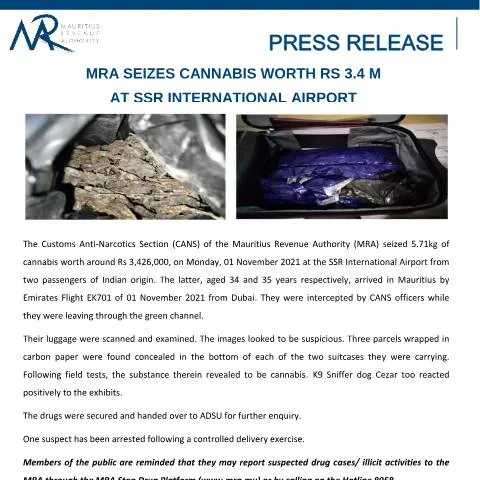
The Mauritius Revenue Authority (MRA) plays a pivotal role in the enforcement of customs and tax regulations in Mauritius. A noteworthy instance illustrating this enforcement is the seizure of cannabis on November 1, 2021, at SSR International Airport, valued at approximately Rs 3.4 million. This event sheds light on the methodologies employed by the MRA, particularly the Customs Anti-Narcotics Section (CANS), in combating drug trafficking, alongside the legal frameworks that facilitate their operations.
The seizure occurred during the inspection of luggage from two individuals of Indian descent arriving on Emirates Flight EK701 from Dubai. The operation highlights the hybrid legal system of Mauritius, which merges French civil law with English common law procedures. It is essential for stakeholders to understand the implications of such actions, not only from a law enforcement perspective but also regarding the broader societal impact and individual responsibilities.
Decoding the Role of the Press Release
This specific press release, identified under the code PressRelease031121, serves multiple purposes. Not only does it inform the public about significant law enforcement actions, but it also acts as a communication tool to deter potential drug traffickers by showcasing the efficacy of the MRA's operations.
The Importance of Transparency
Transparency in operations fosters public trust. By issuing this press release, the MRA is showing accountability in its duties, ensuring that citizens are aware of the active measures being taken to uphold the law. Furthermore, it encourages public participation in reporting suspicious activities through platforms such as the MRA Stop Drug Platform.
The Seizure Process: From Detection to Resolution
Understanding the procedures involved in this particular seizure illustrates the steps taken by enforcement agencies in drug-related cases. The operational sequence is vital for grasping how such incidents progress from initial detection to eventual legal consequences for the offenders involved.
Initial Detection and Suspected Activity
The first step in the seizure process occurred when CANS officers assessed the luggage of the two passengers. Upon scanning, the luggage images appeared suspicious, prompting a manual examination. This is a standard procedure that ensures thoroughness in investigations involving potentially illegal substances.
Field Testing and Confirmation
Once the suspicious parcels were uncovered, field tests were conducted to ascertain the nature of the substance. The initial results confirmed the presence of cannabis, a procedure that is crucial for ensuring legal compliance before any action is taken. The involvement of K9 units, such as the trained sniffer dog Cezar, further validates the findings, reinforcing the credibility of the investigation.
Post-Seizure Procedures: Legal Implications and Next Steps
Following the seizure, the next steps involve intricate legal processes aimed at ensuring justice and compliance with national laws. The substance was secured and handed over to the Anti-Drug and Smuggling Unit (ADSU) for further inquiries, which is a standard protocol in drug-related investigations.
Legal Consequences for Offenders
The individuals involved, upon identification and confirmation of the illicit substances, may face severe legal repercussions, including arrest. Controlled delivery exercises, as mentioned in the press release, often serve to apprehend accomplices or additional suspects linked to broader drug trafficking operations.
Engagement and Reporting: Mobilizing Public Participation
Involving the public in combating drug-related crimes is a key strategy for the MRA. The press release encourages the citizenry to actively participate in reporting suspicious activities, thus fostering a community-oriented approach towards crime prevention.
Utilization of the MRA Stop Drug Platform
The public is urged to utilize the MRA Stop Drug Platform for reporting suspected drug cases. This platform serves as a vital tool for the community, empowering citizens to contribute to the fight against drug trafficking and illicit activities.
The Broader Implications of Drug Seizures
The seizure of cannabis, as reported in this instance, has broader implications beyond legal and enforcement aspects. It touches on public health, safety, and education regarding the dangers associated with drug use and trafficking.
Public Health Considerations
Drug trafficking poses significant risks to public health and safety. Increased awareness and education regarding these risks are essential in mitigating the issues associated with drug abuse in society. The MRA's actions serve as a reminder of the ongoing battle against drug-related crimes and the need for continued vigilance and proactive measures.
Conclusion: The Ongoing Fight Against Drug Trafficking
The MRA's press release detailing the seizure of Rs 3.4 million worth of cannabis at SSR International Airport is a significant marker of ongoing efforts to combat drug trafficking in Mauritius. Understanding the processes, implications, and community engagement practices associated with such events is crucial for fostering a safer environment for all citizens.
As Mauritian society continues to navigate the complexities of drug-related issues, the importance of collaboration between authorities and the public remains paramount. By remaining informed and engaged, citizens can play a crucial role in supporting law enforcement efforts and fostering a safer community for all.
Understanding the Legal Framework Surrounding Cannabis in Mauritius
The legal framework governing cannabis in Mauritius is complex and deeply rooted in both the legacy of colonial law and modern legislative efforts. Historically, cannabis was demonized and classified under stringent narcotics laws, which were influenced by international conventions such as the Single Convention on Narcotic Drugs of 1961. In Mauritius, the Dangerous Drugs Act 1988 criminalizes the possession, use, and trafficking of cannabis, with severe penalties including substantial fines and imprisonment.
However, ongoing debates about drug policy reform, harm reduction, and the medicinal use of cannabis are gaining traction. In 2021, the Mauritian government expressed a willingness to reconsider its stance on cannabis, particularly in terms of medical applications and potential economic benefits. This ongoing discussion at various governmental levels and public forums signals a shift, albeit slow, towards a more nuanced approach regarding cannabis legislation in the near future.
For individuals and businesses interested in navigating the potential changes in this landscape, understanding both the current legal situation and forthcoming reforms is crucial. Attending public consultations, monitoring proposals from the Ministry of Health and Quality of Life, and engaging with advocacy groups can provide insights and aid in preparation for any forthcoming changes in policy.
Fill in your form directly online
No printing: type your details into the boxes of the official form, tick, then download the PDF ready to send.
- 1Type into the form boxes
- 2Tick in one click
- 3Save and download the PDF
The Role of MRA in Combating Drug Trafficking
The Mauritius Revenue Authority (MRA) plays a pivotal role in the enforcement of customs regulations and the prevention of illegal drug trafficking at the country's borders, particularly at SSR International Airport, which serves as a major point of entry and exit for travelers. The MRA’s Customs Division employs sophisticated techniques, including intelligence gathering, risk analysis, and collaborative efforts with international narcotics control agencies, to intercept illegal substances like cannabis.
As a part of its operational strategy, the MRA conducts regular training sessions for its officers on the latest trends in smuggling techniques and drug concealment methods. This continuous education ensures that officers remain vigilant and equipped to identify suspicious behaviors and cargo. The recent seizure of cannabis worth Rs 3.4 million underscores the urgency and importance of these measures, showcasing MRA's commitment to safeguarding the nation's interests and public health.
Moreover, the MRA collaborates closely with local law enforcement and health authorities to ensure a multi-faceted approach to drug trafficking. This cooperation facilitates information sharing and the formulation of response strategies that address the underlying causes of drug trafficking, such as socio-economic factors and addiction treatment. By taking a comprehensive stance, the MRA not only tackles the criminal aspect but also contributes to broader efforts of public safety and health advocacy.
Public Awareness Campaigns and Community Engagement
Following high-profile drug seizures, including the cannabis bust at SSR International Airport, the Mauritian government and various NGOs have recognized the need for robust public awareness campaigns about the dangers of drug abuse and trafficking. These initiatives aim to educate the public about the legal repercussions of drug possession and trafficking, which is essential for fostering a culture of compliance among citizens.
Community engagement plays a vital role in these campaigns. Workshops, seminars, and informational sessions are organized in schools, workplaces, and community centers to discuss the risks associated with drug use and the importance of reporting suspicious activities. Local authorities encourage citizen participation, emphasizing the role of the community in creating a safer environment through vigilance and proactive measures.
Additionally, social media platforms have become critical in disseminating information quickly and effectively. Leveraging these tools, governmental organizations and NGOs engage with younger audiences who are often the most vulnerable to drug influence. By utilizing relatable content, testimonials, and educational materials, these campaigns aim to deter drug use among youth, ultimately reducing the demand and associated trafficking activities.
In summary, the integrated efforts of the MRA, local law enforcement, health authorities, and community organizations are essential in creating an informed populace capable of resisting the allure of drugs. Moving forward, continued collaboration and engagement will remain key to addressing the multifaceted challenges posed by drug trafficking and abuse in Mauritius.