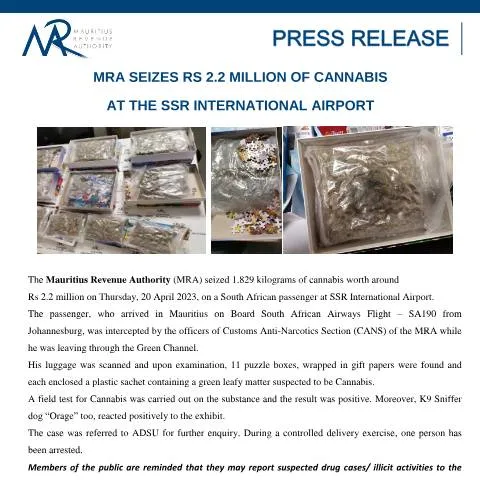
Understanding the Context: A Significant Drug Seizure at SSR International Airport
The recent incident involving the seizure of 1.829 kilograms of cannabis valued at approximately Rs 2.2 million at SSR International Airport is a crucial event that underlines the ongoing battle against drug trafficking in Mauritius. This occurrence is not just about the immediate actions taken by the Mauritius Revenue Authority (MRA) but also reflects broader implications for public safety and legal accountability in the island nation. It serves as a stark reminder that customs enforcement is pivotal in safeguarding the community.
Who Initiates the Process: Custom Officers and Their Role
The officers from the Customs Anti-Narcotics Section (CANS) of the MRA played a vital role in intercepting the suspect. As passengers arrive at the airport, they are monitored closely, particularly those departing through the Green Channel, which is designated for travelers who have nothing to declare. In this case, the customs officers utilized advanced scanning technology to thoroughly examine the luggage of a South African passenger.
- Customs Anti-Narcotics Section (CANS): This specialized unit within the MRA is dedicated to combatting drug trafficking and ensuring compliance with national laws regarding illegal substances.
- Technology and Training: The CANS officers are trained to use sophisticated equipment and techniques for identifying suspicious behavior and items, which enhances their efficiency and effectiveness in drug interdiction.
Steps Involved in the Seizure Process
When a potential contraband item is detected, a series of steps follow that are crucial for the legal handling of the situation:
- Initial Detection: The luggage is screened using advanced imaging technology, which alerts officers to anomalies.
- Physical Examination: Upon a positive alert, officers conduct a thorough physical inspection of the luggage.
- Field Testing: Suspicious substances are subjected to field tests to ascertain their nature. In this case, the substance tested positive for cannabis.
- K9 Assistance: Sniffer dogs, such as K9 “Orage,” are deployed for additional verification, significantly increasing the reliability of the interception.
- Referral to ADSU: Cases of drug seizures are referred to the Anti-Drug and Smuggling Unit (ADSU) for further investigation and legal proceedings.
Special Cases: Foreign Nationals and Legal Implications
The scenario becomes more complex when a foreign national is involved, as seen in this incident. The legal framework governing drug offenses in Mauritius applies equally to citizens and non-citizens, leading to specific considerations:
- Legal Representation: Foreign nationals are entitled to legal representation, and they should be informed of their rights upon apprehension.
- Diplomatic Channels: In certain cases, diplomatic intervention may occur, particularly if the individual’s home country requests it.
- Customs Regulations: Travelers must be aware that the laws regarding drug possession and trafficking are strictly enforced, and ignorance is not a valid defense.
Documentation and Legal Proceedings: What Happens Next?
Once the MRA has completed its initial investigation and the substance has been seized, several legal processes ensue:
- Filing of Charges: The ADSU will file charges against the individual based on the evidence collected.
- Court Proceedings: The accused will face legal proceedings in a court of law, where evidence will be presented.
- Potential Penalties: If found guilty, penalties may include imprisonment, fines, or both, under the Dangerous Drugs Act of Mauritius.
It is crucial for individuals caught in such circumstances to engage legal counsel experienced in drug-related cases to navigate the complexities of the legal system effectively.
Communication with the Authorities: Reporting and Support
In the context of drug-related crimes, the MRA encourages public participation in combating illicit activities. Citizens can play a proactive role by reporting suspicious activities through designated channels:
- MRA Stop Drug Platform: Accessible via the MRA's official website, this platform allows individuals to report cases anonymously.
- Hotline 8958: A dedicated hotline for immediate reporting of drug-related concerns.
These avenues not only empower citizens but also enhance the effectiveness of law enforcement in tackling drug trafficking.
Online Submission and Documentation: Streamlining Procedures
As part of a broader initiative to enhance efficiency, the MRA has integrated e-services for reporting and documentation. While traditional methods are still available, online submission offers numerous advantages:
- Convenience: Submissions can be made from anywhere, eliminating the need to physically visit an office.
- Real-time Tracking: Applicants can monitor the status of their submissions, ensuring transparency and accountability.
- Documentation Preparation: Online tools assist users in preparing necessary documents and understanding what is required for their specific cases.
However, it is essential to ensure that all information is accurate and complete to avoid delays in processing.
Understanding the Legal Framework: The Dangerous Drugs Act
The legal context surrounding drug offenses in Mauritius is primarily governed by the Dangerous Drugs Act. This legislation outlines the framework for the handling of drug trafficking and possession cases. Key aspects include:
| Aspect | Details |
|---|---|
| Definition of Drugs | Cannabis and other controlled substances are explicitly defined, with classifications determining legal penalties. |
| Penalties | Penalties range from fines to imprisonment, depending on the quantity and type of substance involved. |
| Legal Processes | The act details procedures for arrest, evidence collection, and court trials for drug-related offenses. |
Staying informed about such legislation is crucial for both citizens and visitors to Mauritius, highlighting the importance of compliance with local laws.
Final Thoughts: Community Involvement in Combating Drug Trafficking
The seizure of cannabis at SSR International Airport exemplifies the active role of the Mauritius Revenue Authority in drug enforcement. This incident signifies not just the efforts of law enforcement but also the essential partnership between government agencies and the public in addressing drug-related crimes.
Citizens are encouraged to remain vigilant and informed, recognizing that each individual plays a part in creating a safer environment. By understanding the processes, reporting suspicious activities, and adhering to legal protocols, the community can contribute significantly to the fight against drug trafficking in Mauritius.
Understanding the Role of MRA in Drug Enforcement
The Mauritius Revenue Authority (MRA) operates under a multifaceted mandate that extends beyond tax collection, interweaving its responsibilities with national security and public health concerns. The recent seizure of Rs 2.2 million worth of cannabis at the SSR International Airport highlights the critical role the MRA plays in drug enforcement. MRA officers are trained to identify suspicious activities and collaborate with law enforcement agencies to prevent the trafficking of illegal substances.
In addition to revenue collection, the MRA conducts customs examinations and screenings that are essential for detecting narcotics and contraband. Their operations are governed by the Customs Act and various international treaties aimed at curbing drug trafficking. Collaborative efforts with the Narcotics Bureau and other international anti-drug organizations enhance their capabilities, ensuring that the detection mechanisms at entry points are robust and efficient.
Fill in your form directly online
No printing: type your details into the boxes of the official form, tick, then download the PDF ready to send.
- 1Type into the form boxes
- 2Tick in one click
- 3Save and download the PDF
The MRA also engages in public awareness campaigns to educate citizens and tourists about the legal ramifications of drug possession and trafficking. These initiatives are vital in fostering a well-informed community that can help in the fight against drug-related crimes. Furthermore, the authority's commitment to leveraging technology, such as advanced scanning systems at ports of entry, significantly bolsters their operational efficiency in identifying illicit goods.
Legal Implications and Consequences of Drug Seizures
The legal framework surrounding drug seizures in Mauritius is stringent, with significant repercussions for individuals found in possession of illegal substances. The Narcotics and Psychotropic Substances Act outlines the penalties, which can include hefty fines and lengthy prison sentences. For instance, possession of cannabis can lead to a prison term of up to five years, depending on the quantity involved.
In the event of a seizure, the MRA is required to follow a specific protocol which includes documentation of the quantities seized, evidence collection, and immediate reporting to the necessary judicial authorities. This ensures that the evidence is admissible in court and that the due process is followed, safeguarding the integrity of the legal proceedings that may follow.
Individuals implicated in drug trafficking often face not only criminal charges but also civil asset forfeiture where assets obtained through illegal means, including vehicles and properties, can be confiscated by the state. Furthermore, legal proceedings can take months or even years, during which individuals may face considerable uncertainty regarding their legal status and the implications of their charges.
The Economic Impact of Drug Trafficking on Mauritius
The recent cannabis seizure at the SSR International Airport serves as a reminder of the wider economic implications of drug trafficking in Mauritius. Illegal drug trade can undermine the local economy, creating volatility in markets and increasing costs associated with law enforcement and public health initiatives. The effects ripple through various sectors, including tourism, which is a cornerstone of the Mauritian economy. Potential tourists may be deterred by the perception of drug-related crime, affecting hotel bookings and overall visitor numbers.
The government of Mauritius, through various agencies, is continuously working to mitigate these impacts by implementing stringent drug laws and fostering international cooperation in drug enforcement. By collaborating with regional and international bodies, Mauritius aims to strengthen its legal framework and enhance its capability to combat drug trafficking. The economic costs of drug trafficking extend beyond law enforcement; they also encompass healthcare costs associated with drug addiction and rehabilitation programs.
Moreover, the MRA’s efforts in curbing drug trafficking can lead to increased foreign investment as a clear stance against illegal activities creates a more stable business environment. Investors are more likely to commit to a country that prioritizes security and the rule of law, fostering an economy that is less prone to the disruptions caused by drug-related crime.