Understanding the Context of Drug Seizure Documentation
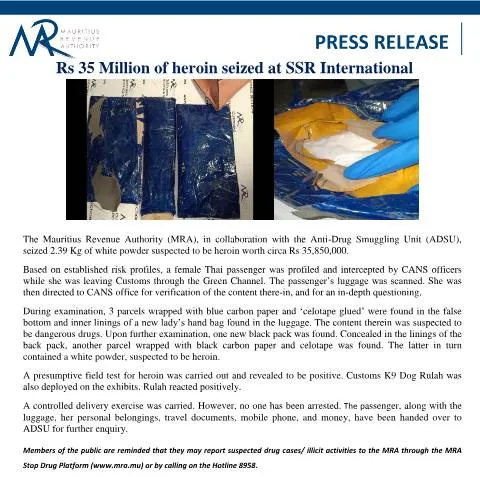
The seizure of Rs 35 million worth of heroin at SSR International Airport on February 26, 2024, stands as a crucial event in Mauritius' ongoing battle against drug trafficking. Such incidents necessitate a structured and formal approach to documentation, as the authorities rely heavily on consistent reporting to combat drug-related crimes. The official document related to this seizure—referred to here as Document Code: DrugSeizure260224—is not just a form; it encapsulates a critical process in law enforcement and drug control efforts.
Who is Responsible for Filing the Document?
This document must be filed by designated law enforcement authorities, particularly the officers involved in the seizure operation. In cases like this, the drug seizure report is collaboratively prepared by the Mauritius Revenue Authority (MRA) and the Anti-Drug Smuggling Unit (ADSU). The involvement of these agencies ensures that the document not only serves legal purposes but also assists in further investigative actions against illicit drug activities.
It is crucial for the filing officers to accurately complete this report as it forms the basis of subsequent legal proceedings and potential prosecutions. Failing to adhere to the correct procedures could jeopardize the case against the involved parties.
The Role of the Drug Seizure Document in Legal Proceedings
The primary function of Document Code: DrugSeizure260224 lies in its role as a formal record of the events surrounding the drug seizure. This document aids in establishing a chain of custody for the seized evidence, crucial for maintaining its integrity in a court of law.
- Documents details of the seizure operation, including identifying information about the suspect.
- Contains descriptions of the drugs seized, including quantity and estimated value.
- Records the actions taken by officers, including any forensic tests conducted.
With the incorporation of proper documentation, Mauritius can uphold its commitment to tackling drug trafficking effectively. Such documents are critical, serving as evidence in criminal investigations and helping authorities to build a strong case.
Completing the Seizure Document: Key Considerations
Filling out the Drug Seizure document requires meticulous attention to detail. Officers involved in the seizure must ensure every section of the form is accurately completed. Here are some essential elements to focus on:
- Identification of the Suspect: Full name, nationality, passport number, and other identification.
- Description of the Seized Items: Include the substance's appearance and packaging details.
- Operational Details: How the suspect was intercepted and the methods used for seizure.
Specific Steps for Document Completion
- Gather all pertinent information before beginning the form.
- Follow any specific formatting guidelines provided by the MRA.
- Cross-check all entries for accuracy before submission.
Accuracy is key, as any discrepancies in the document could complicate subsequent legal actions or investigations.
Submitting the Document: Channels and Best Practices
Following completion, the document can be submitted through several channels, each designed to ensure the secure handling of sensitive information. Each submission method has its nuances, so understanding the differences is crucial.
| Submission Method | Advantages | Limitations |
|---|---|---|
| Online Submission via MRA Portal | Fast processing and immediate confirmation of receipt. | Requires internet access and familiarity with the online system. |
| In-Person Submission at MRA Office | Direct interaction with officials for immediate feedback. | May involve longer wait times and potential delays depending on office hours. |
| Mail Submission | Can be used for remote locations without access to MRA offices. | Potential delays and no immediate confirmation of receipt. |
Whichever method is chosen, ensure to retain a copy of the submitted document for future reference. This serves as a safeguard in case of any disputes regarding submission timelines or requirements.
Anticipating Outcomes: The Follow-Up Process
Once the document has been submitted, it enters the approval process within MRA and ADSU. Here’s what to expect following submission:
- Initial Review: The document is reviewed for completeness and accuracy.
- Investigative Follow-Up: Based on the details provided, further investigative actions may be initiated.
- Legal Proceedings: If applicable, the case may advance to legal action against the suspected individual.
Officers must stay informed about the status of the document, which can be monitored through internal communication channels within the MRA and ADSU.
Managing Complex Situations: Unique Cases and Exceptions
Certain scenarios may complicate the submission or processing of the Drug Seizure document. For instance, if a minor is involved, or if the suspect is a foreign national, additional layers of bureaucracy may apply. Here are some considerations:
- Involvement of Minors: Special handling procedures may be necessary, requiring consultation with child protection services.
- Foreign Nationals: Coordination may be necessary with embassies or consulates. Documentation must comply with international law.
Understanding these complexities upfront can streamline the submission process and ensure compliance with legal requirements.
Timelines: From Submission to Resolution
Timeliness is essential in the realm of drug seizures and the subsequent documentation. The following outlines the general timelines one can expect:
- Document Submission: Immediately after seizure, ideally within 24 hours.
- Initial Review: Within 72 hours post-submission, barring weekends and public holidays.
- Investigative Actions: Ongoing, but significant developments may occur within two weeks of the initial review.
These timelines serve as a framework, and responsiveness from the submitting officers can significantly influence the speed of subsequent processes.
Engaging with Authorities: Reporting Further Illegal Activities
In addition to the immediate case at hand, the document plays a role in encouraging community engagement against drug trafficking. The MRA actively invites the public to report suspected drug cases and illicit activities. Citizens can utilize the following channels to engage:
- MRA Stop Drug Platform: An online platform dedicated to receiving reports.
- Hotline 8958: A dedicated number for swift communication regarding suspected activities.
Such outreach is essential for creating a collaborative environment where the public plays an active role in combating drug-related issues.
Conclusion: The Importance of Drug Seizure Documentation
In the ever-evolving landscape of drug enforcement, the Drug Seizure Document—specifically the Document Code: DrugSeizure260224—serves more than a bureaucratic function. It embodies the efforts of the MRA and ADSU to maintain public safety and uphold the rule of law. Through diligent preparation, submission, and follow-up, authorities can navigate the complexities of drug-related cases effectively.”
Fill in your form directly online
No printing: type your details into the boxes of the official form, tick, then download the PDF ready to send.
- 1Type into the form boxes
- 2Tick in one click
- 3Save and download the PDF
Contextual Overview of Drug Trafficking in Mauritius
To appreciate the significance of the recent seizure of Rs 35 Million worth of heroin at SSR International Airport, one must first understand the broader context of drug trafficking in Mauritius. As a strategically located island in the Indian Ocean, Mauritius has unfortunately become a transit point for various illicit drugs, including heroin, cocaine, and synthetic drugs. The geographical position of Mauritius, coupled with its thriving tourism sector, has provided traffickers with opportunities to exploit the island.
The Mauritian government has been increasingly proactive in combating drug trafficking and related crimes. Agencies such as the National Anti-Drug and Alcohol Abuse Agency (NDAA) work in conjunction with law enforcement to dismantle drug trafficking networks. The introduction of stricter customs checks and enhanced surveillance systems at airports and ports underscores the urgency with which authorities are tackling this growing concern. Moreover, international collaborations with agencies from countries such as South Africa and India have been strengthened to share intelligence and bolster preventive measures.
Legal Implications and Consequences of Drug Seizures
The confiscation of heroin valued at Rs 35 Million poses not only a significant legal challenge but also reflects the rigorous enforcement of drug laws in Mauritius. According to the Dangerous Drugs Act of 1988, possession, trafficking, and manufacturing of illegal drugs carry severe penalties. The act delineates various categories of drugs, with heroin classified as a Schedule 1 drug, leading to stringent repercussions for offenders.
Individuals found guilty of trafficking in heroin can face a minimum sentence of 5 years to a maximum of life imprisonment, along with substantial fines. In cases where large quantities, such as the recent seizure, are involved, the courts may impose even harsher sentences. Additionally, the prosecution must establish the intent to distribute, which can complicate legal proceedings if the defendant claims personal use. The legal system takes a stern view of drug-related offenses, given their impact on society and public health, further emphasizing the seriousness of the current situation.
Impact on Public Health and Community Initiatives
The implications of drug trafficking extend far beyond immediate legal concerns; they are deeply intertwined with public health issues in Mauritius. The increase in drug availability directly correlates with rising addiction rates, which pose significant health challenges for the population. The Ministry of Health and Wellness in Mauritius has acknowledged the need for comprehensive drug abuse prevention programs alongside enforcement efforts.
Community initiatives play a critical role in addressing the underlying issues related to drug abuse. Programs aimed at educating the public about the risks of drug use and available support services are vital. Rehabilitation centers provide necessary support for individuals struggling with addiction, fostering a pathway back to recovery. Furthermore, collaborations with local non-governmental organizations (NGOs) have been instrumental in reaching vulnerable populations, providing them with resources and support to combat drug-related issues effectively.
Efforts to mitigate the impact of drug trafficking on public health encompass not only immediate responses but also long-term strategic planning. By investing in education, healthcare, and support systems, Mauritius aims to create a resilient society capable of resisting the detrimental effects of drug trafficking.