Understanding the Context of Drug Seizures in Mauritius
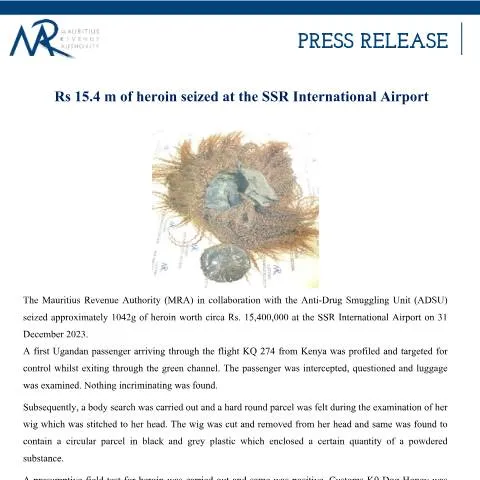
The recent seizure of approximately 1,042 grams of heroin, valued at around Rs 15.4 million, at the SSR International Airport on December 31, 2023, serves as a stark reminder of the ongoing battle against drug smuggling in Mauritius. This incident highlights the crucial role of the Mauritius Revenue Authority (MRA) and the Anti-Drug Smuggling Unit (ADSU) in safeguarding the country’s borders. The methodology of drug concealment, particularly the case of the Ugandan passengers using wigs to hide contraband, underscores the evolving tactics of traffickers.
The Role of MRA and ADSU in Combatting Drug Trafficking
The MRA, in collaboration with the ADSU, employs a comprehensive strategy to intercept narcotics at entry points. This operation, involving body searches and the use of sniffer dogs, is indicative of a proactive approach to law enforcement. The successful detection and subsequent seizure of heroin not only protect public health but also stress the importance of community vigilance against drug-related activities.
Who Needs to Submit the Documentation
In light of this drug seizure, various stakeholders, including law enforcement agencies, customs officials, and the MRA, are involved in the reporting and processing of the incident. Individuals who may need to submit related documentation include:
- Customs Officers: Required to document the findings and report the incident formally.
- Law Enforcement Agencies: Involved in further investigations based on the seizure.
- Individuals Reporting Incidents: Citizens who wish to report suspicious activities can submit information through designated channels.
Specific Profiles of Involved Parties
The passengers implicated in this drug trafficking case represent a specific profile often targeted by law enforcement for drug smuggling:
- Frequent Travelers: Individuals traveling frequently from high-risk countries.
- First-time Flyers: Those who may be easily manipulated into carrying illicit substances.
- Unaccompanied Bags: Passengers who do not claim their luggage or appear nervous during customs checks.
The Calendar of Events: From Seizure to Investigation
The chronological timeline of this operation is crucial for understanding the enforcement process:
- Initial Suspicion: On December 31, 2023, profiling indicated two Ugandan women arriving via flights KQ 274 and KQ 270.
- Control Measures: Both passengers were subjected to thorough checks as they exited through the green channel.
- Seizure Operations: During body searches, heroin was discovered hidden in wigs, leading to the confiscation of 520g and 522g of heroin from each passenger.
- Handing Over to ADSU: The passengers and their belongings were transferred to the ADSU for further inquiry, ensuring a legal follow-up on the seizure.
Next Steps Following a Drug Seizure
Once the initial seizure has occurred, the following steps are typically undertaken:
- Investigation: ADSU conducts a detailed investigation to ascertain the network of trafficking.
- Legal Proceedings: Depending on the findings, charges may be filed against the individuals involved.
- Community Communication: Members of the public are encouraged to report any further suspicious activities through the MRA Stop Drug Platform or hotline.
Community Reporting and Vigilance
Public involvement is critical in the fight against drug trafficking. The MRA actively encourages citizens to report any suspicious behavior or illicit activities:
- Stop Drug Platform: Accessible at www.mra.mu, offering anonymity and safety for reporters.
- Hotline Number: Call 8958 to report incidents discreetly.
Essential Documents and Their Preparation
In the context of drug seizures, several documents are critical for both enforcement and community reporting. Here’s a breakdown:
Fill in your form directly online
No printing: type your details into the boxes of the official form, tick, then download the PDF ready to send.
- 1Type into the form boxes
- 2Tick in one click
- 3Save and download the PDF
| Document Type | Prepared By | Purpose |
|---|---|---|
| Incident Report | Customs Officials | To document the details of the seizure. |
| Witness Statements | Law Enforcement | To gather testimonies from those involved or observed the incident. |
| Community Report Form | Civilians | For citizens to report suspicious activities anonymously. |
Addressing Errors or Missing Information
In the processing of drug seizure documentation, errors or missing information can occur. Here’s how to address such situations:
- Notification: Officials must notify relevant parties promptly regarding any discrepancies.
- Additional Evidence: Request for further documentation or witness accounts might be necessary if initial reports are insufficient.
- Community Response: Those reporting can be contacted for clarifications or additional information if necessary.
Following Your Report or Submission
Once a report has been submitted or an incident documented, it’s vital to understand how to follow up:
- Case Tracking: Individuals may inquire about the status of their report through established MRA channels.
- Legal Updates: Public announcements about investigations and outcomes may be released, keeping the community informed.
- Continuous Engagement: Citizens are encouraged to remain vigilant and continue reporting any suspicious activities in their neighborhoods.
Conclusion: A Community Effort Against Drug Trafficking
The seizure of Rs 15.4 million worth of heroin at the SSR International Airport is not just a law enforcement victory; it’s a community success story. The collaboration between the MRA, ADSU, and vigilant citizens plays a crucial role in safeguarding Mauritius against the threats of drug trafficking. By maintaining awareness and actively participating in reporting illicit activities, individuals contribute to the broader efforts aimed at protecting public health and safety.