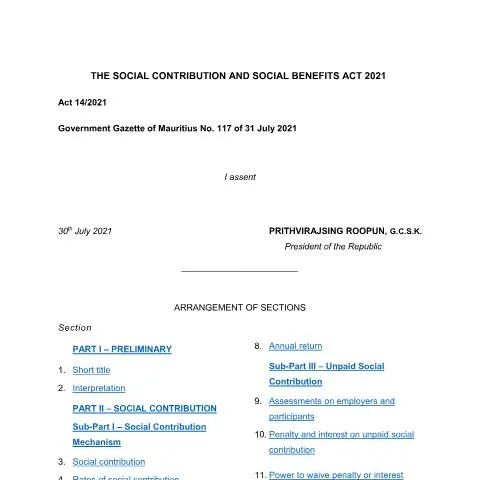
Navigating the Social Contribution and Social Benefits Act 2021: A Comprehensive Overview
The introduction of the Social Contribution and Social Benefits Act 2021 (Act 14/2021) marks a pivotal shift in Mauritius' social welfare framework. This legislation lays the groundwork for a structured approach to social contributions and benefits, offering a safety net for various segments of society. Understanding the intricacies of this Act is crucial for citizens, employers, and potential beneficiaries.
Understanding the Legal Landscape: Historical Context of the Act
The Social Contribution and Social Benefits Act 2021 emerged from a need to adapt Mauritius' social welfare system to contemporary challenges. Preceded by fragmented policies, this Act consolidates various social benefits under a single regulatory framework. It was officially gazetted on 31 July 2021, reflecting a commitment to enhance social security.
With the Act's implementation, the government aims to streamline contributions, increase transparency, and ensure equitable distribution of benefits. The move towards a more organised system aligns with international best practices, enhancing the overall efficacy of social welfare initiatives.
Key Objectives of the Act
- Create a uniform mechanism for social contributions.
- Establish clear eligibility criteria for social benefits.
- Facilitate easier access to benefits for citizens and residents.
- Promote accountability among governmental and non-governmental actors.
The Role of the Form: A Gateway to Social Benefits
Central to the Act is the necessity for individuals and businesses to complete the prescribed forms accurately. The completion of these forms serves as the gateway for accessing various social benefits such as retirement allowances, maternity benefits, and disability allowances.
Individuals eligible for social benefits must ensure they fill out the relevant forms, which vary based on the type of benefit sought. The forms require detailed information about income, employment status, and other demographic factors relevant to the application.
Types of Benefits and Corresponding Forms
| Type of Benefit | Form Required | Eligibility Criteria |
|---|---|---|
| Retirement Benefits | PSC Form 1 | Age 60 and above, resident status |
| Disability Allowance | PSC Form 2 | Verified medical disability |
| Maternity Allowance | PSC Form 3 | Proof of pregnancy and employment status |
| Child Allowance | PSC Form 4 | Dependent child status, income eligibility |
Filing Channels: Online vs. Offline Submissions
One of the significant advancements brought about by the Social Contribution and Social Benefits Act is the introduction of multiple channels for submitting forms. Citizens can now choose between online submissions and traditional paper-based applications.
Online Submission via MauPass
The online portal, accessible through the MauPass system, offers a streamlined approach to filing. Here are some advantages of online submissions:
- Convenience: Submit forms anytime, anywhere, provided you have internet access.
- Efficiency: Instant confirmation of receipt, reducing processing times significantly.
- Reduced Paperwork: Minimized use of physical documents, contributing to environmental sustainability.
Paper-Based Submissions
For those less familiar with digital platforms or facing specific challenges, the option to submit forms via paper continues to be available. However, this method comes with its own set of considerations:
- Processing Delays: Paper submissions may take longer to process due to manual handling.
- Potential Errors: Handwritten forms are more susceptible to errors, which could delay benefits.
- Location-Specific: Must submit to designated offices, potentially requiring travel.
Who Should File? Profiles and Particular Cases
The Social Contribution and Social Benefits Act encompasses a broad spectrum of individuals and entities. Understanding who is required to file forms under this Act is vital for ensuring compliance.
Profiles of Filers
- Employees: All employed individuals earning a salary must ensure their social contributions are correctly reported.
- Employers: Employers are responsible for deducting contributions from employee salaries and submitting monthly returns.
- Self-Employed Individuals: These individuals must file based on their net income, ensuring compliance with contribution rates.
- Dependents: Individuals seeking benefits on behalf of dependents, such as children or disabled family members, must complete the appropriate forms.
Special Circumstances: Navigating Complex Situations
The Social Contribution and Social Benefits Act also caters to unique circumstances that may affect an individual's eligibility or filing requirements.
Exceptional Cases to Consider
- Non-Citizens: Non-citizens may have different eligibility requirements for certain benefits, particularly retirement allowances. They must provide proof of residency and compliance with immigration laws.
- Minors: Minors may qualify for benefits, but applications must be filed by a parent or legal guardian.
- Individuals in Transition: Those changing employment or transitioning from self-employment must ensure all contributions are accurately reflected during the transition period.
- Urgent Applications: In cases of immediate need, individuals may seek expedited processing of their applications by providing supporting documentation to justify urgency.
Steps to Successful Submission of Your Application
To ensure your application process is smooth and successful, it's important to follow a clear set of steps.
Application Preparation and Submission Steps
- Determine Eligibility: Confirm which benefits you are entitled to based on your profile and circumstances.
- Gather Required Documents: Assemble all necessary supporting documents, including identification, proof of income, and any relevant medical certificates.
- Complete the Form: Carefully fill out the required form, ensuring all information is accurate and complete to avoid delays.
- Choose Your Submission Method: Decide whether to submit online via MauPass or through a physical office.
- Submit and Keep Records: After submission, retain a copy of your application and any confirmation receipts for future reference.
Tracking Your Application: What to Expect After Submission
Once you have submitted your application, understanding the post-submission process is crucial for timely benefit allocation.
Processing Timelines and Notifications
The processing timeline can vary depending on the type of benefit and the clarity of your submission. Typically, applicants can expect:
- Initial Review: Within a week of submission, the form will undergo initial checks for completeness.
- Detailed Assessment: Further review may take two to four weeks as the office verifies eligibility and supporting documents.
- Notification of Outcome: Applicants will receive a notification via email or postal mail regarding the outcome of their application.
In cases of rejection or additional information requests, applicants have the right to appeal or provide further documentation within specified timelines.
Conclusion: Empowering Citizens through Social Benefits
The Social Contribution and Social Benefits Act 2021 represents a significant advancement in Mauritius' social welfare landscape. By understanding the nuances of this Act, individuals can better navigate the administrative processes involved in accessing social benefits. As the government continues to enhance its digital services and streamline applications, citizens are encouraged to engage fully with these systems to ensure they receive the support they need.