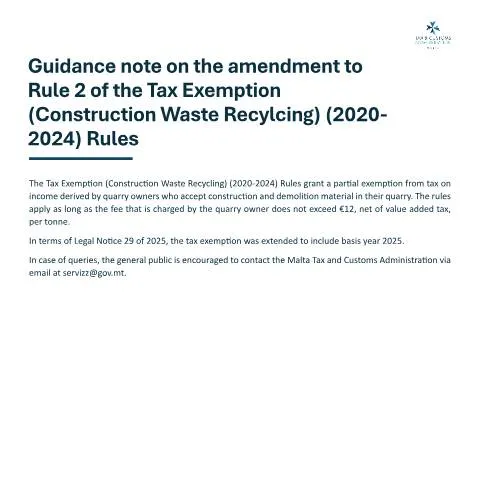
Understanding the 2025 Guidance Note on Tax Exemption for Construction Waste Recycling
In the context of Malta's evolving regulatory landscape, the 2025 Guidance Note - Tax Exemption (Construction Waste Recycling) (2020-2024) (Amendment) plays a pivotal role for local contractors and businesses engaged in construction and waste management. This document, issued by the Income Tax Department, serves as a framework for understanding how tax exemptions can be applied to costs incurred during the recycling of construction waste. As the government aims to promote sustainable practices, awareness of this guidance note is crucial for ensuring compliance and maximizing potential benefits.
The Historical Context of Construction Waste Recycling Regulations
The regulatory framework surrounding construction waste recycling in Malta has undergone several amendments over the years, reflecting a growing commitment to environmental sustainability. The Public Administration Act (Cap. 595) laid the groundwork for such initiatives, encouraging businesses to adopt greener practices. The introduction of tax exemptions serves to incentivize recycling efforts, alleviating the financial burden on those who invest in environmentally-friendly waste management solutions.
Starting from the initial guidelines issued in 2020, adjustments have been made to address practical challenges faced by businesses in the construction sector. The 2025 amendment brought about by this guidance note aims to streamline the application process and broaden the scope of eligible expenses.
Distinction from Other Financial Forms and Documents
It is essential to draw a clear distinction between the Guidance Note on Tax Exemption for Construction Waste Recycling and other similar financial forms that might be encountered by contractors. While many forms relate to general tax declarations or project funding applications, this specific guidance note addresses a niche area of tax relief specifically tailored for recycling activities.
- Tax Relief Applications: Unlike standard tax relief applications that may encompass various financial aids, this guidance focuses solely on the recycling of construction waste.
- Eligibility Criteria: The eligibility criteria for this exemption are specific to construction waste management, which might differ from other forms targeting broader industrial activities.
- Application Process: The process to apply for this exemption is constructed to facilitate quick approvals for eligible entities, differentiating it from more complex funding applications.
A Thorough Breakdown of the Form's Sections
When approaching the completion of this guidance note, understanding the specific sections of the associated form is crucial. Each section is designed to elicit information that supports the applicant’s claim for tax exemption. Below, we dissect the key components of the form, paving the way for more efficient completion and submission.
Section 1: Applicant Information
The first section typically requests detailed information about the applicant, including their name, address, and tax identification number. Precision is vital here; any errors could lead to delays.
Section 2: Project Details
This section requires the applicant to provide detailed information about the specific project in question. Essential elements include:
- Project Name
- Project Location
- Estimated Start and End Dates
Ensure that these dates reflect the actual timeline, as discrepancies may trigger further inquiries from the Income Tax Department.
Section 3: Recycling Details
At this juncture, applicants must elucidate the nature of the construction waste being recycled. Clear descriptions and, if possible, quantifiable measures are necessary to substantiate the claim for tax exemption.
Section 4: Declaration of Expenses
This section details the types of expenses being claimed for exemption. Applicants are typically expected to provide receipts or invoices that correspond to the claimed expenses. Common pitfalls include:
- Not retaining receipts for all expenses.
- Claiming ineligible expenses.
Section 5: Compliance Statements
Applicants must affirm adherence to the guidelines outlined in the guidance note. A lack of clarity or honesty in these statements could jeopardize the entire application.
Step-by-Step Journey from Application to Approval
Understanding the chronological flow of the process from the moment the application is submitted to the eventual approval can help applicants navigate the system smoothly. Here’s a typical roadmap:
- Preparation of the Application: Gather all necessary documentation and complete the form as detailed in the previous section.
- Submission: Submit the application via the designated means (e-ID is often required).
- Initial Review: Upon receipt, the Income Tax Department conducts a preliminary review to ensure all necessary information has been provided.
- Detailed Evaluation: A more comprehensive evaluation follows, wherein documentation is cross-checked against defined eligibility criteria.
- Approval or Request for Additional Information: Within a standard timeframe, applicants will be informed of either an approval or a request for further details.
- Issuance of Tax Exemption: Once approved, a formal notification is provided, outlining the specific exemptions granted.
Special Cases: Unique Scenarios and Considerations
There are numerous scenarios in which applicants may find themselves in a complex situation. Below are a few examples that highlight the nuances within the application process.
Foreign Entities
For foreign businesses operating in Malta, understanding the local tax framework is critical. They may have to provide additional documentation to validate their operational status and tax compliance in Malta. Consulting a local tax expert can greatly facilitate this process.
Minor Applicants
In cases where minors are involved in the contractor or construction sector, guardians may need to be appointed to act on their behalf when submitting the application. This adds a layer of complexity that requires attention to legal stipulations regarding the involvement of minors in business activities.
Complex Situations
In instances where applicants have faced legal issues or disputes regarding prior tax claims, it's essential to address any outstanding matters before proceeding with this application. Failure to do so could result in complications or rejection.
The Form's Role in the Larger Administrative Framework
The guidance note and its corresponding form do not exist in a vacuum. They are part of a broader administrative ecosystem that encompasses various aspects of tax management and compliance in Malta.
- Interrelations with Other Tax Forms: Successful navigation of this form may require an understanding of other tax documents and applications, creating a web of interdependency.
- Regulatory Compliance: Ensuring compliance with the guidance note is integral to maintaining good standing with the Income Tax Department, impacting future applications.
The Practical Impact of the Guidance Note on Users
Familiarity with the guidance note is pivotal, not just for compliance but also for recognizing the rights and obligations that come with claiming tax exemptions. Understanding what this means for their financial standing can lead users to make informed decisions.
Rights Granted
Approved applications confer certain rights, including but not limited to:
- The right to claim exemptions on specified recycling expenses.
- Access to potential follow-up funding opportunities aimed at promoting further sustainable practices.
Obligations Enforced
Alongside these rights are responsibilities. Recipients of tax exemptions must:
- Maintain accurate records of expenses and activities related to the claim.
- Comply with any audits or reviews conducted by the Income Tax Department.
Consequences of Omission
Failure to adhere to the provisions outlined within the guidance note can lead to significant consequences, including financial penalties or revocation of tax benefits.
Identifying and Understanding the Target Audience
This guidance note primarily targets construction companies, contractors, and waste management firms actively engaging in recycling efforts. However, understanding the nuances within this audience can lead to more effective compliance.
Small vs. Large Enterprises
Small enterprises may require different support compared to larger companies, which often have established frameworks for compliance. Tailoring advice and resources to these differing needs can significantly impact the application process.
Sector-Specific Considerations
Different sectors within construction may face unique challenges when recycling. For instance, residential projects may have different waste profiles compared to commercial developments. Recognizing these distinctions is vital when completing the form.
Final Thoughts on Navigating the Guidance Note
Ultimately, the 2025 Guidance Note on Tax Exemption for Construction Waste Recycling is a crucial document for individuals and organizations committed to sustainable construction practices. Understanding the intricacies of the application process, the specifics of the form, and the broader regulatory framework will empower users to effectively leverage tax exemptions available to them. For further information and assistance, it is advisable to consult directly with the Income Tax Department.
Understanding the Tax Exemption Framework for Construction Waste Recycling in Malta
The Tax Exemption for Construction Waste Recycling in Malta has undergone several amendments since its introduction, with the most recent adjustments being applicable for the years 2020 to 2024. As a resident or business owner involved in the construction industry, it is essential to comprehend the underlying principles of this exemption and how it might impact your financial obligations.
The tax exemption aims at incentivizing recycling practices within the construction sector. By reducing the tax burden on companies that engage in recycling construction waste, the government not only promotes sustainable practices but also contributes to the reduction of landfill waste. Businesses must be aware that this exemption does not come automatically; certain conditions and procedures must be followed to benefit from it.
To qualify for the tax exemption, companies must ensure they comply with local environmental regulations and provide proof of actual recycling activities. This documentation typically includes receipts, records of materials recycled, and evidence of the processing methods used. Furthermore, entities must register with relevant authorities, such as the Malta Environment and Planning Authority (MEPA), to demonstrate compliance with environmental standards. This registration can often be done through the e-ID system, simplifying the process for applicants.
Navigating the Application Process for Tax Exemption
Applying for the tax exemption under the Construction Waste Recycling framework involves several steps that need to be meticulously followed to ensure a successful application. Initially, businesses must gather all necessary documentation that verifies their recycling efforts, including reports from licensed waste management companies and any relevant environmental assessments.
In addition to the required documents, it is advisable to fill out the appropriate forms meticulously. For instance, utilizing Form REC1 is essential for the initial application, while further evidential submissions may require specific e-forms available on the servizz.gov.mt portal. These forms are designed to facilitate the collection of information related to the recycling operations conducted by the applicant.
Once the application is submitted, businesses should allow for a reasonable processing period as outlined by the Inland Revenue Department. They will assess the submission to ensure compliance with the established rules before granting the exemption. It is crucial for applicants to maintain communication with the authorities during this period, responding promptly to any requests for additional information or clarification.
The Long-term Benefits of Engaging in Recycling Practices
Participating in construction waste recycling offers numerous long-term benefits, not only in terms of tax exemptions but also for the environment and corporate reputation. By actively engaging in sustainable practices, companies position themselves favorably in an increasingly eco-conscious market. This proactive approach can enhance brand image, attract environmentally-minded clients, and potentially lead to more business opportunities in the growing green sector.
Moreover, as regulations surrounding waste management become stricter, companies that have established a recycling infrastructure will be better prepared to adapt to new legal requirements. This foresight can shield businesses from potential fines or sanctions associated with non-compliance. Additionally, companies may also experience cost savings over time, as recycling can often reduce disposal fees and lower the costs of purchasing new raw materials.
In conclusion, the increased focus on sustainability within the construction industry, coupled with the financial incentives provided by the tax exemption, underscores the importance of integrating recycling practices into your business model. Understanding and navigating the exemption framework not only supports compliance with regulations but also cultivates a healthier community and environment.