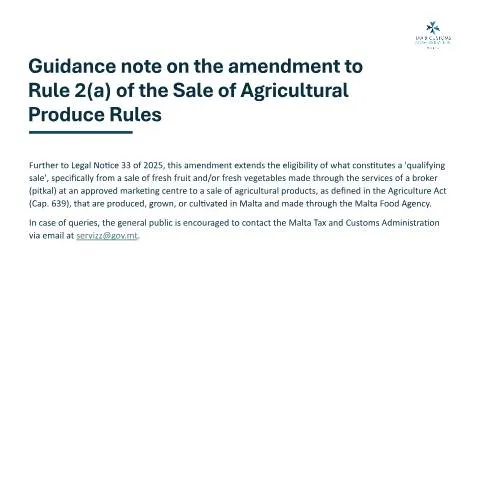
Understanding the Guidance Note on Sale of Agricultural Produce (Amendment) Rules 2025
The agricultural sector in Malta is pivotal not only for food production but also for preserving the island's cultural heritage. As such, regulations surrounding the sale of agricultural produce are crucial for ensuring that both producers and consumers interact within a framework that promotes fair practices and transparency. The Guidance Note on Sale of Agricultural Produce (Amendment) Rules 2025 plays a significant role in this regulatory environment, providing clarity on the updated requirements for agricultural producers.
Historical Context and Regulatory Framework
To fully appreciate the Guidance Note, one must delve into the historical context and the legislative framework that shaped its creation. Over the years, Malta’s agricultural policies have evolved significantly, influenced by both domestic needs and European Union regulations. The initial legislation governing agricultural sales set the stage for subsequent reforms, including amendments that address the dynamic nature of agricultural practices, market demands, and environmental concerns.
The introduction of the amendment rules in 2025 signifies a response to changing agricultural landscapes and the growing importance of sustainability. This document serves to align local regulations with broader European standards while ensuring that producers can effectively market their produce.
The Importance of the Guidance Note in the Regulatory Chain
The Guidance Note is not merely a standalone document; it forms part of a broader regulatory chain designed to facilitate compliance and promote best practices in the agricultural sector. This guidance is critical for producers who wish to ensure their sales practices adhere to both local and EU regulations.
- Regulatory Compliance: It outlines the necessary steps producers must follow to remain compliant with income tax regulations related to agricultural sales.
- Market Access: By adhering to these rules, producers can gain better access to markets that require documented proof of compliance.
- Consumer Protection: The amendment aims to safeguard consumer rights by ensuring transparency in the sale of agricultural products.
Understanding the role of this guidance note is essential for any producer seeking to navigate the complexities of agricultural sales in Malta effectively.
Filing Channels: Online Versus Traditional Methods
Producers have various options for submitting the necessary documentation related to agricultural sales, reflecting Malta's commitment to digital transformation. While the traditional paper-based submission method is still available, the online process offers numerous advantages.
| Submission Method | Advantages | Disadvantages |
|---|---|---|
| Online Submission |
|
|
| Paper Submission |
|
|
Producers are encouraged to choose the submission method that best suits their operational needs, bearing in mind the benefits of online processes in the current digital landscape.
Completing the Guidance Note: Steps to Ensure Compliance
Filling out the Guidance Note correctly is crucial for ensuring compliance with the amended rules. Producers should approach this task methodically, following these steps:
- Gather Required Information: Collect all necessary data regarding produce types, sales volumes, and compliance history.
- Consult the Official Guidelines: Review the Guidance Note thoroughly to understand each section's requirements.
- Fill Out the Form: Ensure that all fields are filled accurately. Pay attention to units of measurement and ensure consistency in reporting.
- Double-Check for Errors: Review the completed form for any omissions or inconsistencies before submission.
Producers should consider reaching out to the Income Tax Department for clarification on any complex aspects of the form, ensuring all criteria are met.
What Happens After Submission?
Once the Guidance Note has been submitted, producers should be aware of the subsequent processes that follow. This phase is critical, as it sets the groundwork for any potential oversight or compliance checks.
- Processing Period: The Income Tax Department typically initiates processing within a specified timeframe, during which the submitted information is validated.
- Potential Follow-Up: The department may reach out for additional documentation or clarification on submitted data, highlighting the importance of maintaining accurate records and communication.
- Outcome Notification: Producers will be notified of the decision regarding their compliance status. This notification may include approval, additional requirements, or potential penalties for non-compliance.
Producers should remain vigilant during this period, ready to respond promptly to any requests from the authorities to ensure a smooth process.
Dealing with Refusals and Rectifying Errors
In some cases, submissions may be met with refusals or requests for additional information. Understanding how to navigate these situations is essential for producers aiming to uphold their market position.
- Review the Reason for Refusal: Analyze the feedback provided by the Income Tax Department to identify areas of concern.
- Rectify Errors or Omissions: Address any noted deficiencies by gathering the required information or documentation.
- Resubmit the Guidance Note: Once corrections are made, the form may be resubmitted alongside any additional requested documents.
- Seek Clarification: If the reasons for refusal are unclear, producers should not hesitate to contact the Income Tax Department for guidance.
Being proactive in addressing refusals can significantly reduce delays and facilitate compliance.
Conclusion: The Role of Producers in Agricultural Compliance
The Guidance Note on Sale of Agricultural Produce (Amendment) Rules 2025 is an indispensable tool for Maltese agricultural producers. It not only clarifies the obligations under the amended rules but also enhances the accountability and transparency of agricultural sales in Malta. By adhering to these guidelines, producers not only ensure their compliance but also contribute to a more robust agricultural sector that meets consumer expectations and regulatory standards.
As the landscape of agricultural sales continues to evolve, staying informed and responsive to regulatory updates will empower producers to thrive in a competitive marketplace. Understanding and correctly implementing the requirements set forth in the Guidance Note is essential for maintaining a sustainable and profitable agricultural enterprise in Malta.
Understanding the Sale of Agricultural Produce Regulations
The Sale of Agricultural Produce (Amendment) Rules 2025 aim to streamline the processes surrounding the sale of agricultural products in Malta. These regulations are particularly important for local farmers and producers as they set forth guidelines governing the marketing, packaging, and distribution of agricultural produce. Key changes in the 2025 amendment include enhanced standards for product labeling, which ensure that consumers are well-informed about the origin and quality of the produce they are purchasing. For farmers, this means a thorough understanding of compliance requirements, which are crucial for maintaining market access.
Farmers are encouraged to familiarize themselves with the terminology and requirements outlined in the new rules. For instance, the regulations now specify the conditions under which produce can be marked as organic, local, or sustainable. Understanding these terms not only aids in legal compliance but also enhances marketability. Furthermore, producers must be vigilant about the documentation necessary for compliance; this includes documentation relating to traceability, which is now mandated under the new rules.
To assist farmers in adapting to these changes, the Ministry for Agriculture and Fisheries plans to conduct workshops throughout 2025. These will be aimed at educating stakeholders on the specifics of the new rules, including practical sessions on proper labeling techniques and record-keeping practices necessary for proving compliance. A practical knowledge of these regulations will ultimately contribute to the success of local agricultural businesses.
Implementation Timeline and Stakeholder Responsibilities
As with any legislative amendments, the successful implementation of the Sale of Agricultural Produce (Amendment) Rules 2025 will require cooperation from various stakeholders, including farmers, distributors, the Ministry for Agriculture and Fisheries, and consumer protection agencies. The government has proposed a transitional period from January to June 2025, during which stakeholders can adjust to the new requirements. During this time, the Ministry will provide ongoing support and resources to ease the transition.
Farmers and producers must prepare to comply by conducting internal audits of their operations to ensure adherence to the new labeling and documentation standards. It is crucial to have systems in place that monitor the production process from farm to table, ensuring that all products meet the newly defined standards. For distributors, understanding the new transport and storage conditions set out in the regulations will be vital for maintaining the quality of agricultural products as they move through the supply chain.
Additionally, consumer protection agencies will play a vital role in enforcing these rules. Their responsibilities will include monitoring compliance, conducting inspections, and addressing any consumer complaints regarding agricultural products. Stakeholders must maintain open lines of communication with these agencies to ensure a smooth implementation process and to foster trust with consumers.
Future Outlook and Market Opportunities
Looking beyond 2025, the Sale of Agricultural Produce (Amendment) Rules are expected to create new market opportunities for Maltese farmers. With the rising consumer demand for locally-produced, organic, and sustainable products, compliance with these regulations can significantly enhance the marketability of agricultural goods. Farmers who adopt best practices in line with the new rules will likely find themselves at a competitive advantage both domestically and in export markets.
Moreover, the focus on sustainability and traceability outlined in the amendments aligns with broader international trends towards eco-friendly practices and transparency in food sourcing. This trend could lead to partnerships between Maltese agricultural producers and international markets looking for high-quality, sustainable produce. Farmers willing to invest in quality certification and sustainable practices will not only meet the regulatory requirements but will also tap into a lucrative market segment.
The Ministry is also exploring initiatives to promote Maltese agricultural products through marketing campaigns emphasizing quality, sustainability, and local production. Engaging in these initiatives can further bolster the reputation of Maltese produce and open doors to new sales channels, including farmers’ markets, specialty stores, and online platforms dedicated to sustainable food.