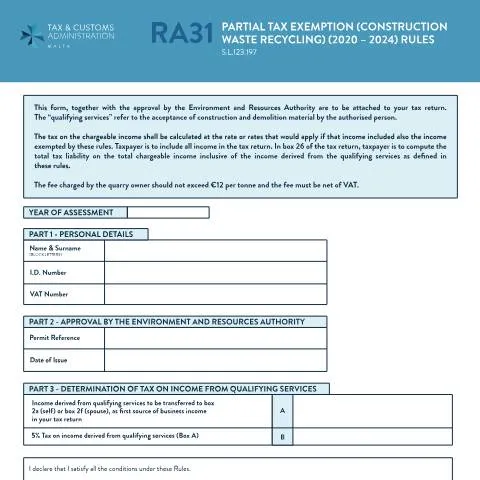
Understanding the RA31 Tax Exemption for Construction Waste Recycling
The RA31 form serves as a pivotal document for stakeholders involved in construction and demolition activities in Malta, specifically targeting those looking to benefit from tax exemptions related to construction waste recycling. The implications of completing and submitting this form are significant, as they directly affect the financial viability of construction projects amidst increasing environmental regulations and requirements.
Who Needs to Engage with the RA31 Form?
The RA31 form is primarily intended for contractors, builders, and companies engaged in construction activities that generate waste. Here are the categories of individuals and organizations that typically find themselves needing to complete this form:
- Contractors: Individuals or companies responsible for the management and execution of construction projects.
- Developers: Those engaged in real estate development that involves significant construction and demolition work.
- Waste Management Companies: Enterprises that handle recycling and waste disposal, especially those focusing on construction waste.
- Local Authorities: Entities that may need to validate compliance with recycling regulations under their jurisdiction.
It is essential for these stakeholders to assess their situation against the criteria laid out in the form to ensure they qualify for the exemption. For instance, specific guidelines may apply to projects of varying scales or types, which necessitates careful review.
Distinct Features of the RA31 Compared to Other Forms
The RA31 form serves a unique purpose compared to other tax-related and exemption forms. Understanding its distinct features can help applicants avoid confusion and ensure compliance. Here’s a comparison highlighting its specific role:
| Form | Purpose | Key Distinction |
|---|---|---|
| RA31 | Tax exemption for recycling construction waste | Focused specifically on environmental impact and waste management |
| Other Tax Forms | General taxation and exemption requests | No specific environmental or recycling component |
This unique focus on construction waste recycling not only underscores the significance of environmental sustainability but also aligns with Malta's broader goals of reducing landfill waste.
Dissecting the RA31: A Step-by-Step Guide to Completion
Completing the RA31 form accurately is crucial to avoid delays or rejections. Below is a breakdown of the sections typically included in the form, as well as tips for effective completion:
Section 1: Applicant Information
This section requires details about the applicant, including:
- Full name or company name
- Address and contact information
- Tax identification number
Ensure that all details match official records to prevent discrepancies.
Section 2: Project Details
Here, the applicant must provide specifics about the construction project, including:
- Project location
- Type of construction work (e.g., residential, commercial)
- Estimated volume of waste generated
Be specific in describing the nature of the work, as this may influence the eligibility for exemptions.
Section 3: Waste Management Strategy
Detailing how the waste will be managed and recycled is crucial. Applicants may need to outline:
- Methods of waste segregation and recycling
- Partnerships with registered recycling facilities
- Compliance with local environmental laws
Inadequate detail in this section could lead to rejection, highlighting the importance of thorough documentation.
Section 4: Declarations and Signatures
The final section requires the applicant's declaration of the truthfulness of the information provided. It must be signed by the applicant or an authorized representative. This is a vital legal component of the form, and any false declaration could lead to penalties or disqualification from future exemptions.
The Path to Submission: Channels and Procedures
Once the RA31 form is completed, applicants have multiple avenues for submission, each with its nuances:
Online Submission
Utilizing the e-ID system, applicants can submit the RA31 form online. This method is generally quicker and allows for immediate confirmation of receipt. However, ensure that:
- You have a valid e-ID account.
- All attachments are correctly formatted and uploaded.
Paper Submission
For those who prefer traditional methods or face challenges with the online system, paper submission remains an option. This involves:
- Printing the completed form.
- Mailing it to the appropriate income tax office.
Keep in mind that processing times may be longer for mailed applications.
In-Person Submission
Applicants may also choose to submit the RA31 form in person at designated offices. This choice allows for immediate feedback and clarification of any questions regarding the application. However, consider:
- Visit during less busy hours to avoid long waits.
- Bring copies of all supporting documents for review.
Timeline: Key Dates and What to Expect
Understanding the timeline associated with the RA31 form is crucial for effective planning:
- Filing Period: Generally, applications should be submitted well in advance of the project start date.
- Processing Time: Once submitted, the processing time may vary based on submission method, typically ranging from a few weeks to several months.
- Outcome Notification: Applicants will receive written confirmation regarding the decision on their exemption request.
Being aware of these timeframes can help in aligning project schedules and avoiding potential disruptions.
Exceptional Cases: Navigating Complex Situations
Certain scenarios may require additional consideration when submitting the RA31 form. These include:
Foreign Entities
For companies not registered in Malta, nuances in tax identification and compliance requirements may apply. These entities should consult with local tax advisors to ensure all necessary documentation is included.
Underage Applicants
In cases where the construction project is managed by individuals under the legal age, a parent or guardian must complete the RA31 form on their behalf. This necessitates additional declarations regarding responsibility.
Complex Projects
For projects involving multiple stakeholders or intricate waste management strategies, it may be necessary to engage professional assistance when filling out the RA31 form to ensure compliance with all regulations.
Final Thoughts on the RA31 Process
Successfully navigating the RA31 process can significantly impact a construction project's financial aspects. Given the complexities and nuances involved, it is advisable to approach the completion and submission of the RA31 form with diligence and care. Stakeholders should consider enlisting the help of professionals if needed, ensuring that all aspects of the submission are handled correctly and efficiently.
Understanding RA Forms: A Comprehensive Overview
The RA Forms, particularly RA31 concerning tax exemptions for construction waste recycling, play an essential role in fostering a sustainable construction industry in Malta. This tax exemption aims to stimulate the recycling of construction debris and promote environmentally friendly practices among builders and developers. Understanding the intricacies of this form can significantly benefit businesses aiming to reduce their tax liabilities while contributing to ecological conservation.
When submitting the RA31, it's crucial to grasp the eligibility criteria outlined by the relevant authorities, including the Environment and Resources Authority (ERA) and the Malta Chamber of Commerce. Eligible entities typically include registered contractors who meet specific sustainability standards and have projects that generate recyclable materials. In addition, maintaining accurate records of the waste produced and the recycling processes undertaken is critical, as these documents may be requested during the assessment of the application.
Step-by-Step Guide to Completing RA31
Filing the RA31 form requires careful attention to detail to ensure compliance with Maltese regulations. Here’s a structured approach to navigating this process:
- Obtain the Form: Access the latest version of the RA31 form through servizz.gov.mt or directly from the tax authority. Ensure that you are using the most current version to avoid delays.
- Identify Project Details: Clearly outline the project’s specifics, including the type of construction, expected waste quantities, and the recycling methods you plan to employ. This information provides a solid foundation for your application.
- Document Waste Management Practices: Include detailed documentation of your waste management practices. This should encompass waste audits, records of previous recycling efforts, and any contracts with recycling facilities.
- Complete the Form Accurately: Fill out the RA31 form with the required information meticulously. Double-check to ensure all fields are completed and that figures are accurate, as discrepancies could lead to application rejection.
- Submit the Form: Once fully completed, submit the RA31 form electronically through the government e-ID system. Make sure to keep a copy for your records, as you may need to reference it later.
Remember that successful completion of the RA31 not only yields tax benefits but also enhances your company's reputation as a responsible player in the construction industry.
Common Challenges in Filing RA31 and How to Overcome Them
Filing the RA31 form can come with challenges, especially for those unfamiliar with Maltese administrative processes. Here are some common obstacles and solutions:
- Insufficient Documentation: One of the primary reasons applications are denied is the lack of adequate paperwork. To avoid this, maintain thorough records of all waste management activities and ensure that any claims made in the application are backed by solid evidence.
- Misunderstanding Eligibility Requirements: Applicants might misinterpret the eligibility criteria, leading to improperly filed forms. To mitigate this, consult with the relevant authorities or seek guidance from industry experts who can provide clarity on the requirements.
- Technological Barriers: As the RA31 form submission is predominantly digital, some users may encounter technical issues. It’s advisable to familiarize yourself with the e-ID system beforehand, ensuring all necessary digital certificates are up to date and that you have a stable internet connection while filling out the form.
- Submission Deadlines: Missing deadlines can result in financial penalties or loss of tax benefits. Keeping a calendar with important dates related to tax submissions, including reminders, can help ensure timely filings.
By proactively addressing these challenges, you can streamline the RA31 filing process and enhance the likelihood of a successful outcome.