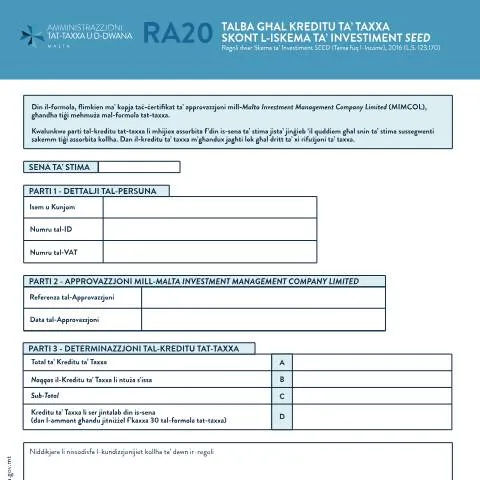
Navigating the RA20 Tax Credit Application: A Comprehensive Guide
The RA20 Tax Credit in terms of the Seed Investment Scheme is an essential tool for individuals and entities in Malta looking to stimulate their entrepreneurial ventures through financial benefits. Understanding the nuances of this document is crucial for applicants to maximize their opportunities and ensure compliance with local regulations.
Understanding the Seed Investment Scheme: Context and Importance
The Seed Investment Scheme in Malta is designed to encourage investment in new and innovative enterprises. This scheme provides tax credits to qualifying investments, promoting economic growth and fostering a vibrant startup ecosystem. The RA20 form is the gateway for applicants to claim these tax credits, serving as a formal request to the Income Tax Department.
For many entrepreneurs, obtaining financial support through this scheme can be a turning point. The ability to offset tax liabilities through investments in new projects not only enhances cash flow but also reduces the overall financial burden on the business. Therefore, understanding the RA20 form's role within this framework is paramount.
Who Should Consider Submitting an RA20 Form?
The RA20 form is applicable to a wide range of applicants, including but not limited to:
- Individuals making personal investments in startups.
- Corporations seeking to fund innovative projects.
- Partnerships and joint ventures pooling resources for new endeavors.
However, certain eligibility criteria must be met before proceeding with the RA20 submission. For example:
- Investments must be made in qualifying companies as defined by the scheme.
- Applicants must maintain a minimum investment threshold, typically assessed on a case-by-case basis.
- Engagement with local business support agencies can provide insights into qualifying ventures.
Preparing for Submission: Key Documentation and Information
Before diving into the RA20 form, it's essential to gather necessary documentation that will support your application. This includes:
- Proof of Investment: Documentation demonstrating that funds have been invested in a qualifying startup.
- Business Plan: A detailed business plan outlining the purpose of the investment and the business model.
- Tax Identification Number: Personal or corporate tax identification to ensure correct processing.
Validation of these documents is crucial. Ensure that they are accurate and up-to-date, as errors could lead to delays or rejections of the application. Correctly identifying and categorizing your supporting documents can significantly streamline the review process.
Step-by-Step Process from Application to Decision
The journey from submitting the RA20 form to receiving a decision from the Income Tax Department follows a structured timeline. Here’s a typical sequence of events:
| Step | Description | Timeframe |
|---|---|---|
| 1. Submission | Submit the RA20 form along with required documentation via electronic channels or in person. | Day 1 |
| 2. Initial Review | The Income Tax Department assesses the submitted documents for completeness. | 1-2 weeks |
| 3. Additional Information Request | If necessary, additional information may be requested from the applicant. | Variable |
| 4. Final Review | A thorough assessment of the application is conducted. | 2-4 weeks |
| 5. Decision Notification | The applicant is notified of the decision regarding the tax credit. | 4-6 weeks |
Understanding this timeline can help applicants prepare accordingly, ensuring they remain informed about the status of their application throughout the review process.
Addressing Challenges: What If Your Application Is Denied?
Receiving a denial for your RA20 application can be disheartening, but it’s important to understand the next steps. Common reasons for denial may include:
- Insufficient documentation to prove investment.
- Non-compliance with the eligibility criteria.
- Errors in the completed form.
In the event of a denial, applicants have the right to appeal the decision. This process typically requires:
- Submission of Appeal: Prepare and submit a formal appeal outlining the reasons for reconsideration, along with any additional supporting documents.
- Engagement with Tax Authorities: Communicate directly with the Income Tax Department to clarify the reasons for the original denial.
- Consultation with Advisors: Seek advice from tax consultants or legal advisors specializing in Maltese tax law for further guidance.
Various Submission Channels: Electronic vs. Paper
Applicants can submit the RA20 form through different channels, each with its own advantages and disadvantages:
Online Submission via e-ID
Utilizing the online portal requires a registered e-ID, allowing for:
- Faster processing times.
- Immediate confirmation of submission.
- Convenience of accessing the system at any time.
Paper Submission
For those preferring traditional methods, submitting a physical copy can also be done. However, this may entail:
- Longer processing times, as documents must be mailed and manually reviewed.
- Risk of postal delays or misplacement of documents.
Choosing the right channel for submission will depend on personal preferences, urgency, and the complexity of the application.
Understanding the Timeline: When to Expect Feedback
Time is of the essence when navigating the RA20 application process. Not only does it reflect the efficiency of the Income Tax Department, but it also impacts the financial planning of the applicant. Here’s a ballpark timeline for various stages:
- Submission to Initial Review: Approximately 1 to 2 weeks.
- Final Review: 2 to 4 weeks.
- Decision Notification: Within 4 to 6 weeks from the submission date.
Having a clear understanding of these timelines enables better financial forecasting and planning for applicants, ensuring they are prepared for any potential outcomes.
Conclusion: Ensuring Success with Your RA20 Submission
Navigating the RA20 tax credit application process within the Seed Investment Scheme requires diligence, preparation, and a proactive approach. By familiarizing yourself with the requirements, timeline, and potential challenges, applicants can significantly enhance their chances of success.
Engagement with local advisors, thorough documentation preparation, and strategic submission choices will collectively contribute to a smooth application experience. As you embark on this process, remember that the RA20 form is more than just a document; it represents a significant opportunity for your entrepreneurial ambitions.
Understanding the SEED Investment Scheme Tax Credit
The SEED Investment Scheme is an initiative introduced by the Maltese government to foster innovation and support startups in their early stages. Under this scheme, eligible individuals and businesses can apply for tax credits, which can significantly alleviate their tax burden. The RA20 form specifically relates to the tax credit that can be claimed in terms of this scheme.
To apply for the tax credit using the RA20 form, applicants must provide detailed information about their investment activities. This includes a description of the project, the amount invested, and how it aligns with the objectives of the SEED Investment Scheme. It is essential to document how your investment contributes to innovation and economic growth, as the authorities will review these aspects critically.
Moreover, the application process requires submission of supporting documentation, such as invoices and contracts related to the investment. Therefore, maintaining meticulous records throughout the investment process is crucial. Applicants should also be aware of the timelines for submissions—ensuring that all necessary paperwork is filed within the stipulated periods to avoid any delays or potential rejection of the application.
Eligibility Criteria and Important Considerations
When applying for the tax credit under the SEED Investment Scheme via the RA20 form, it is vital to ensure eligibility. Key eligibility criteria include:
- Investment Amount: The minimum investment must meet the government-set thresholds to qualify for the tax credit.
- Type of Business: The scheme is primarily designed for startups and innovative enterprises. Therefore, traditional businesses may not be eligible.
- Project Viability: You must demonstrate the potential for growth and sustainability of your project. This often involves presenting a detailed business plan.
Applicants must also consider the impact of their investments on the local economy. The authorities often prioritize applications that show a commitment to creating jobs, fostering innovation, or contributing to sustainable development in Malta. It's advisable to provide quantitative data and forecasts that can strengthen your case during the application process.
In addition, it is recommended to consult with a tax advisor or legal expert familiar with the SEED Investment Scheme to ensure you fully understand the implications of your investment and the potential benefits of the tax credit.
Resubmission and Appeals Process for RA20 Forms
In instances where an application for the tax credit via the RA20 form is rejected or requires resubmission, applicants have specific recourse options. The first step is to thoroughly review the feedback provided by the authorities, as they will typically outline the reasons for rejection. Common issues might include insufficient documentation or failure to meet eligibility criteria.
Applicants have the right to amend and resubmit their RA20 form, provided they address the concerns raised during the initial review. Clear communication with the relevant authorities can also facilitate a smoother resubmission process. If resubmission is not successful, individuals may appeal the decision. The appeals procedure involves submitting an appeal letter, typically to the relevant administrative authority overseeing the SEED Investment Scheme.
It is crucial to adhere to stipulated timelines for both resubmissions and appeals. Delaying these processes can result in forfeiture of the tax credit. Engaging with an expert familiar with the appeals process can also enhance the chances of a favorable outcome. By comprehensively addressing the feedback and providing additional supporting documentation, applicants can significantly improve the prospects of approval in subsequent attempts.