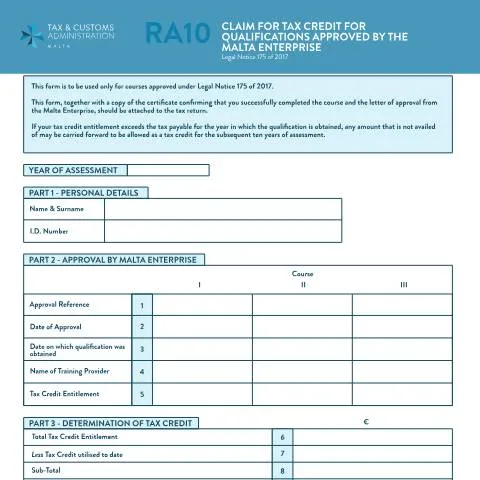
Understanding the RA Forms: mtca-ra10-mlt-eng
The RA Forms, particularly the mtca-ra10-mlt-eng, are instrumental in the administrative landscape of income tax in Malta. This document serves as a pivotal mechanism for individuals and entities wishing to lodge their claims and declarations with the Income Tax Department. For many, navigating this form is a necessary step toward fulfilling their tax obligations and ensuring compliance with local regulations.
Navigating the Intricacies of the RA Form
The RA Form is not a mere collection of fields to fill out; it is part of a broader framework that governs tax declarations and ensures proper documentation is submitted to the relevant authorities. Understanding how to complete this form effectively is crucial. Here’s how to approach the process.
Preparation: Gathering Necessary Documentation
Before diving into the RA Form, it’s essential to collate all necessary supporting documents. Depending on your personal or business circumstances, these may vary but generally include:
- Income statements, such as payslips or profit and loss accounts for businesses.
- Details of any deductions applicable, like receipts for allowable expenses.
- Information regarding property ownership and any associated income.
Each of these documents plays a crucial role in validating the information you present in your RA Form. Ensuring you have everything organized will streamline the submitting process and potentially reduce the time it takes to process your claim.
Diving Into the Form: Key Sections Explained
The RA Form comprises several sections, each demanding careful attention. Let’s dissect the form’s structure.
- Section A: Personal Information
This section requires you to provide your name, Maltese ID number, and contact details. It's critical that this information is accurate to avoid any miscommunication.
- Section B: Income Details
Here, you must disclose all sources of income, including salaries, rental income, and investment returns. Be meticulous, as inaccuracies can lead to delays or additional scrutiny from the tax authorities.
- Section C: Deductions and Allowances
This portion allows you to claim any deductions or allowances. Be prepared with the relevant documentation to support your claims.
- Section D: Declaration
This essential part often includes a declaration of the truthfulness of the information provided. Misrepresentation could result in significant penalties.
Consequences of Inaccuracies: The Importance of Accuracy
Filling out the RA Form isn’t just a bureaucratic task; it’s a critical step that can open or close avenues for tax benefits and obligations. Any discrepancies or omissions can lead to audits, penalties, or even legal repercussions. In extreme cases, failing to accurately report income may result in criminal charges. It is advisable to double-check all entries and, if necessary, consult with a tax advisor for complex situations.
Submission Channels: Where and How to File
Once the RA Form is meticulously filled out, the next step is submission. The Income Tax Department offers various channels for submitting your form, each with distinct characteristics.
Online Submission via e-ID
For those familiar with Maltese digital services, submitting the RA Form online using your e-ID is often the fastest and most efficient method. This process eliminates the need for physical paperwork, reducing the likelihood of lost documents and expediting processing time.
Paper Submissions: The Traditional Route
For individuals who prefer a paper trail, submitting a hard copy of the RA Form is still an option. However, it requires you to either mail the completed form to the Income Tax Department or drop it off in person. Remember to retain copies of your submission for your records.
In-Person Assistance: The Benefits of Face-to-Face Interaction
For those with complex queries or who prefer direct interaction, visiting the Income Tax Department can be beneficial. Staff can assist with clarifications on the submission process and address any specific concerns you may have regarding your situation.
The Processing Stage: What Happens After Submission?
After submission, the RA Form enters the review process. This phase is crucial for ensuring that all claims and declarations are legitimate and comply with Maltese tax laws. Understanding what occurs during this time can help alleviate concerns.
Monitoring Progress: Staying Informed
Once submitted, you have the ability to track the progress of your application. This can typically be done through the Income Tax Department's online portal, where you can log in with your e-ID. Checking the status regularly can give you peace of mind and allow you to respond promptly to any requests for further information.
Potential Outcomes: What to Expect
The review of your RA Form may lead to various outcomes:
- Approval: If everything is in order, your claims will be accepted, and any due refunds or credits will be processed.
- Request for Additional Information: The tax authorities might reach out for clarification or additional documentation. Responding promptly is vital.
- Audit Notification: In cases where discrepancies are found, a formal audit may be initiated, which will require further engagement and documentation.
Special Cases: Unique Scenarios to Consider
Every taxpayer's situation is unique, and certain circumstances can complicate the process of filling out the RA Form. Here are some special considerations:
Foreign Nationals: Additional Requirements
For those not holding Maltese citizenship, there may be additional forms and requirements to complete alongside the RA Form. This could include proof of residency or tax identification numbers from their home countries.
Minors: Filing on Behalf of Dependents
When filing for minors, the RA Form must be completed by a parent or legal guardian. The income earned by the minor must still be reported, and specific guidelines govern how this should be done.
Complex Financial Situations: When to Seek Help
If your financial situation involves complex elements—such as multiple income streams, business ownership, or international assets—it is advisable to seek the help of tax professionals. They can provide tailored guidance based on your circumstances and ensure compliance with local tax laws.
Connecting the Dots: The RA Form Within the Broader Tax Framework
The RA Form does not exist in isolation; it is a crucial component of the overall income tax framework in Malta. Understanding how it fits into broader tax obligations can help taxpayers make informed decisions.
Interconnected Forms and Declarations
Often, the RA Form is one of several forms required for comprehensive tax compliance. Taxpayers may also need to engage with other forms related to property tax, VAT, or local income declarations. Awareness of these interconnected requirements is essential for full compliance.
The Role of Income Tax in Public Services
Ultimately, the accurate completion and submission of the RA Form contribute to the broader public good. Income tax supports various public services in Malta, and understanding this responsibility can inspire a sense of civic duty among taxpayers.
Future Updates and Changes: Staying Informed
Tax laws and forms can evolve, and staying informed about any changes to the RA Form or tax regulations is crucial. Regularly checking the Income Tax Department's official communications can provide updates that may affect your obligations.
Final Thoughts: Embracing the Process
Navigating the RA Form can be a daunting task, but understanding its purpose, structure, and implications can significantly ease the burden. Whether you choose to submit online, by mail, or in person, being diligent in your preparation and submission will ensure that your obligations are met efficiently and accurately. Engaging with the tax process not only fulfills legal requirements but also contributes to the functioning of essential public services in Malta.
Understanding the RA Forms: A Comprehensive Overview
The RA Forms, specifically the RA Form MTCA-RA10, serve as essential documents for various administrative processes in Malta. They are primarily utilized for applications related to real estate and property matters, including but not limited to, residential leases, property sales, and acquisitions. Understanding the intricacies of these forms is crucial for both citizens and foreigners engaging in property transactions in Malta.
To begin with, it's important to recognize that the RA Form MTCA-RA10 is part of the broader framework established by the Lands Authority. It is critical to ensure that all sections of the form are filled out accurately to avoid delays or complications in the processing of your application. Each section requires specific information, and any omissions or errors can result in the rejection of your application.
Users must provide detailed information about the property in question, including its location, size (measured in square meters), and current ownership status. Additionally, the form requires the applicant to declare any encumbrances or legal disputes related to the property to ensure transparency in the transaction. As part of the submission process, applicants are also required to submit supporting documentation, which may include identity verification through the e-ID system, property title deeds, and tax clearance certificates.
Common Pitfalls and How to Avoid Them When Submitting RA Forms
While the RA Form MTCA-RA10 is designed to streamline property transactions, several common pitfalls can complicate the process. Being aware of these issues can help applicants navigate the form more effectively and avoid unnecessary delays.
One major pitfall is the incomplete submission of required documents. Each application must be accompanied by a comprehensive set of documentation, which should include proof of identity (e.g., a Maltese ID card or a valid passport), proof of residence (where applicable), and any pertinent agreements related to the property. Failure to submit these documents can lead to the immediate rejection of your application.
Additionally, applicants often underestimate the importance of accuracy in the information provided. It is imperative that all details on the RA Form MTCA-RA10 are filled out precisely. For instance, errors in the property description or incorrect details regarding the ownership can cause significant delays, as the Lands Authority will need to seek clarification or additional information before proceeding with the application.
Another critical aspect to consider is the timeline for processing applications. While many individuals assume that their applications will be processed quickly, the reality can be quite different. Depending on the complexity of the case and the volume of applications being processed, the time frame for obtaining approval can vary widely. Therefore, it is advisable to submit your application well in advance of any planned transactions and to monitor the status regularly through the Central e-ID portal or by contacting the Lands Authority directly.
The Impact of Digital Transformation on RA Forms and Administrative Processes
In recent years, Malta has made significant strides towards digital transformation in its public administration, and the handling of RA Forms is no exception. The introduction of online submission systems via the e-ID platform has transformed how citizens interact with government services, making processes more efficient and user-friendly.
One of the key benefits of this digital shift is the enhanced accessibility of services. Citizens can submit their RA Forms from anywhere, at any time, without the need for physical visits to government offices. This convenience is especially beneficial for those living abroad or for busy professionals who may find it challenging to visit administrative offices during regular working hours.
Moreover, the integration of the e-ID system strengthens security and verification processes. Applicants can authenticate their identity easily, reducing the risk of fraud and ensuring that only legitimate applications are processed. This reliability is essential in a field where property transactions often involve significant financial stakes.
Future developments may further enhance the efficiency of RA Forms and related administrative processes. For instance, the ongoing evolution of data-sharing capabilities between government entities could lead to a more streamlined application process, where applicants might not need to provide redundant documents previously submitted to other departments.
As Malta continues to embrace digital solutions, staying informed about upcoming changes and enhancements to the RA Forms process will be vital for both property buyers and sellers. Engaging with official resources like servizz.gov.mt will provide the latest updates and guidance.