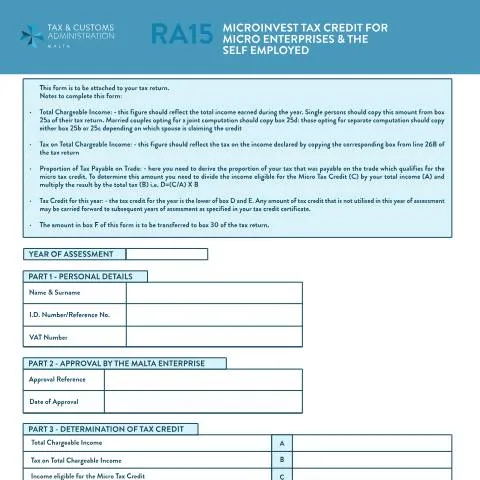
The Role of the RA Forms in the Maltese Income Tax Landscape
The RA Forms, particularly the mtca-ra15-mlt-eng, hold significant importance in the broader context of income taxation in Malta. This specific document plays a vital role in the process of claiming tax relief on various grounds, including investment expenditures, research and development, and other qualifying activities. Stakeholders utilizing this form are often engaged in more extensive tax planning and compliance strategies, positioning it as a pivotal element in the taxation framework.
Understanding the Process: From Filing to Relief
To fully appreciate the role of the RA Forms, it is essential to grasp the entire process surrounding income tax submissions in Malta. The RA Forms fit into a broader sequence of procedures that taxpayers must navigate to ensure compliance and optimal tax outcomes.
- Initial Documentation: Upon gathering the necessary financial records, taxpayers prepare various supporting documents.
- Filing the RA Form: Taxpayers must complete the RA Form accurately, detailing their eligible expenditures and reasons for claiming relief.
- Submission to the Inland Revenue Department: The completed form is submitted either online or through traditional means.
- Assessment and Notification: Following the review by the Inland Revenue officials, taxpayers receive a notification regarding the outcome of their submission.
- Appeal Process (if necessary): Should taxpayers disagree with the assessment, they have the option to initiate an appeal.
Distinguishing the RA Form from Similar Tax Documents
The RA Form often gets confused with other tax-related forms due to its specificity and the intricate nature of Malta's tax legislation. Specifically, understanding its distinct features helps ensure that taxpayers do not misfile or delay their claims.
Here are a few key distinctions:
| Form Type | Purpose | Usage Context |
|---|---|---|
| RA Form (mtca-ra15-mlt-eng) | Claiming tax relief for specific expenditures | Applicable for businesses and individuals involved in eligible financial activities |
| Form TA | Annual income tax return | General tax reporting for all income earned |
| Form N | Non-resident income tax declaration | For individuals earning income in Malta but residing abroad |
Who Needs to Navigate the RA Form?
The profile of taxpayers who must fill out the RA Form can vary widely. Here’s a detailed look at potential candidates:
- Individuals: Those claiming tax relief for personal investments or expenditures related to education.
- Small Enterprises: Businesses aiming to recoup costs related to research projects or training initiatives.
- Corporations: Larger entities that may have extensive investments in qualifying sectors such as technology or renewable energy.
Moreover, certain exceptions apply:
- Non-residents who may be conducting business might have specific regulations to consider.
- Minors can also qualify but may require parental consent and guidance in filing.
Key Sections of the RA Form: Navigating the Details
Completing the RA Form involves careful attention to various sections that each serve a specific purpose. Each entry requests detailed information that can affect the eventual outcome of the relief claim.
Section Breakdown:
- Taxpayer Information: This section requires the personal identification details of the taxpayer, including their e-ID and VAT registration number if applicable.
- Claim Summary: Taxpayers must summarize their claim succinctly, outlining the nature of the expenses and the relief being sought.
- Expenditure Details: A comprehensive breakdown of the expenditures incurred, supported by relevant invoices and documentation.
- Declaration: A mandatory declaration of truthfulness, which underscores the importance of accuracy in reporting.
While filling out the form, taxpayers should be wary of common pitfalls:
- Inaccurate information can lead to delayed processing or outright rejection of claims.
- Failure to provide supporting documentation may hinder the approval process.
Submission Channels: Navigating Your Options
Filing the RA Form can be conducted through various channels, each with distinct advantages and considerations.
Options for Submission:
- Online Submission: Utilizing the e-ID system provides a streamlined process, reducing the risk of errors and expediting processing times.
- Paper Submission: For those preferring traditional methods, mailing the completed form to the Inland Revenue Department is permissible but may lead to longer processing times.
- In-Person at the Inland Revenue Office: Taxpayers can also deliver their forms personally, allowing for immediate confirmation of receipt and any necessary clarifications.
Comparative Advantages:
| Method | Speed | Verification | Convenience |
|---|---|---|---|
| Online Submission | Fast | Instant | High |
| Paper Submission | Slow | None until receipt | Moderate |
| In-Person Submission | Moderate | Immediate | Moderate |
Legislative Framework: The RA Form within Malta's Tax Architecture
Understanding the regulatory context surrounding the RA Form is crucial for effective utilization. The Public Administration Act (Cap. 595 of the Laws of Malta) outlines the governance of administrative procedures, including those related to tax administration. This act sets the framework for transparency, efficiency, and taxpayer rights.
While specific details of the laws governing tax relief are subject to amendments, the RA Form remains a static point of reference for taxpayers seeking to navigate the complexities of Malta's tax law.
Recent Changes and Their Implications
Legislative changes can significantly impact how taxpayers approach their claims. Staying informed of recent amendments ensures that individuals and businesses align their filings with current regulations. Check the updates regularly through the Inland Revenue Department for any notifications or guidance related to the RA Form.
Final Insights: Strategic Considerations for Tax Relief
Engaging with the RA Form requires more than mere compliance; it necessitates a strategic approach to maximize potential relief. Taxpayers should consider consulting with tax professionals to ensure that their claims are prepared accurately and reflect all available relief options. Furthermore, the complexity of the form suggests that a proactive approach often yields the best results in tax reliefs.
Understanding how to leverage this document effectively can lead to significant financial benefits, thus making it an essential document in the tax filing arsenal of Maltese taxpayers.
Understanding RA Forms: Key Components and Their Importance
The RA Forms, specifically the RA15 form, serve as a crucial element in the administrative landscape of Malta. These forms are utilized mainly in the context of property transactions and align with the broader objectives of the Lands Authority. Understanding the key components of the RA15 form can greatly enhance your interaction with various government departments.
One essential section of the RA15 form pertains to the identification of parties involved in the transaction. This includes details of the seller, buyer, and any intermediaries. Accurate completion of this section is critical as it ensures that the transaction can be traced effectively within the government's property records. Moreover, any discrepancies may lead to delays or even complications in the legal ownership transfer process.
Additionally, the form requires specific information regarding the property in question. This encompasses not only the physical address but also details such as property size, boundaries, and the nature of the property (residential, commercial, agricultural, etc.). Such precise definitions help the Lands Authority categorize the property correctly and apply the appropriate regulations and taxes related to the specific type of property.
Filing Procedures for RA Forms: A Step-by-Step Guide
Navigating the filing procedures for RA Forms can seem daunting, but a clear understanding of the steps involved can ease this process significantly. The first step is to ensure that you possess a valid Central e-ID; this is mandatory for almost all transactions involving the Maltese government, including the submission of RA forms.
Once you have your e-ID ready, the first action is to access the correct form through the servizz.gov.mt portal, making sure to select the RA15 form. It is advisable to download the PDF version so you can review and fill it out meticulously before submitting it online. The forms often include instructions and examples, so take advantage of these resources to avoid common pitfalls.
Following the completion of the form, you will be required to submit it electronically. This process typically involves navigating through the e-forms section on the Lands Authority's website. After submission, it's crucial to monitor the status of your application. This can be done through the same portal or via direct communication with the Lands Authority's customer support. Remember, any additional documentation or clarifications requested should be submitted promptly to avoid delays.
Common Challenges and Solutions When Dealing with RA Forms
While the RA Forms are designed to streamline property transactions, various challenges can arise during their completion and submission. One common issue is the misunderstanding surrounding the property description. Many applicants struggle to articulate the specifics of the property, leading to incomplete or incorrect submissions.
To mitigate this risk, it’s advisable to gather all relevant documents beforehand, including title deeds, surveys, or any prior communications regarding the property. Consulting with a legal professional or a real estate expert can also provide clarity on the requirements and terminology used within the forms.
Another challenge often encountered is the technical aspects of electronic submission. Some applicants may find the online submission process confusing or run into issues related to their e-ID credentials. To overcome this, ensure that your digital signature is correctly configured and that your browser is compatible with the e-forms system. If issues persist, do not hesitate to reach out to the technical support service offered on the servizz.gov.mt website.
Finally, applicants frequently overlook the deadlines for submitting RA Forms. While some forms may have strict timelines, others may not be as clear. Always check the specific requirements associated with your type of transaction, and consider setting reminders to ensure you do not miss any critical deadlines.